
SMART goal setting for snow sports & sports medicine wellness
As winter settles into our beautiful mountain community, it’s the perfect time to focus on intentional goal setting to support your health, performance, and injury resilience. The American Physical Therapy Association (APTA) and Sports Medicine best practices emphasize individualized goal creation, structured training, and proactive injury prevention, tools that help every skier, snowboarder, Nordic athlete, and winter adventurer stay strong and confident throughout the season.
Our Sports Medicine and Physical Therapy teams work together to support athletes of all ages, helping you build strength, improve balance, manage fatigue, and stay on the mountain safely all winter long.
SMART goal setting: A simple template for success
Creating clear, realistic goals increases motivation, consistency, and long-term success. Both Sports Medicine clinicians and physical therapists commonly utilize SMART goals, Specific, Measurable, Achievable, Relevant, and Time-bound, to guide effective progressions.
Example SMART snow-sport goal
“I will complete a 20-minute strength and balance program three days per week for the next eight weeks to improve lower-body stability and reduce knee fatigue while skiing.”
SMART goals help you stay accountable, track progress, and prioritize the training that matters most for performance and injury prevention

Provider Spotlight
Karen Rossman
Athletic Trainer
Originally from New Jersey, I’ve slowly migrated farther and farther west in search of bigger mountains and more adventure. When I’m not working, you can usually find me hiking, trail running, skiing, or exploring the outdoors with my dog, Tucker (who firmly believes he is the star of every trail).
I’ve worked in a variety of athletic training settings, from PT clinics to high schools to industrial sites, which means I’ve seen just about everything. Ironically, I don’t watch many sports in my free time, but I absolutely love helping athletes get back to doing what they love most. I grew up playing sports myself and first discovered athletic training after an injury during high school field hockey, proof that good things can come from sprained ankles.
This season, I’m excited to dive into a brand-new world: ski racing and snowboarding. I can’t wait to learn from our incredible athletic trainers and sports medicine docs, and I’m thrilled to be part of such an adventurous, mountain-loving community.
Here’s to new trails, new mountains, and a winter full of learning (and hopefully staying upright on skis)!
Contact info
Tahoe Forest Sports Medicine & Therapy Services
10710 Donner Pass Road, 2nd floor, Truckee, CA 96161
Tahoe Forest Orthopedics & Sports Medicine
10051 Lake Avenue, Ste. 3, Truckee, CA 96161
(530) 587-7461 | tfhd.com/orthopedics
Incline Orthopedics & Sports Medicine
880 Alder Ave, 2nd Floor, Incline Village, NV 89451

Featured Therapy
How physical therapy elevates winter performance
Physical therapists are movement experts trained to optimize strength, mobility, balance, and mechanics, key factors in snow-sport performance. According to APTA, PTs play a critical role in both injury prevention and sport preparation, helping athletes maintain resilience from opening day through spring.
Pre-season PT can provide
- Movement, balance, and strength screening
- Identification of asymmetries or mobility deficits
- Personalized sport-specific conditioning programs
- Guidance on technique, power generation, and neuromuscular control
In-season PT can support
- Load management during high ski weeks
- Recovery strategies to reduce soreness
- Early intervention for strain or overuse
- Adjustments to maintain optimal performance throughout the winter
Injury Prevention Corner
Staying consistent when the mountain is calling
In a town where early-morning powder turns can derail even the best training plans, consistency matters. APTA and Sports Medicine principles highlight the importance of graded loading, tissue capacity building, and intentional habit formation for long-term resilience.
Tips for staying consistent:
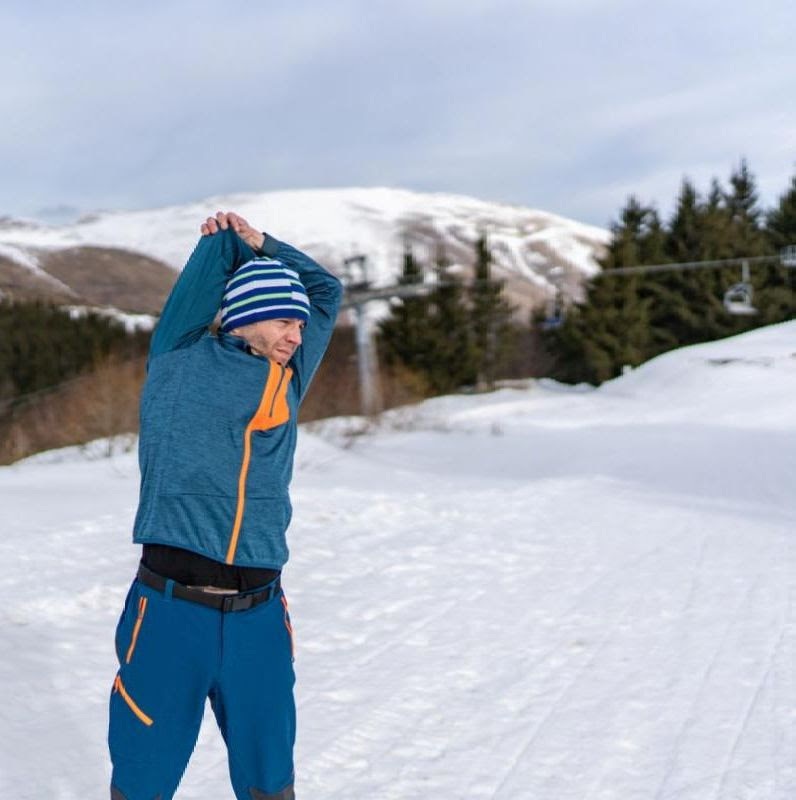
- Pair your workout with your mountain time, warm up with strength before skiing, or stretch after your last run.
- Keep it short and effective; 10–20 minutes of targeted work improves endurance and reduces injury risk.
- Use visible reminders, place cues in your ski locker, car, or kitchen.
- Track small wins, better balance, less soreness, more control on variable terrain.
A consistent routine helps you ski longer days, manage fatigue, and feel stronger throughout the season.
View exercises to engage your core to help you warm up and reduce the risk of injuries.
Ski Season Training Q&A
Q: How can Sports Medicine help me during ski season?
A: Our providers provide injury evaluation and management planning, strength recommendations, and early intervention strategies to keep you safely active.
Q: Do I need to see a PT even if I’m not injured?
A: No, but they can help! Physical therapy offers performance optimization and preventive screenings to keep you strong before problems arise.
Q: How often should I train during ski season?
A: Even 2–3 short sessions per week significantly improve stability, endurance, and fatigue resistance.