A podcast focused on health topics in your community
Join Dr. Brian Evans, Tahoe Forest Health System Chief Medical Officer, as he explores the people, stories, and innovations happening in health care in the Sierra. From everyday wellness to the latest advancements in medicine, Dr. Evans’ goal is to provide clear, trusted information to help you live well.
Latest Mountain Health Today Episodes
Welcome to Mountain Health Today, the show where we explore the people, stories, and innovations shaping health in the Sierras. I’m Dr. Brian Evans, Chief Medical Officer, of Tahoe Forest Health System.
From everyday wellness to the latest advances in medicine, our goal is very simple, to give you clear, trusted information that helps you and your family live well. Today, we’re going to be discussing my favorite area of the hospital.
I call it the center of the medical universe, the emergency department. And who better to join us than Dr. John Swanson, the Medical Director of the ED here in Truckee.
Dr. Swanson is a board-certified emergency physician practicing full-time at Tahoe Forest Hospital. He has deep experience managing all kinds of emergency patient care, particularly in the mountain environment in which we live.
Dr. Swanson, welcome to Mountain Health Today. Thanks for having me.
You know, to start us off, can you just tell our listeners about your background? How does one end up becoming an emergency physician?
What’s the training involved? We don’t just take people right off the street.
Correct. Correct.
Yeah. So, you know, as a medical student, you’re exposed to different fields within medicine such as OBGYN, surgery, orthopedics, pediatrics, and many different specialties.
And I found during my training that I really enjoyed most of the library of medicine. And you know, there’s a couple fields that really pick all that up.
And one of them is emergency medicine. And so, as I went through my training, I just liked ortho, I like neurology, I liked OBGYN.
In the end, since I liked it all, I just decided to do emergency medicine. Yeah.
I give you a little bit of everything, right? And full disclosure to the audience, I’m also an ER doc, so by background.
And so I feel very similarly you get that breadth of science and medicine and healthcare and you don’t have to really pick one area. But you’ve also got to be ready to go, right?
You got to be ready for anything that comes through the door, right? And you know we evaluate a lot of medical complaints such as chest pain and you know stroke like symptoms.
But we also get to work with our hands doing laceration repairs, joint reductions and fracture reductions. And so I also found that really intriguing.
And when you say reductions, we’re talking about putting a bone back in the place it belongs. Yep.
Yeah. Aligning up both bones you know, making one side look like the other.
That’s always a good thing. Generally a good symmetry is good.
So, you’re also the Medical Director of the group and the physicians that work in the emergency department here in Truckee. So that’s kind of a different sort of a thing, right?
I mean, it’s not just seeing patients and taking care of patients, but you’re also leading the team and making sure that everybody is functioning at a very high level. Correct.
How long have you been doing that? Correct.
Yeah. So, you know, I started I moved to Truckee in 2000 and worked really just sort of in the pit or in the ER as we would call it for 20 odd years.
And the last couple years I’ve switched over to more administrative work. And one of the things I really enjoy about it is helping to work with the docs that we have sort of putting them in you know other administrative roles where you know giving them an opportunity to succeed doing other aspects of providing care in the emergency department.
And so I’m involved with clinical policy formation. You know, reviewing patient charts and reviewing patient concerns. And trying in general to make sure that the care provided at Tahoe Forest Hospital is topnotch.
Yeah, things change all the time, right? I mean, how has the emergency department and the science around it and what we know about how to take good care of patients changed in your career?
Sure. Sure.
I mean, you know, I would say one of the biggest changes in my career is we went from paper charts to electronic healthcare records. It was, you know, a dramatic change.
And, you know, there we were, and 2000 flipping through, you know, paper charts that were the size of an old dictionary. And now everything is integrated into the computer.
You know, along with computer physician order entry. You know, most of what we do is on the computer now.
And that’s helped make things much quicker and much more efficient. And also brought in you know more patient safety making sure you know we’re doing the correct orders on the correct patients.
And so I think that’s probably been one of the biggest changes in my lifetime. I get a little post-traumatic stress just thinking about switching from paper because I was trained on paper too.
And I remember it well when we went to the computers. And some docs were really not happy and actually quit the profession at that time because it was just too much to learn how to do these systems.
But I mean back in those days we had to worry about handwriting for example like bad handwriting could be a major patient safety issue. And certainly that’s been resolved with computers.
Yep. You also have been the Medical Director for EMS.
So what does EMS stand for and you know what’s involved in that? How does that interplay with the emergency department?
Sure. So Emergency Medical Services it’s really kind of describing pre-hospital care. You know, care provided by what most of the public would think about and you know an ambulance per se.
And in our community you know it’s Truckee and Tahoe City Fire that provides EMS or patient care outside of the hospital. And this ranges you know they’re called out for medical complaints.
They’re called out to ski resorts. They’re called out onto the freeway in the worst weather imaginable.
And trying to figure out how to extricate patients from where they’re injured. Package them up and get them safely to a hospital where we can take care of them in a nice warm dry environment.
So they really set the tone for and are critical in providing patient care before you know hitting the ER. Yeah.
You know what I think when people think about what is involved in getting patients safely to the emergency department here in Truckee or to our other hospital in incline where you and I know you work very closely with Abby Young who’s the Medical Director of the Incline Emergency Department for us. It’s sort of mindboggling how people get from where they are, like whether it’s in a crashed vehicle or they’re on a mountain after some sort of an accident and they get in here.
How much does weather really play a role in this? Because it does change the mechanisms that we’re using to get folks in and how we’re responding to that.
Sure. I mean, in our community, we have everything from remote bike paths that you know might need to be accessed with a litter and a search and rescue team.
To a UTV or side-by-side type vehicle, which Truckee Fire has. To boats out on Donner and boats out on Lake Tahoe.
So, you know, we’ve got a myriad of different conditions in the natural environment. And then of course ski season is big for all of us.
And we see an amazing number of patients injured out on the slopes that ski patrol is actually sort of even before EMS they’re the ones typically getting patients down a slope. And into the hands of the firefighters.
Yeah. All these things are like little fingers reaching out into the community.
They’re an extension of the emergency department. But ultimately the patients arrive and there they are in the emergency department.
What kind of cases do you typically see? I mean, people always wonder what an ER doctor is doing?
There’s a lot of fascination about the ED and like what’s happening there? So, what kind of cases would you expect to see on a typical ER shift?
You know, a typical ER shift for us, I’d say we sort of have, you know, two big seasons, right? We’ve got our summer season and our winter season.
And as every local knows, the shoulder seasons just seem to be going away. You know, in the winter, you would often see ski or snowboard trauma.
Sort of simple injuries such as a shoulder injury or wrist injury. And then we see more complex injuries where patients will have concussions or trauma to their chest or abdomen.
And you know that’s kind of our sort of winter day trauma that we would see. In the summer, we’re thinking about seeing patients that come in after mountain bike injuries, e-bike injuries, hiking injuries, slip and falls.
So we do see summer in the trauma as well. And as most residents from North Tahoe can tell you, the summer really is probably even our busiest time.
Busier even in the winter. The old mantra is that people came to Tahoe for the winters and they stayed for the summers.
So, it really is a magical time to be up here. And with the swelled population, the emergency census swells as well.
Yeah, the population definitely jumped up around Covid, a lot of people became more permanent residents. And it’s definitely affected the emergency department.
Okay, I’ve got to ask you this, Dr. Swanson. So, I get asked actually all the time about the pit.
All right, this is for those of you that haven’t seen it that are listening, The Pit is a show about an Emergency Room in Pittsburgh. And it’s quite popular.
Won a bunch of Emmys. Have you seen this show?
I’ve seen it. Yeah, it is an amazing show.
And as we mentioned earlier, people are always like, “Is the ER really like The Pit?” And the answer is, of course, yes.
Although the pit is maybe all of the best cases sort of crammed into one shift. So, you take the best cases of the year and you just cram it all into one hour.
So yeah, it’s fun. But I’ve seen almost all those cases that they care for in the pit.
And so it’s always really interesting when you watch it. And they’re seeing and doing the same kind of medicine that we actually practice.
I noticed you said the best cases. And I’m not sure that a lay person would say the best case.
They might say the worst cases. True.
If you know, and maybe the way to put it is exciting cases, right? These are cases that are life or limb threatening.
It’s our opportunity as an emergency physician to make a time-sensitive intervention to save someone’s life. Save someone’s limb.
And that makes for good TV. And it makes for good medicine.
Absolutely. Yeah.
I’ve been surprised by just the way that the procedures are depicted on that show. And they actually look very very realistic.
And I agree. Like all those things that come in, you know, they’re things I’ve seen in the past.
But definitely not on the same shift, luckily. Yeah.
Very interesting. I mean, the fascination with what’s going on in the emergency department has been a constant really as long as I can remember.
And I know that we were talking before about some of the TV shows that have been out there. And the pit is the latest of a long series of them starting with MASH.
So, did you watch MASH when you were younger? I did.
Yep. And I think maybe the surgeon Hawkeye Pierce was maybe my first interest in becoming a physician.
He just seemed like a great fun-loving character. But I also really cared about patients.
And did whatever he could to save the injured soldiers that he was caring for. You know, the docs that you oversee in the emergency department here.
I’ve been just remarkably impressed by their skill level, their intellect, their background. They’re all board certified emergency physicians.
Why is that important? What’s involved in that?
So that people know. I mean, that they’re maybe you could explain to listeners what the specialty even is.
You know, it didn’t used to be a specialty back in the early days, right? So when the emergency department here was founded by Michael McQuiry, the ER was typically staffed by docs either internists and/or surgeons who were looking to build their practice.
And these docs would sort of moonlight in an ER. And when they met patients that needed care, they would often pick them up and add them to their practice.
And probably in the late ’60s early ’70s people really saw that there was a need to have specialty training in emergency medicine. Right?
I mean we were doing everything from fever workups on infants. To running codes if a patient had a heart attack or cardiac arrest.
Or they stopped breathing or their heart stopped. We were managing those cases as well.
And so it was everything from complex medical care to complex trauma care and triage. And so the specialty of emergency medicine was founded.
And currently that means that there is a residency in emergency medicine. It’s typically a three to four year process to train to become an emergency physician.
So all of us in the ER have that training. And we all maintain that board certification.
Yeah, absolutely. Things really have changed.
I think the specialty has gotten much more sophisticated over the years. And I think the expertise and the care that’s provided to patients is much more consistent and very high quality.
You know, one thing that people don’t know about our it’s a small emergency department relative to a big inner city one. But we have added some capabilities.
Or your team has added some capabilities to the hospital in the form of some accreditations. So we are now a stroke receiving center.
We’re also a level three trauma center. And recently certification accreditation as a geriatric emergency department.
Why are these kinds of efforts important for our community and for the patients that receive care here? Sure.
So you know all three of those are excellent examples of the type of work that emergency physicians have done to really raising the bar in care in our community. The first was becoming a trauma center.
The American College of Surgeons are the ones that accredit hospitals as trauma centers. And if you are a level three trauma center, that is telling the public that our hospital is ready to handle most traumatic emergencies.
For example, think about a ruptured spleen that might occur if you fell skiing. And you injured your chest or abdomen.
Our facility has the capabilities of caring for most of those injuries. And by becoming a trauma center that means that we go through a process that a national organization will come in and make sure we have the correct tools and physicians on board and processes to care for injured patients.
And so that was a change that occurred in the last 5 years. When I first started here 10 years ago, we were not a trauma center.
But we cared for a lot of injured patients. And so by becoming a trauma center, it really raised the bar on how we care for our injured community members.
The next one we became a stroke center two years ago. And again this also made caring for patients that are having strokes much higher.
We have the ability to bring in a neurologist over what we call a teleneurology consult. Where they appear on a screen and they talk to the patients.
And they help us make patient care decisions. And it’s really an amazing way to bring specialist care into the emergency department.
Yeah. And I’ll just jump in and say that what some people don’t realize is that a neurologist is there seeing the patient within minutes of their arrival, typically.
Which is very very difficult to do. But we’ve got a process where we rely on neurologists from numerous areas around the country.
And they jump in and see that patient right away. Yeah.
And I’ve listened to these neurologists have conversations with our patients. And they can really provide incredible care despite being out of the ER.
And I’ve heard them talk to patients. They explain everything.
They are very helpful. They’re very caring.
And they are passionate about trying to improve stroke care for patients in the emergency department. They help us try to make the hard decision about whether or not a patient might need different treatments for their stroke.
And then lastly we became a geriatric emergency department. And that means that our ER physicians have undergone extra training to provide the specialty care that our older patients will require.
And sometimes patient presentations as we age get more difficult. And so that’s been great training for us.
And we have a few goals to improve our care for all of our older patients in the emergency department for the next year. So that’s been a great achievement as well.
Yeah. I think recognizing what the community is now and how it’s shifted over the years is important.
And noticing that we’re seeing older people wanting to stay in this community longer. They want to stay here, retire here, and continue to be active.
And they want to know that we’re here for them if something is necessary. Whether it’s a stroke or heart attack or trauma situation.
And now the certification of being a geriatric center so that we can really up our game. I think that’s just an incredible thing for you and the team to have offered.
So thank you for that. One thing that’s in our area of risk is an avalanche.
You’ve had a lot of experience with the Avalanche Center. And so what drew you into that?
And how was that important for us? Sure.
So, you know, I was involved in a lot of pre-hospital research and EMS work. And as I became part of this community, one of the things that I really enjoyed was backcountry skiing.
And of course, that comes with the risk of an avalanche. And so I volunteered with the CR Avalanche Center for the better part of a decade.
And helped them with fundraising and was on their board for many years. And that is a great organization.
But that was how I got involved with the Avalanche Center. Okay.
Well, what’s the one thing that you’d really recommend to our community out there in terms of staying safe? Whether it’s wintertime or summertime.
What would you recommend to folks just to make sure that they stay safe out there? Sure.
I think in terms of general safety, really prevention is the key. For example, if you’re going to go backcountry skiing, there are Avi 1 courses and first aid courses that you can do.
To try to help manage problems as they arise. But the main thing is trying to avoid avalanche terrain.
And avoid getting avalanched. Avi 1 will teach you what to do if there is an avalanche.
But probably the best thing you can do is avoid being in avalanche terrain from the get-go. And so I look at that in terms of all of my outdoors activities.
If we’re mountain biking, maybe just ratcheting back speed. If we’re hiking, try to be aware of the weather and the terrain.
And making sure that we’re prepared for those things. Well, you have your marching orders from Dr. John Swanson.
I really appreciate you being here with us today. Dr. Swanson is the Hawkeye Pierce of Lake Tahoe, I believe.
So, that does wrap up our conversation. Thank you, the audience, for spending part of your day with us.
I’m Dr. Brian Evans, Chief Medical Officer of Tahoe Forest Health System. You can learn more about today’s topic or find resources and services at tfhd.com.
Until next time, take care of yourselves. Take care of each other.
And stay healthy here in the mountains. Thank you.
Inside the Emergency Department with Dr. John Swanson
Dr. Brian Evans is joined by Dr. John Swanson, Medical Director of the Emergency Department in Truckee. They explore what it takes to deliver high-quality emergency care in a mountain community.
Welcome to Mountain Health today, the show where we explore the people, stories, and innovations shaking health in this year. I’m Dr. Brian Evans, chief medical officer of Tahoe Forest Health System.
Each month, we take a few minutes to talk with local experts and the community leaders about what it really means to stay healthy physically, mentally, and emotionally here in the mountains. From everyday wellness to the latest advances in medicine, our goal is very simple.
To give you clear, trusted information that helps you and your family live well. So, thank you very much for joining us and let’s get started.
Today, we’re actually going to be discussing an absolutely crucial topic. It affects every community, including ours.
It’s about breast cancer screening and early diagnosis. We’re very fortunate to have a guest today, Dr. Kristy Howard.
Dr. Howard is a board-certified OB-GYN physician practicing full-time at Tahoe Forest Hospital. She provides full spectrum OB-GYN care to our community and has special interests including menopause as well as breast cancer screening and early treatment.
Dr. Howard, welcome to Mountain Health Today. Thank you so much for having me.
I think this is such a great series that we’re doing and I’m really excited to be a part of it. Well, we really appreciate your expertise certainly on this topic, but all you do for our community and patients with OB/GYN care, delivering babies, prenatal, postnatal, the whole gambit.
So, we really appreciate you being here. We’re talking today specifically about breast cancer screening and how important it is to make sure that people are getting diagnosed as early as possible.
Maybe you could give us a little bit of an idea about your background and what led you to focus on breast health and breast cancer screening specifically. Great.
Yeah, happy to share that. So, as you mentioned, I’m an OB-GYN.
I was drawn to women’s health and OB-GYN really for the opportunity to take care of women throughout their whole lifespan starting from adolescence or earlier and through menopause and beyond. And I think my practice has really kind of evolved over time the longer I’ve been doing this and that as I have aged with my patients.
I think that I really have focused more on menopause care and included that with breast cancer screening. And then recently, I think one of the things that really has kind of brought it to light for Tahoe Forest Hospital and myself is being a part of partnering with community health in outreach to really help reach people in our community that are not being properly screened for breast cancer.
We’ve taken note that there are folks in our community that are not getting the screening that they need. And you know, overall our rates are pretty good in California and in our particular community, but there are definitely women that aren’t getting the screening that they should get.
And I know that’s a passion for you to make sure that we reach them. There’s lots of folks in our community health department that are trying to figure out strategies to really get people the screening test that they need.
So, thank you for jumping in on that. What are some of those strategies to try to get people to get the screen?
Like how do you have this conversation with their patients and how do you reach people that aren’t even coming into the clinic to see them, right? That’s a good question.
I mean, I think the ones who are coming in and seeing us and doing their yearly exams, that’s kind of the easy population to capture. and you know, that’s what we do on a daily basis is just educating women, empowering women to take care of themselves and do these preventative screenings.
As you mentioned, I think the bigger issue comes in for the women who are not coming in. And so that’s what our big focus is, more with community outreach and trying to reach these women that are not coming in for their routine visits and getting this screening.
Some of the ways that we’re trying to work on that right now, we’re currently partnering with UC Davis, the community health department, this is something that they do so well is with the community outreach. We’re specifically trying to reach our Hispanic population. It is one of the groups in particular that has been underscreened in this community.
And so we’re partnering with them to get outreach materials not only written materials but going to community events where we can reach these women. Why does early screening make a difference?
If somebody feels great, they don’t have any symptoms, they’re not noticing any abnormalities with their breasts, why do they need to get a screening test? No, that’s a really great question and that’s kind of the whole definition of a screening test, right?
It is to detect something and to be able to prevent disease. The benefit of mammograms and breast cancer but it is the primary form of breast cancer screening is that it is able to detect small things that you wouldn’t be able to feel on an exam probably for many many years.
And it makes such a difference to detect these things and diagnose these cancers at an early stage. Not only is it an easier treatment in general, it can do a lot more conservative therapy typically rather than more extensive surgery and be a much more minor surgery, it can have the potential to avoid chemotherapy and a lot more detrimental treatment options that just can affect quality of life.
And so I think not only for the woman herself, but for her family and her support people, finding these things early makes such a difference in quality of life. So it really can be a life or death kind of a situation getting that screening test done.
It really can be. That’s absolutely correct.
I mean the mortality rate from breast cancer was so much higher before mammograms became mainstream which really didn’t happen till late 80s early 90s. and we’ve seen such a dramatic decrease in mortality from breast cancer because of early detection.
Yeah absolutely. So say a little more about some of the treatments.
I think people are familiar with the fact that if they are diagnosed with breast cancer, they may need radiation therapy, they may need surgical therapy, and they certainly are likely to know about chemotherapy. But if the screening is done and the diagnosis is made early on, some of those treatments may be less necessary or less intense or just less impactful to the patient and the family members.
Is that right? That’s absolutely right.
When we can diagnose these cancers at a really early stage more often than not women are able to avoid chemotherapy altogether and just do more limited surgery. We’re able to just remove the problem area rather than having to do a full mastectomy or remove the entire breast and then the adjuvant treatment that needs to happen afterwards can dramatically different it depending on how early these cancers are detected.
What are some of the reasons why some folks might want to avoid these screening tests? Are they concerned about discomfort or they’re afraid of getting bad news or what’s going on?
I mean, I think all of the above, right? I think that there’s a definite fear factor, not only just fear of the procedure itself and the unknowns that come with that, but the fear of getting that information and what you do with that information when you get it.
I think there’s a lot of misinformation, unfortunately, about mammograms where some women are worried that the mammogram itself is dangerous from a radiation perspective. And so I think that that limits some women.
And then unfortunately I think cost and access become an issue for a lot of women as well. A screening mammogram should be something that is routinely covered for all women.
But unfortunately some women either don’t know that or don’t aren’t properly connected to the avenues to help them financially not have to be paying out of pocket for these spring deaths. So we certainly do have options for that for folks that have limited resources and we want to make sure that every woman gets the screening test that is indicated and so you can reach out to Tahoe Forest Hospital and the imaging department and go on the website and figure out the various options.
There’s lots of help available and programs. So yeah, financially you know obviously in this country our insurance system being what it is and we don’t expect you to solve that today but it is a challenge out there but we don’t want financials to be a barrier for getting these screen tests.
That’s absolutely right and I think that’s another thing that Tahoe Forest Hospital is really doing a great job at right now and part of that project that I’m working on that I’d mentioned partnering with UC Davis for outreach but we’re also working internally to set up these channels to make it much easier for patients to reach financial financial counselors and know all the different programs and things that we have available in grants to help pay for these services for women.
Right. So some women are at higher risk than others for breast cancer.
So, when you’re seeing patients in your clinic, if you’re in your own community, how do you have that conversation with people and try to ascertain whether they do have higher risk and then do your recommendations potentially change as far as screening those individuals? Yes, that’s a really good point.
There are definitely women that are at high risk. The classic thing I think that most people are aware of is a family history.
Interestingly, the vast majority of breast cancers are actually diagnosed in women with no family history, but that is one of our kind of easily identifiable risk factors. Also prior radiation exposure, other lifestyle factors as far as obesity and alcohol consumption and all of these other lifestyle factors absolutely play a role.
So I think that part of these kinds of routine health screenings that we do is assessing the whole woman and the whole picture of what might be influencing her risk. There’s some really nice calculators that plug in all these different risk factors, just age and family history and previous exposure to things that can increase your risk of breast cancer.
And it’s nice because it really can kind of generate this lifetime risk for breast cancer. And it can help kind of guide us as clinicians like what kind of imaging is just a mammogram alone enough?
Do they need supplemental tests and things other than mammograms such as ultrasound and MRI and other tools that can be used? And so it’s definitely an individualized discussion with your healthcare provider kind of based on your own risk factors to see what is going to be best for you.
Let’s talk about some of those other modalities because when people think about breast cancer screenings, they first think about mammograms, but there is a lot of discussion around MRI as potentially a modality that might be used more in the future, especially for breasts that are dense. Why would that be?
Yeah, that’s a really good thing and it’s definitely a hot topic lately. I think we’re seeing a lot of conversation about this happening. It is something that is assessed at the time of your mammogram is the level of density and there are different gradings based on how dense your breasts are.
And the more dense that tissue is can affect not only the accuracy of mammogram but it also puts a woman at an increased risk of breast cancer when you do have that more dense tissue. And so that’s another one of those factors that does get calculated in those risk predictions and that’s where MRI can really play a crucial role in the early diagnosis for women with the extremely dense tissue.
It’s not meant to take the place of a mammogram. It’s meant to be a supplement and adjunct to mamogram.
Ultrasound similarly is used in this situation. MRI for sure is the preferred study and more and more becoming the preferred study.
But again the cost and finances can always come into play with that conversation. Absolutely.
So you talked a little bit about some people having higher risk than other people. Family history is one of those things.
And there’s genes, right? There’s some people who carry particular genetic changes or abnormalities that put them at higher risk. How would someone even start to figure out if that’s them or they are one of those people?
Would they typically have a family history that they know about or how do you have those conversations? For both and more often that’s you know that’s how women got to our attention typically is from the family history.
And now this genetic testing is so widely available. We offer it through the women’s center. I know primary care offers it in a lot of places. I think you can just order online now yourself to get this information. But I always suggest talking with a physician or your provider so you can have better counseling once you get those results rather than just ordering it online.
But yes, there’s a lot of genetic testing available to identify these women and those really are the women that are at the highest risk. Not everybody with a family history has these hereditary genes, but those women who do particularly the BRCA gene we know puts women at a substantially increased risk of breast cancer.
And these are the women that really need to be followed more closely with not only mammograms but MRI on a regular yearly basis and maybe earlier in life. Correct.
So now for folks that are let’s say average risk, they don’t have the BRCA1 gene or they don’t have any other reason to think that they’re higher risk. Is it 40 that folks are supposed to get their first mammogram or it used to be 50, right?
It used to be 50. Well ACOG the American College of Obstetricians and Gynecologists as well as the American College of Radiologists both recommend starting yearly screening at age 40.
It’s pretty unanimous after age 50 that this should be done yearly. There were some differing opinions for women in their 40s whether it should be yearly or every two years.
Kind of the shared decision with their provider has always kind of been the recommendation for women in their 40s but more and more the push is towards starting yearly at age 40. Okay.
Yeah. So I mean it never hurts to say well talk to your doctor and kind of assess the risk.
We do know that breast cancer is more common as we age. That’s right.
But that doesn’t mean that it doesn’t happen to younger women as well. So we want to think about all of those folks.
What happens after somebody has a mammogram and there’s something abnormal there. This is a fairly intense situation for patients and family members as well.
So how do you handle that sort of finding and walk them through the process? Ideally when I get to counsel a patient before she’s actually had the mammogram, I like to do anticipatory counseling about the possibility of what people refer to as the call back.
That’s after you go in for your routine screening mammogram and you get a call saying we need you to come back in. About 10% of women will get a call back and that is much more common the younger you are.
Most of those call backs do not result in a diagnosis of cancer. It just means they need a closer look.
A diagnostic mammogram uses the same technology but takes more images and different angles. That can be followed by ultrasound or sometimes biopsy if needed.
We try to prepare patients so they understand what might happen so the anxiety is lower if they get that call. Breast cancer treatment has improved so significantly and we have invested heavily in technology including 3D mammography at Tahoe Forest Hospital.
We also have MRI, ultrasound, biopsy capability, and navigation support including genetic counseling. Having access to that full system matters.
We also have a cancer center in Truckee and it is a remarkable resource. We work closely with them and communication is excellent.
Even after a cancer diagnosis, patients continue routine care with us and the cancer team. Care is very coordinated across providers.
Most women still consider OB/GYNs part of their primary care team, even though we encourage partnership with primary care physicians. Preventive care is shared across the system.
Key points are screening should start discussion early, usually age 40 for average risk. Screening type depends on risk factors like breast density and family history.
And the best outcomes come from individualized conversations with your provider. Artificial intelligence is also starting to be used in imaging interpretation.
I haven’t had many patients ask about it yet, but radiology is increasingly using AI to support accuracy. It does not replace radiologists but works alongside them.
It can help improve detection and reduce false positives. Overall it is another tool to improve care.
Thank you, Dr. Howard, for sharing your expertise today. This concludes Mountain Health Today.
I’m Dr. Brian Evans, Chief Medical Officer of Tahoe Forest Health System. Caring for this community is a privilege and these conversations help us stay connected to your health and well-being.
You can learn more at tfhd.com. Until next time, take care of yourselves, take care of each other, and stay healthy in the mountains. Thank you.
Breast Cancer Screening and Early Diagnosis
Join Dr. Evans as he talks to Dr. Kristy Howard, a board-certified OBGYN physician with Tahoe Forest Women’s Center. They discuss breast cancer screening and the importance of getting diagnosed as early as possible.
More episodes to be released in soon
Stay tuned for future Mountain Health Today Podcast episodes. Dr. Evans will explore topics like advanced radiology close to home and ketamine treatment in behavioral health.
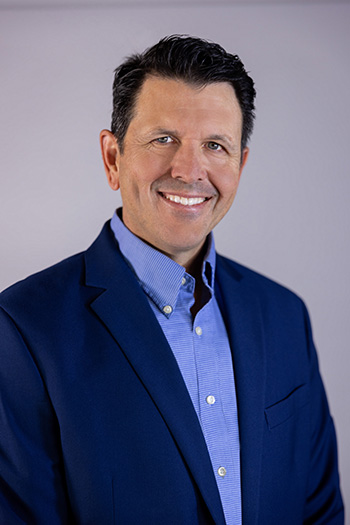
Meet Dr. Evans
Dr. Brian Evans, Chief Medical Officer, joined Tahoe Forest Health System in December 2022.
From everyday wellness to the latest advancements in medicine, Dr. Evans’ goal for the Mountain Health Today podcast is to provide clear, trusted information to help you live well.
Dr. Evans completed his medical degree at the University of California, Los Angeles, and his residency in emergency medicine at the University of California, Davis. Dr. Evans is certified by the American Board of Emergency Medicine.
From the archives: Mountain Health Today and Mountain Health Minutes
Join us for lively discussions about the state of health care in our region and the role of Tahoe Forest Health System in our community.
We cover topics like hospital pricing and cost, wellness, mental health, access to care, substance abuse and community partnerships. In short, anything that affects health in our local community.
Watch: Mountain Health Today
In-depth discussions covering a wide range of health care topics important to the Truckee-Tahoe region.