
Mountain Health Today logo

A podcast focused on health topics in your community

Join Dr. Brian Evans, Tahoe Forest Health System Chief Medical Officer, as he explores the people, stories, and innovations happening in health care in the Sierra. From everyday wellness to the latest advancements in medicine, Dr. Evans’ goal is to provide clear, trusted information to help you live well.

Latest Mountain Health Today Episodes
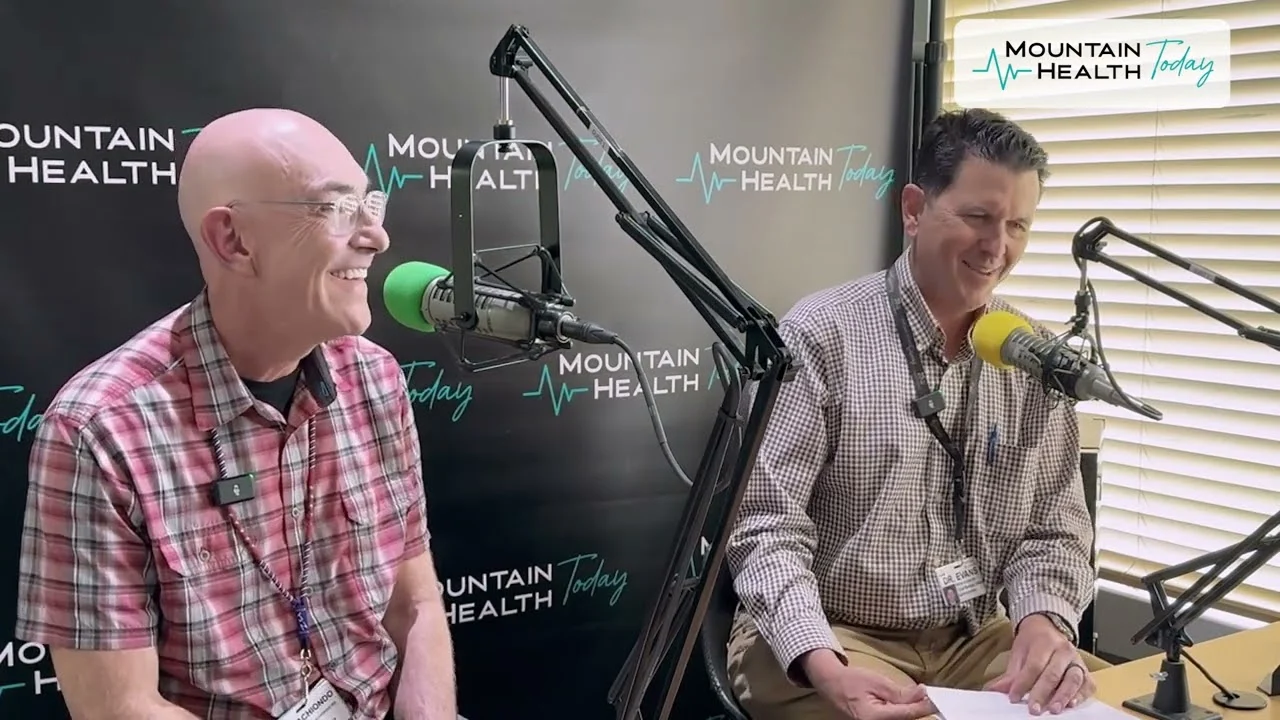
Welcome to Mountain Health Today, the show where we explore the people, the stories, and the innovations shaping health in the mountains. I’m Dr. Brian Evans, Chief Medical Officer of Tahoe Forest Health System.

From everyday wellness to the latest advances in medicine, our goal is very simple: to give you clear and trusted information that helps you and your family live well. Today, we’re going to be talking about the amazing trauma program that we have at our health system.

It’s just an astonishing group of resources that has been put together with some very smart people. We’re going to understand first what the heck is the trauma program, and we’re also going to be learning all about what it’s like to be a general surgeon.

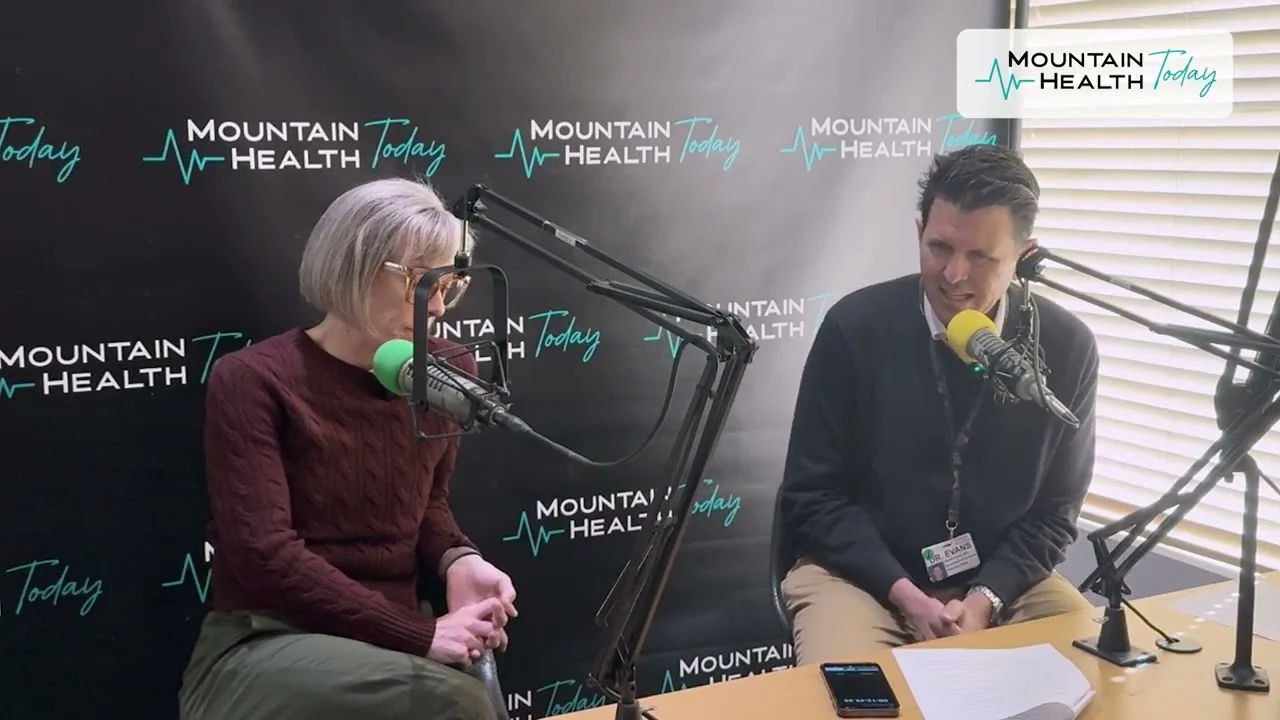
In order to do that, I’ve got to bring in an expert, and I’ve got just the one — somebody who can tell us all about both those things. So, we’re very lucky to be joined by Dr. Ellen Cooper.

Dr. Cooper is a board-certified general surgeon and medical director of the trauma surgery program. She can do it all, from taking out your appendix to fixing you if you crash your ebike into a tree.

Dr. Cooper, welcome to Mountain Health Today. Thank you. I hope you can fix me if I crash my ebike into a tree, because it’s almost happened many times.

I’m going to do my best. And if I can’t, we’ll get you to where you can be fixed.

Okay, sounds good. I do wear my helmet — we’ll probably get to that later — but thank you for being here.

I really appreciate it. Let’s start with just general surgery and what a general surgeon is, because it has changed over the years, and you are a general surgeon first and foremost and also the head of our trauma program.

That’s correct. Yeah. So when I think about general surgery, I think about surgeons who take care of a variety of conditions and diseases.

We operate all over the body. Our focus is mainly on the abdomen and the chest, but we also take care of cancers across the body and really get to fix a lot of problems in patients.

Yeah, it’s a pretty broad area and it kind of covers the gamut from head to toe. It does. And sometimes we kind of define ourselves by what we aren’t — we don’t operate on the brain, we don’t operate on bones, but we operate almost everywhere else.

There are specialties for all that other stuff, and there’s been more of those specialties accumulating over the years. And one of the great things about practicing general surgery in Truckee is that because we’re a small town, we haven’t divided ourselves up into quite so many small pieces, so we really get to do a lot of different things.

Yeah, you really do. What’s the training process like? So if I wanted to become a general surgeon, how would I go about that?

I wouldn’t recommend it at your age, to be frank. After an undergraduate degree of your choosing, you spend four years in medical school and then at least five years in a general surgery residency, and that can increase depending on if you want to do research or an additional fellowship, but it’s a minimum of five years of surgical training after medical school.

Yeah, just full disclosure, I did think about becoming a general surgeon, but standing up for hours on end is not good for my ADHD, so it was not a fit. ER is much better for your ADHD.

Absolutely. All right, let’s talk about the trauma center, because we do now have a trauma center here at Tahoe Forest Health System.

So, what the heck is that, what does it mean, and specifically, maybe we can talk about the different levels — and we’re a level three. Yeah. So the concept of a trauma system has been around for decades.

The idea is that all injured patients can get to the right resources at the right time in the right place. And so we talk about centers, but what we’re really talking about is a whole continuum of care from pre-hospital to post-discharge where injured patients get exactly what they need in a planned, thoughtful way where we’ve thought about all the possibilities in advance.

There are essentially four levels of trauma centers. A level one is typically your big academic center, level twos are large community hospitals that may not do their research and surgical training but have all of the clinical resources, and then a level three, which is what we are, is really designed to provide resources as quickly as possible, especially in areas that may not be in those big cities.

And when you think about our community and all the activities going on in the North Lake Tahoe area, it really almost seems like a no-brainer that we have a trauma center here, getting close to where accidents and injuries may occur. Absolutely. I mean, if you think about the winter with I-80 being open or not open, it could basically be unreachable to get to the level two in Reno or the level one in Sacramento without a little bit of stabilization and care in Truckee itself.

The other thing we think a lot about is that if we can care for our community in a way that’s really meaningful and high quality and not have to send people out to those areas, that’s a real value for this area as well. Yeah.

But when you rewind the clock a little bit and think about what it was like here maybe 50 years ago, there was a hospital, we had an emergency department, we had some operating rooms, but we did not have a trauma center. We didn’t have this coordinated care effort, and so if people got hurt, what would happen to them? I mean, it was a lot more risky, wasn’t it?

I think it was a lot more risky. And I think it was also a lot more sort of, you know, who’s involved in the moment making those decisions — everybody was doing their best, but nobody had necessarily thought in advance, “Well, if this thing happens, this is our plan.”

If I-80 is closed, we have a plan to call our battalion chief at Truckee Fire to figure out how to get a patient out of Truckee if we need to. But we also have a whole set of plans for how to take care of patients in our community.

Yeah. Let’s talk a little bit more about the people you’re talking about, some of the folks on this broader team.

It’s not just the trauma surgeon — you’ve got a lot of folks who we think are the most important, but actually it’s really about a lot of people in this community coming together and using their expertise in their field to inform how we’re making decisions for injured patients. For sure. I mean, surgeons all agree that surgeons are the most important people in the hospital, right?

That is correct. That is correct. Yes. No dispute. Okay.

But you mentioned some of the folks who are outside in the environment, like out in EMS — emergency medical services — picking patients up and bringing them in, sometimes having to go find somebody to deal with a very difficult extraction. So who are those folks?

Well, I think that in the winter time, it starts with our local ski patrol, including our people who have wilderness medicine certifications. We have some ski patrol who have advanced training in first aid and ALS.

And then it moves on to our really valuable fire agencies that do all of our transportation for us. We think about pre-hospital communication between them and our nursing staff and the ER — our ER is a huge component of this.

And then you think about the OR, the ICU, and those places, and then post-discharge after injury. How do we get people back to doing exactly what they love as quickly as possible?

That includes rehab, physical therapy, home health — all of those people play a role in making sure we understand how to take care of these patients as successfully as possible. It’s amazing when you think about just the breadth of skills required in order to take care of a complicated trauma patient.

And all of this stuff has to be ready to deploy at a moment’s notice. That’s really the key — a trauma system has tried to anticipate everything in advance so that when a really sick trauma patient comes in, you don’t think, “Well, what do we do now?” You say, “Oh, we do what we do every time.”

So, you helped build this program, and I know that it was a team lift. But what did that require? Did you have to go out and make a case to the community or to the hospital or to others that we needed this, and what was the case that you made?

I think we were really at a moment as a health system where we were thinking about what’s our next step, what’s the next best thing that we can provide for our community, and everybody knew for I think 10 years or more that we should be a trauma system. And so I think everybody was ready at that moment, but it does take a lot of buy-in.

It takes asking a lot of people to change how they’ve done things historically and say, “Well, maybe we could do it this way — it’ll provide better care for people.” And what I love about working in this community is that if you are a good listener and you really understand where someone’s coming from and what their expertise is and then you work with them, they really want to do what’s best for a patient, so it was a really collaborative environment.

Yeah. What a great opportunity to seize, and I know it wouldn’t have happened without you, so thank you for that on behalf of the community.

I do want to ask this because you could almost imagine, “Oh, we’re just going to build a trauma center, we’re going to get all these positions in place and get the right equipment, and then it’s done.” But that is definitely not the case.

So tell us what goes into sustaining a trauma program and also continuously improving what we’re doing. Yeah. I think you make a really good point in that if we put a bunch of rules in place and said, “Okay, everybody follows these rules,” a couple of things can happen.

One, if the rules don’t make sense to people, we’ll never follow them. And so you have to be continually in dialogue with people about what your rules of the road are and why.

And then you really have to be a good listener when people come to you and say, “You know what, you made this set of rules, but in point of fact, Ellen, you are a member of the indoor team and you have never been on the side of a mountain trying to get someone out of a crevice, so your idea about how we’re going to do this doesn’t work.” And then I have to turn around and say, “Oh, you’re right about that — we need to change these rules.”

And the other thing you need to do is constantly look at how your care is performing — is the care that you’re delivering what you want to deliver? And if you’re varying from that, how do you bring people back and continually keep an eye on things so that you’re continuing to provide the highest level of care that you can?

I know that you’re very diligent about data and getting the right data about how this trauma program is performing. And then not just looking at it and going, “Okay, looks good,” but actually comparing how we’re doing at this trauma center nationally — what’s going on across the country and where do we stack up?

So what kinds of things are you looking at to show us that we’re either doing really well or maybe have an opportunity to improve some aspect of the care that’s delivered? Yeah. I think there’s a lot of data we look at, and one of the things we think a lot about is timely access to care.

If you show up at Tahoe Forest with a broken femur — the big main bone of your leg — how quickly should that be repaired, how quickly are we repairing it, and what are the barriers if we’re not matching up? And I’ll let you in on a little secret, Brian: our orthopedic surgeons destroy the national average on getting patients from the hospital into the operating room. They are amazing and deeply caring, and this is a high priority for them.

But you really have to be looking at all sorts of metrics, and the metrics can be kind of boring sometimes — but that’s where you start to see where quality could slip. Let’s say you’re supposed to get someone to the CT scanner within 30 minutes who’s significantly injured, and you’re watching it go to 45 minutes or an hour — well, you’ve got to pull that back in, because that’s where we diagnose life-threatening problems, and so if we delay that one piece, that could have a real consequence for the patient, even if on the outside it looks like a really boring thing.

Yeah. And we don’t just assume, “Okay, we like our data, we’re good” — you bring in a team of external experts to look at everything, look at our data, look at the care we provide, and then accredit our trauma center.

Absolutely. Who are those folks?

So that’s the American College of Surgeons. And if you’re a surgeon, you think that’s the most important governing body in the entire world.

General surgeons and trauma surgeons were the people who conceived of this idea of trauma systems and trauma care, and so they’ve built basically a very technical, very complicated checklist of what you need to do to provide care that’s appropriate to your community. It’s not really a secret, but it’s really technical and it can be really complicated, and sometimes you have to get creative in your community — if you’re, say, a rural hospital high in the Sierras — on how to meet what they expect of you.

The surgeons do a lot of that work, but the other staff in the trauma program are absolutely critical to making sure that we are dotting our i’s and crossing our t’s and doing what’s necessary to show the American College of Surgeons that we are where they want us to be. It’s almost like a continuous audit of our program — the program isn’t just rolling along doing what it does, it’s being looked at continuously, scrutinized, and improved upon.

Absolutely. And the other thing that you have to do is build a culture where people who are not totally immersed in this all the time feel really comfortable coming to the program and saying, “Hey, I have a question about this,” or, “Hey, I was involved in this patient and I didn’t think it went well — can you guys take a look at this?”

You really have to build a culture where you’re collaborating and people feel really safe and empowered to speak up, make changes, or ask us to review cases. Yeah.

And I know that a big component of all of this is your trauma conference — the case review conference that you host — and then there’s also a Winter Illness and Injury Symposium that we have once a year. So that seems to me to be a great opportunity to get the entire team together. How valuable is that?

It’s so valuable. And one of the things for me on a personal level, as someone who kind of lives and breathes trauma, there is nothing like listening to ski patrol or listening to our EMS partners talk about the challenges of mountain rescue and extrication in this environment.

And it just builds for me personally so much respect for what they deal with and how they solve problems. It really is remarkable when you think about the day-to-day job of ski patrol and EMS.

They are amazing, and what I have to admit — and people have heard me say this — is that when I stepped into this role in 2019, I was pretty sure I knew the answer to every question and how things should go. And really quickly, they very gently and without an ounce of rudeness educated me on what the realities were like for their jobs.

And so I always talk about the indoor team and the outdoor team, and I have such profound respect for our teammates who live outdoors with these patients with very minimal resources. They don’t check the weather and say, “Well, it’s raining, I don’t want to go outside” — they just go out, and I think they’re just amazing.

They really are. So, a lot of people have been watching this new show called The Pit.

How much is The Pit like what you do when there’s a trauma patient coming in and everybody gets the alert that they’ve got to go to the ER and take care of this patient — or maybe more than one? Are they getting it right in that show?

Have you seen the show? Yes, I’ve seen the show. And what I would say is that what happens in a day on The Pit would never happen in any hospital in one day.

But I actually struggled to watch it because it’s so emotionally resonant to me — it makes me a little anxious, it reminds me of situations I’ve been in where life is kind of on the line. And so I think it does a wonderful job of showing the team dynamic and the preparation that it takes to take care of these patients.

So we’re not endorsing the show, but if you were to watch it as a lay person, you’d see things that we do see and do take care of, a lot of the little details — just not all at once. Not all at once. Thank goodness. That would really be a problem.

Let’s talk a little bit about general surgery, because as we talked about, it’s kind of a full-spectrum sort of thing. So, what kinds of procedures do you do and like to do as a general surgeon at Tahoe Forest?

I feel really fortunate because I get to do a lot of different things at Tahoe Forest. As we talked about before, we’re not divided up into tiny little compartments.

I think other than trauma, the thing I love to do most is take care of women with breast cancer. With our cancer center, we are able to keep the majority of that care within our community, and I don’t know many general surgeons who wear two big hats of breast cancer and trauma, but I get to do that.

And then I also get to take care of people in emergency situations — take their appendixes out, fix their hernias, and solve a variety of other problems. You talked about your ADHD earlier, and small-town general surgery does allow you to switch gears a lot.

It really is interesting that your career has stuff that is routine — it can be scheduled, you can line it out like, “Okay, we’ll do that case in three weeks” — and then other stuff where you’ve just got to do it right now because there’s an emergency situation and it’s time to go. Absolutely.

And one of the things I think is challenging is that because of how our practice is built, you can do those same things within about 10 minutes of each other. And so you’re always switching gears and thinking about the long-term versus the short-term and how you’re going to prioritize care for patients.

You know, one of the things about our area is that there is a lot of cancer — it’s growing, and we have an older population that is getting older actually — so our cancer program is busy. And it’s also incredible, so say a little bit about how you interact with the oncology team at Tahoe Forest in just taking care of those patients.

Well, I think the first thing I’ll say is that our cancer center is also accredited by the American College of Surgeons — another situation where the surgeons think they’re the most important person in the room — but they have also built an incredibly high-quality program of care. And I think they do an amazing job at providing care that’s equivalent to the national standard, which is really spectacular.

And then what I think the real secret sauce is that we’re so small that you really get to treat every patient as an individual. Our nurses know everybody, they think about everybody, we’re on the phone or texting with each other all the time about patients to make sure that nobody slips through the cracks and that everybody is getting really personal, really emotionally centered care.

That’s also better than anywhere else. It is remarkable here — we’re so fortunate to have that team.

Okay, Ellen. So now we’re getting into the summer months, and trauma is relatively unpredictable in itself, but there are trends.

Here in our community, we’ve got the winter stuff and then we’ve got the summer stuff, and as it gets warmer, people start doing things like hitting the lake and firing up the ebikes. So what recommendations would you give to folks to avoid becoming a trauma patient of yours?

Well, not that we don’t want them — happy to take care of them — but you really don’t want to meet me on a Saturday afternoon. I think ebikes are really an emerging area of concern for trauma surgeons.

Many of us put our kids on ebikes to transport themselves across Truckee, including myself, but these are essentially motorcycles or mopeds. People need to respect the speed, they need to be thoughtful, they need to follow the law when it comes to right of way and yielding and those kinds of things.

And people need to remember that they go a lot faster than your body can power, so if you’re someone who hasn’t been on a bike in 20 years and you get on an ebike, your balance and your agility may not be the same. And so if you’re going 20 or 30 miles an hour, it can be really, really risky.

Always wear your helmet, and don’t drink and ebike. That is very good advice.

I am personally going to take your advice in an effort to avoid becoming a trauma patient. And I just want to say, this does wrap up our conversation on Mountain Health Today, but I want to thank you, Dr. Cooper, for sharing your insights, and I want to thank you, the audience, for spending part of your day with us.

I’m Dr. Brian Evans, chief medical officer at Tahoe Forest Health System. You can learn more about today’s topic or find resources and services at tfhd.com.

Until next time, take care of yourselves, take care of each other, and stay healthy here in the mountains.

Learn About Our Trauma Center with Dr. Ellen Cooper

Dr. Brian Evans sits down with Dr. Ellen Cooper, board-certified general surgeon and Medical Director of the Trauma Program at Tahoe Forest Health System, to explore how trauma care works in our community.

Welcome to Mountain Health Today, the show where we explore the people, the stories, and the innovations that are shaping healthcare here in the mountains. I’m Dr. Brian Evans, chief medical officer of Tahoe Forest Health System.

From everyday wellness to the latest advances in medicine, our goal is very simple. To give you clear, trusted information that helps you and your family live well.

Today, we’re going to be discussing a crucial topic that touches really every single one of us, and that is mental health. We’re going to discuss some treatment options for anxiety and depression and the many resources that we have in our own community.

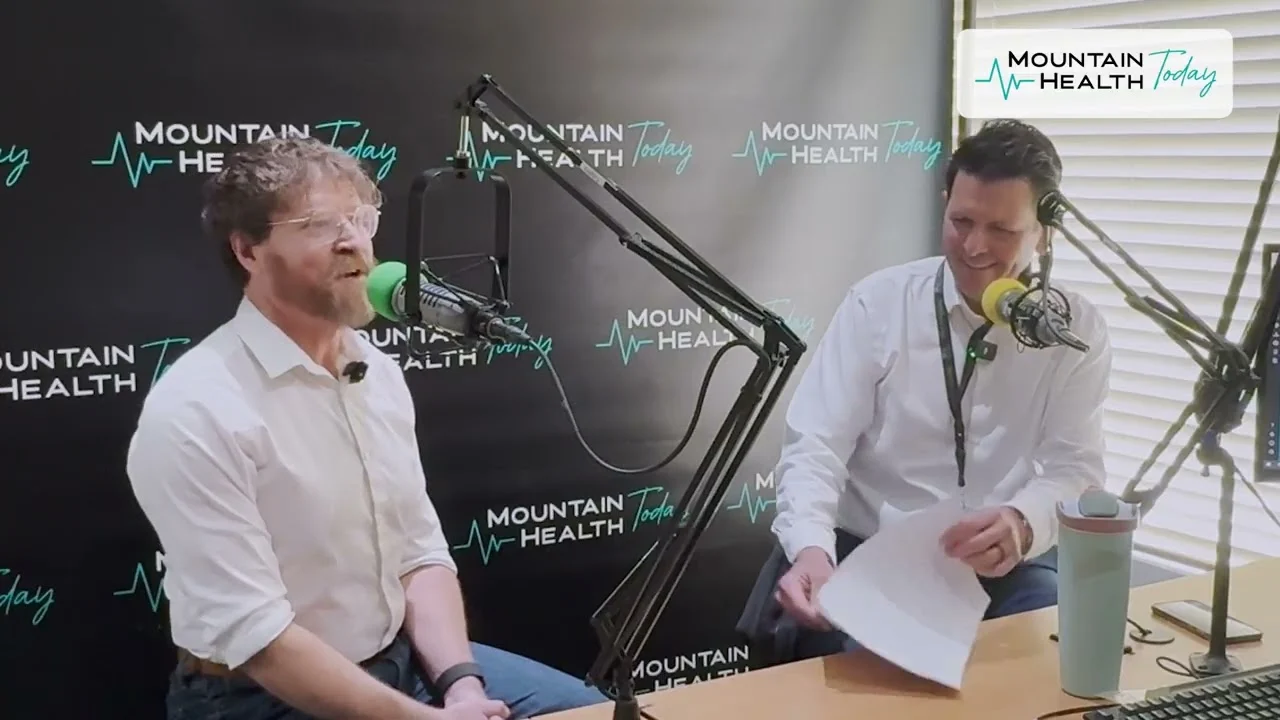
And I brought in an expert today who can help demystify all this for us, Jonathan Lowe, who is a mental health expert here at Tahoe Forest Health System. Jonathan is a licensed psychiatric nurse practitioner.

He practices full-time here with us. He has a ton of experience treating anxiety, depression, PTSD, substance use issues, many other conditions, and he has helped countless people in our community who now live their lives with more joy and more peace.

So, Jonathan, welcome to Mountain Health Today. Thank you so much for having me. I’m excited.

Yeah, really great to have you here. And before we get going, I just want to say thank you for impacting so many people.

I mean, the community is full of people that are better because of your care. So, thank you for that.

Well, I appreciate that. It’s awesome to be a part of the community in this way.

Yeah. And there’s a lot of need out there, there’s a lot of issues out there. I’d like to start with asking you what a psychiatric nurse practitioner does and how does that interface with all of these different other types of providers that are out there?

So, what is your sort of niche for this? Psychiatric nurse practitioners have advanced training specifically in psychiatry.

So we diagnose, we treat, usually with medication. Oftentimes you’ll see us in clinics and hospital systems primarily diagnosing and prescribing medicine.

However, many of us, myself included, are trained in psychotherapy as well. And throughout the life spectrum, you can find psychiatric practitioners, just like psychiatrists, who specialize in niche areas: kids, adults, geriatrics, addictions, eating disorders. It kind of runs the gamut.

What drew you into this area of healthcare initially, because there are so many different things that you could have been drawn into with your background? Why this particular specialty?

So, a few different things. At the time, I think I was working at Planned Parenthood, working as a medical technician, and then I was asked to run a program for at-risk youth.

It was basically an after-school sexual education program. And so that drew me in a bit to just healthcare in general.

At the time, my now wife had just started a midwifery program out on the East Coast where we were living. And so I got more and more interested in her education, looking into mental health.

And my roommate was a pre-med student and he seemed miserable. Is that true for all pre-meds?

Hopefully not all. But yeah, there is some misery there, I would say.

As I got more and more interested in psychiatric care, I was looking at different ways of educating myself or different ways to be involved. Nursing and the holistic approach really spoke to me, and that’s the path I chose.

Well, we’re glad you did because we do know that there’s a lot of need out there. There’s a lot of mental health issues and disorders and people are struggling in a lot of different ways, and we’ve certainly seen some of those numbers increase because of societal forces, like COVID when everybody was on lockdown, and social media and everybody staring at their phones all the time.

So, what have you seen in your career in terms of just trends? Are you feeling like we’re getting our arms around this mental health problem across the country, or is it really just that we’re barely scratching the surface, or somewhere in between?

Maybe somewhere in between. I will say in the past couple of decades, just the awareness — even programs like this that talk about it — raising awareness of mental health issues, destigmatizing mental health issues, allowing more patients to feel comfortable accessing care, it’s been a real win for us.

In terms of the things that I’ve seen coming here to Truckee: I grew up in South Lake Tahoe, that’s where I went to high school, and growing up there, I see a lot of the same issues existing in Truckee today that existed when I was growing up in a very similar community. We see higher rates per capita of things like ADHD in towns like Truckee, higher rates per capita of things like eating disorders and addiction disorders.

So that is a real increase from other practices I’ve been at, like on the East Coast in Connecticut. Not that I didn’t see those issues there — I certainly did — but it’s just that for such a small town, we see higher rates of these things.

The other thing is the stressors, the unique stressors that I think we have in a town like Truckee: cost of living stress, the loneliness that some people experience, kind of feeling secluded, not socializing as much in a rural area. And there’s a very interesting kind of existential threat that many of my patients face as they age or if they get injured, because so much of their life is built around the Truckee lifestyle and being active, and when that is taken away, either naturally or because of an accident, it causes a lot of distress.

Yeah, those are all interesting and concerning influences on mental health. And you think about Truckee and North Lake Tahoe generally being just this beautiful area, and a lot of people are drawn to it for sort of the restorative properties of Lake Tahoe and being here and being healthier and being active, but there are some real issues.

And so when those issues are starting to happen, I like that you talk about stigma, because it didn’t used to be okay to talk about mental health. It used to be something to keep to yourself, keep within the family, don’t let anyone know that you’re struggling, and just kind of deal with it.

And now we’ve seen a lot of high-profile people speak about it, and I think most people now know that it’s absolutely okay and warranted and good to seek help — for yourself, for family members, for friends — and ask people how they’re doing. And so you and your team are absolutely doing that on a regular basis.

Yeah, there’s definitely some interesting pressures — and not just the season passes that have gone up in price for the ski resorts, which is an anxiety inducer for me personally — but lots of other things too. Trying to stay independent and mobile in a mountainous community like this is not always easy.

No, it’s not. Major stressors are coming at us from all angles, not just financially.

Many of my patients are having political stressors and just access issues, right? Just making sure that they have access to care, and that can be hard, too.

Yeah. People are stressed about politics, they’re stressed about the environment, they’re stressed about AI, and it’s hard to say, “Oh, yeah, don’t worry about it.” I mean, these are very serious things.

So, what should people do if someone’s out there listening right now and they are thinking, gosh, I’ve been dealing with anxiety or I’ve been dealing with depression or I’m just not finding joy in life? What would you recommend those people do at this point to seek help?

Well, first off, I think it’s important to understand that the brain is just an organ in our body. And just like every organ in our body, it’s capable of illness and dysfunction.

Recognizing that the brain is not unique, it’s not somehow controllable through thought alone — we can’t pull ourselves up by our bootstraps and just get over these things. Just like we would attend to any other area of our health, if our stomach was in pain, if our knee was in pain, we would hopefully seek the advice and guidance of a medical professional, and no difference with the brain.

I think where it gets tricky for my patients is that the brain is the organ that also helps us to understand who we are, what reality is. So when we’re suffering symptoms of the brain, we often inadvertently kind of absorb them as who we are.

So I might not come to your office, Dr. Evans, and say, “I have left knee pain, I have chronic stomach pain.” But what do we say to our providers? We say, “I am anxious. I am depressed.”

And for me, that language is incorrect. This is just an organ that is acting in a way that it might not normally act.

Just like every other organ, it’s stress on that organ that is most likely to produce symptoms of illness. And so when we’re under this stress and we start to recognize that these symptoms are happening, understand this is not who you are — this is a symptom and it can be addressed effectively.

I love that. It’s sort of like getting a little separation away from it so that you can be more objective and say, “Hey, there’s an issue going on that I’d like some help with,” just like you might do if you sprained your thumb.

Or, you know, I went to my doc recently and said, “Hey, I got this weird rash,” and I had no angst about mentioning it to my doc. And it should be the same way with a mental health symptom.

Yes. Correct.

You know, one of the areas of your practice which is really interesting to me is esketamine. And I know it’s not your entire practice — you do many things and you work with all kinds of members of the community — but esketamine is getting some really impressive results here in Truckee in your practice, but also in other places as well.

So, for the folks listening, can you tell us what is esketamine? What is that drug and how do you give it and what’s it for?

So a simple explanation would be that esketamine is a version of a drug that many people are familiar with, and that’s ketamine. It’s the first FDA approved — what might be considered a psychedelic treatment — first FDA approved for mental health purposes.

And this is important because it allows my patients to access these treatments through insurance, including our state partnership or Medicaid, at a very low cost or no cost for some patients. Esketamine is approved for two different diagnoses currently in psychiatry, and I expect to see more in the coming years.

Right now, it’s for treatment-resistant depression and major depression with acute suicidal ideation. And treatment-resistant depression is important because, while there is no one definition for it, it is a trial and a failure of at least two traditional anti-depressants — pills that a patient might take every day — and they’re just not seeing the results that they would hope, which is a huge portion of patients, at least over a third.

Yeah. I mean, these antidepressant medicines have been around for a while and they’ve been used a lot and they don’t always work that well.

No. And when we look back at a very famous study, the STAR*D trials, and we analyze that information, what we see is that our hope is to go into remission — and anxiety, depression, many of these are chronic illnesses, meaning there is no cure, there are just treatments for them.

When we look at data from the STAR*D, what we see is that the first trial of a traditional anti-depressant might produce somewhere around 25% success rates in terms of remission. And then a second trial about the same, a third trial you start to see a little less, and then a fourth trial, you’re down into the teens in terms of percentage rates of success and remission.

And that’s where treatments like esketamine come in really handy, because what we see is over a 70% rate of success. Meaning that patients will respond to this medicine, seeing a reduction of 50% or more of their symptoms quite quickly.

And these are not pills they’re taking every day — this is a completely different treatment modality. So how are they getting the medication and what’s going on there?

So esketamine is administered intranasally. It’s kind of like an encapsulated, very particular dose of esketamine that patients inhale through their nose.

And they will have — again, not a traditional psychedelic experience — it’s more of a psycholytic, meaning that the effect or the change in the state of consciousness still allows one a lot of agency and influence over their thoughts and control of their movement. So they’re very aware of their surroundings.

So this is not like somebody going on sort of what they would consider a typical psychedelic trip. No, nothing like that.

But it does change the way the brain is functioning in that moment and allows for some longer-lasting benefits to take place. The real benefit of the treatment is not the medication being in the system itself, although that can be a very profound and healing experience for so many of my patients.

It’s this burst of a neurotransmitter called glutamate. And if we can think about glutamate as the number one restorative, reparative, excitatory neurotransmitter in our brain — if we force this neurotransmitter to burst in our brain, and we do so with esketamine because it’s what’s called an NMDA receptor site antagonist — a fancy way of saying it blocks NMDA receptor sites, which is where glutamate likes to hang out and sit.

So if we block those receptor sites, glutamate will burst. And what we see is the strengthening of dendrites and axons, the quickening of new neuronal connections, and the repair and restoration of damaged neuronal tissue that we see often in mental health issues like depression.

And so the effect of these treatments that you’ve been providing, and many others have been providing, for depressed patients has been pretty dramatic. I mean, you talked about some of the numbers, but you’re seeing better results for a much higher percentage of patients than you might see with other types of treatments.

And it’s sort of a one-and-done kind of thing, right? We’re not seeing one-and-done yet with any of these new novel treatments that are soon to be available for prescription.

Again, depression is a chronic illness, and so if someone is to stop treatment — any form of antidepressant — if they have treatment-resistant depression or recurrent depression, there can be an 80% chance that they will go out of remission of symptoms. The nice thing about esketamine is that it is dosed very infrequently for many patients, so patients who I treat might come in once a quarter, once a month, once every two weeks, once a week.

And even though engaging with treatment takes up a portion of their time, they get all of these other hours back in their day without having to take something daily. Glutamate works almost like Miracle-Gro on the brain, and that’s the real magic of these types of medicines.

So, while we’re on the topic, there’s a lot in the news about psychedelic treatments, and in fact, the most recent thing was that there was an executive order signed at the White House essentially fast-tracking some of these other types of psychedelics that aren’t currently FDA approved for psychiatric illnesses like PTSD, anxiety, and depression. So, what was your reaction to that, and are people interested in psychedelics as potential treatments for these kinds of illnesses?

Well, there’s a lot of education that I think needs to be provided to the public about psychedelics and where they might play a role in psychiatry. Really, there’s not a lot of research and development dollars being put into the next daily antidepressant, Prozac-like medication.

Most of the focus is on electricity and psychedelics in order to help the brain and help with these conditions in really profound ways. With the new executive orders, what we’re seeing is that yes, there may be a fast track, but it is not going to do away with the need for and the requirement of really good and well-designed studies in order to approve these medicines.

One of the difficulties with psychedelic medicines in particular is that studies are really hard to do. To do a placebo trial, I think most patients would know whether or not they took the placebo or if they took a psychedelic.

And I think it’s really important to note that this is not like everybody can start using these psychedelic medications to treat everything under the sun — it still needs the science to be done. It was more of an administrative thing to improve the efficiency of the administrative part, just to ease the process a little.

Right now, off the top of my head, there are at least seven psychedelics — varying from psilocybin to forms of LSD or DMT or MDMA — that are in what’s called a phase three trial, so they’re close to FDA approval. And I think they’re just looking to maybe not remove, but make some of the barriers that prevent these medicines from going forward a little bit easier.

So, my sense of this is that there are a lot of people out there who are hoping that these types of psychedelics will be sort of magic bullets for treating all kinds of different things very easily. And there are a lot of people seeking those treatments outside of traditional medicine, some of it not legal — they’re leaving the country to have things done.

There’s a lot of people talking about it on social media, and so it makes me nervous. I’m curious if you feel the same way, because when people are just going everywhere for information and treatments outside of traditional healthcare and a lot of it’s dubious, what could happen?

So there might be cardiovascular risks, and that’s being closely monitored with treatments like ibogaine, and it’s good that we’re being aware of these risks. There are risks with certain mental health conditions, like certain types or subtypes of bipolar illness or schizophrenia, with these medications that will be a contraindication to use them and can be dangerous.

And even with conditions for medications that are very safe, like ketamine and esketamine, there are some contraindications to be aware of. So, it’s important to talk with a healthcare provider that’s knowledgeable about these things and not just go to social media or one or two news stories.

I can see how the public would be excited, as I would be if there were a potential treatment that could radically improve my life very quickly. But yes, I think it’s just making sure that you’re talking with somebody who’s knowledgeable — providers that have advanced training, myself included, with certifications in psychedelic treatments to help guide safe practice.

Yeah. And I really appreciate the perspective, because I think what the community wants from our health system and wants from you and from me and from all of us, is to make sure that we are not close-minded about these things, that we are curious about these things, but we’re also scientists about these things.

And so we’re going to make sure that we use the latest information in a way that’s safe for our patients. So, we’re about wrapped for time here, but I just want to ask what other message would you want to leave our listeners with?

If someone’s struggling, or if they need to do something about their own mental health or someone else in their family, what message would you leave them with today? Well, I want everybody to imagine that there is an invisible boardroom table in your head.

And the way the brain is supposed to work is that we’re supposed to sit at the head of this table, kind of run this company, so to speak, with a gavel in our hand to make executive decisions. And around this table, we all have a lot of parts that we can never get rid of — we can’t fire these board members — we all have our trauma, anxiety, depression, ADHD, any varying things that might affect us.

The real problem is when we’re not holding the gavel, when we’re not the executive of our own lives. And so, to recognize and think about when to seek help — when to seek help is when you feel like you’re not holding that gavel, when your depression is making the decision for you, when your addiction is making the decision for you, when those boardroom members are holding the gavel and you’re just along for the ride.

What psychiatry can do at best is just help you feel like you’re holding that gavel again and can make better decisions for yourself, healthier decisions for yourself, and manage that invisible boardroom that we all have and will always have. I really love that image and that description, and I really appreciate your time today.

That does wrap up our conversation today on Mountain Health Today. I want to thank our guest Jonathan Lowe — really appreciate your insight and all you do for this community.

On behalf of the community, thank you for what you do, and thank all of you listeners for spending part of your day with us. I’m Dr. Brian Evans, chief medical officer at Tahoe Forest Health System, and you can learn more about today’s topic and find resources at https://www.tfhd.com/.

Until next time, take care of yourselves, take care of each other, and stay healthy here in the mountains. Thank you.

Understanding Mental Health with Jonathan Lowe

Join Dr. Brian Evans and Jonathan Lowe, Psychiatric Mental Health Nurse Practitioner at Tahoe Forest Health System, for an open and compassionate conversation about mental health.

Welcome to Mountain Health Today, the show where we explore the people, stories, and innovations shaping health in the Sierra. I’m Dr. Brian Evans, Chief Medical Officer of Tahoe Forest Health System.”

From everyday wellness to the latest advances in medicine, our goal is very simple. We want to give you clear, trusted information that helps you and your family live well.

Today, we’re going to be talking about one of the most exciting and dynamic areas of medicine, which is radiology. A lot going on in radiology.

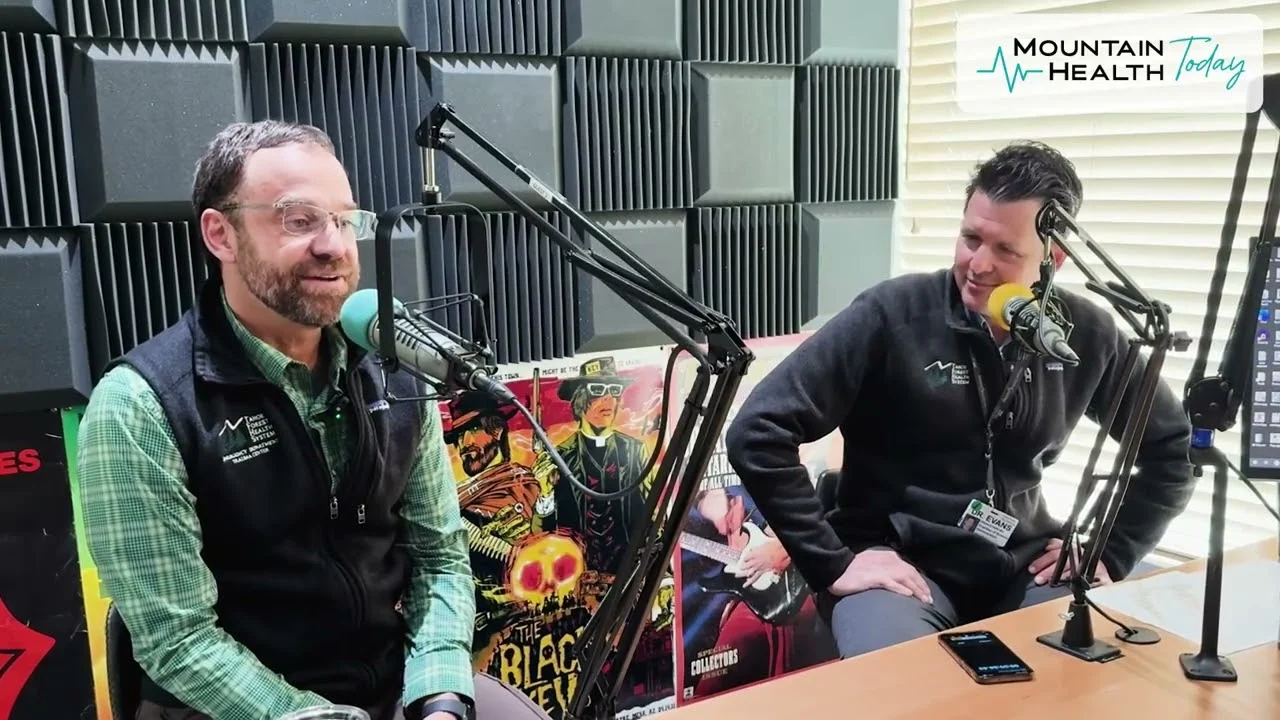
And so I brought in a heavy hitter to answer all our questions for us, Dr. Jeff Fountain. He is the Medical Director of Radiology for our entire health system.

Dr. Fountain is a board-certified radiologist, practices full-time at Tahoe Forest Hospital. He has a ton of experience with just about every imaging type there is and also procedures that are done under imaging guidance.

He’s also an expert in how to create the best possible imaging department in a rural community like ours, which is not an easy task. Dr. Fountain, welcome to Mountain Health Today.

Thanks, Brian. It’s a pleasure.

It’s great to have you. So, a lot is going on in radiology. It’s a highly technical field and I think it’s changed at least as much or more than any other specialty that’s out there.

Tell the audience what does a radiologist do? They might not have a good understanding of what that job even is anymore.

Sure. Happy to give a brief description.

So, first and foremost, we’re physicians. We’re physicians that interpret imaging.

So your X-rays, your ultrasounds, your MRIs, your CTs, we’re in the background looking at every one of those pixels, making sure that we can make the best diagnosis possible for those patients. And so patients are coming in needing all kinds of different imaging studies.

They might need just a basic X-ray of their wrist. They might need a very complicated kind of PET scan or a CT scan.

And you’ve got all these different modalities, but the radiologists are kind of in the background making sure that the test is done properly, making sure that the images are good enough to actually get a diagnosis or interpret them. So, they’re part of the care team.

Who else is on the care team? Well, it’s actually a complex team made up of multiple members.

It starts at the top; obviously we’ve got our very talented radiologists and our colleagues and administrators on the side. We’ve got a great DIAD, Sadi Voidlander and myself helping to run the team.

We’ve got the managers on the floor with radiology, MR, ultrasound techs, mammo techs, PTC techs. We have nurses. It’s a very complicated team of well over 100 members.

Yeah. And becoming a radiologist, I’m not sure people are aware how long it takes or what’s involved. It’s not just a few weekend courses at the local junior college. What did you have to do to actually become a board-certified radiologist?

Yeah, it’s a long haul. I’ve got to be honest, it was fun.

We go to medical school just like any other physician that you would see at the hospital. We spent our four years in medical school.

After that we have our internship and then our residency. A residency is five years, and then the current trend is for radiologists to go out and do a dedicated fellowship in one of the many different modalities of radiology.

So I myself did one in body MRI and MSK, and that fellowship has served me really well in our community. MSK being musculoskeletal, right? So all the muscles, the bones, the tendons, all that good stuff.

Exactly. So, a lot of anatomy is involved there.

MRI has become really a big thing for just about every hospital, and we’ve got a pretty darn good one. We really have a nice MRI with a three Tesla magnet, is my understanding.

So, what’s good about that machine and what kinds of things can you do with it that you didn’t used to be able to do in the old days? It’s pretty miraculous. We’re pretty lucky to have a machine of its caliber.

Long story short, three Tesla versus 1.5, it’s just the strength of the magnet. It’s just the power that it has to perform high quality imaging.

At one point in time when we first purchased the MR, I was very proud to say that the company that we went with, Siemens, came in and said, “Well, this is probably the most powerful magnet, the highest quality magnet west of the Mississippi.”

That’s taken into account all of our referral bases, our folks in San Francisco, Los Angeles, all the major metropolitan areas.

We were lucky enough to have a magnet that had that kind of quality, and we were very lucky to have it. Thanks to our administrative team for helping us with that.

But in the grand scheme of things, what it does is it just helps us to get information and to get it faster and better. And I know that we’ve also been really benefited by a community that supports these types of imaging devices and equipment at a very high level, which has really enabled us to have some pretty top tier technology.

Now, Dr. Fountain, you actually are responsible for the imaging all over the entire system, not just in the hospital in Truckee, but also in Incline. And if you’re getting an X-ray in one of our urgent cares, all of these imaging modalities and techs and everything, you have to make sure they are up to your standards. Is that right?

Absolutely. And does that pressure get to you?

How do you deal with the pressure of that? Well, you’ve already mentioned the team. We’ve got a great team.

The nice thing is that we keep that patient-centered focus at the heart of what we do. It’s not hard to convince our team that they’re on board.

What I have to do is just present to them what we feel is the latest and the greatest and the standard of care, and they typically are more than eager to jump on board and get that accomplished. Absolutely.

So, I know that whenever I need something in healthcare, even though I know a lot about healthcare because I’m in the field, I get kind of stressed out about it. Even just going to see the primary care doctor, but when somebody’s getting an advanced test or a CT scan or something, there’s some stress that goes into that.

How do you guys in the radiology team help patients deal with that anxiety and make them feel comfortable and feel that they’re in good hands? We try to keep it simple, and what we try to do is put ourselves in the patient’s shoes.

Let’s be honest, when you come in there is some anxiety associated with that, but if we approach it like, well, what would we do to try to feel more comfortable, and then try to implement that with our patients.

We like to greet them at the door: “Hey, how are you? Come on back. Let’s talk about your test today. Why are you here? How’s your day? How was your drive?” We immediately try to make that connection.

Our team does a great job of just making sure that we treat each individual as if they were our own family member, a friend, our neighbor. And in doing that, what it really does is it allows us to connect, allows us to help them find a way to feel comfortable, and then get them back in the department and help them along the course of their imaging.

I could tell you it makes a big difference, and it gives a real family sort of environment for patients. One of the things that is a stressor, I think, is patients will get their scan or their X-ray or whatever it is, and then they don’t know what the result is until a radiologist has looked at that study and then they get the result.

I know that your team is really efficient and really tries to get those results back quickly. Why is that important to you guys as a team of radiologists?

Well, like you said, the anxiety associated with the result. Once the imaging is accomplished and completed, we try to get that information back to both the provider and the patient in a timely fashion.

I mean, if it was me, I’d want that information as soon as possible so that I could then obviously build that plan forward of what I need to do to take care of my body or myself. And so our team has really come together and we’ve made it a goal of ours to try to have a 24-hour turnaround time, get everything back to our patients as quickly as we can, and get them on the road to health and wellness.

And I think we do a pretty good job of that. Yeah, definitely a very good job. Very fast results and very accurate too. So we appreciate that.

You know, the technology, we talked about how the technology has changed a lot. I remember when I was in training, which was roughly 150 years ago when I was a resident, we were starting in the emergency department to use ultrasound there.

And the earlier ultrasounds, it looked like you were staring into a snowstorm, basically, and you’re trying to see a gallbladder, for example.

Things have changed not just in ultrasound but in all these modalities. I’m having a hard time just keeping up to date with all that stuff.

So, what have been the biggest changes you’ve seen technologically over the last 10 years? Wow. We could talk about this one for hours, but just to summarize a few things.

I’m not going to tell you when I started, but long story short, when I started, we were still hanging film. It was a picture, right? A physical picture that you would put up on a light box, something that would shine light through the X-ray so you could see through it.

Now we are completely digital. I can pull up images on my phone.

It’s unbelievable how quickly things have advanced, and a lot of that I think is just the age that we get the opportunity of living in. You look at the Apples and the Googles and the Microsofts, and these guys are just advancing at such a rapid rate, and then slowly that trickles into the world of medicine.

Everything is on a beautiful 12 megapixel monitor. We can see just the smallest detail in imaging. I can scroll through it, stop, close it, open up another case. It’s just so free flowing.

And then obviously we’re looking at the next 5 to 10 years, and that is the introduction of artificial intelligence. It’s really exciting.

It’s a tool. It’s not something that’s going to take over the world, but it’s definitely something that’s going to be available to us as a tool to continue to help us work at an extremely efficient pace and doing it with the highest amount of accuracy as we can.

I think people now are getting much more familiar with artificial intelligence and they’re using things like Claude or they’re using ChatGPT and those types of things. In the world of radiology though, it’s a little different, right?

You guys are using artificial intelligence platforms that are actually looking visually at the scans that the radiologist is also looking at, and then they’re providing some assistance in improving that accuracy rate or that speed. What areas are actually being deployed now at Tahoe Forest?

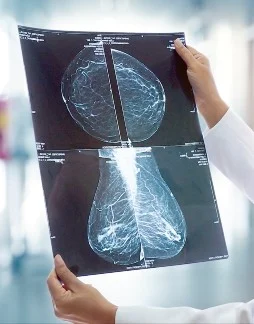
Oh, it’s an amazing time. So at Tahoe Forest, we started using AI for our women’s imaging department specifically with mammography.

It’s most beneficial in the world of screening mammography. We’re lucky to partner with Hologic, which is a company in Northern California that is a premier vendor for women’s imaging and breast imaging.

They came to us a while back, and one of our radiologists, Dr. Jim Schlan, who is associated with Hologic, had an inside scoop and said, “Hey, listen. This is a perfect opportunity for us to work alongside a vendor to identify where artificial intelligence can help us in our day-to-day jobs.”

So we’re currently using AI, and have been for about four years, as a tool, as an assistant to kind of help us. In fact, we had the privilege of being one of the first sites in California to have this AI platform.

And because of that, we’ve been actually teaching it. Yeah, and I don’t know that most members of the community have been aware of how much of a front-runner Tahoe Forest has been in this technology.

Simply put, the technology is there to save lives — actually make the right diagnosis, make it as early as possible, make sure that people aren’t having unnecessary testing or procedures, just better care overall. So that’s got to be gratifying.

Absolutely. And working with it the last four years, we’ve seen its strengths, we’ve seen its weaknesses, and we’ve hopefully helped those weaknesses become strengths.

It’s been a really interesting trajectory and I’m excited to see where else it goes. I think there’s going to be a lot of opportunity in that realm.

You know, one of the things that didn’t used to be such a big concern back in my early days of training was radiation exposure. And people are aware now about radiation exposure, and we try to minimize it.

I know that your team does a lot to really try to minimize radiation exposure as much as possible. There are modalities that don’t really use radiation, and limiting doses is a priority.

So, how do you approach that from a patient safety point of view and making sure that patients are informed about radiation and what they should know? Absolutely. It’s definitely something that we’re constantly thinking about.

For the modalities like X-ray and CT where radiation is a primary imaging source, we try to maintain the lowest dose possible, and we do that by utilizing technology. Our current CT scanner has low dose technology that allows us to use the lowest possible dose to get the best possible image.

We lean on that. We utilize that to make sure that patients first and foremost get a high quality image but don’t get that full dose of radiation that we used to in the past.

Well, I think it’s really appreciated, and I know that when people have questions — and they should have questions — they should ask questions, and we’re all very happy to answer them.

You know, one thing about radiology that some people have a view of is that radiologists never really get out of the dark room where they’re reading the studies, but that is definitely not the case at Tahoe Forest.

Your docs are running around all over the place, and a lot of times they are doing procedures on patients, and that’s a huge part of radiology now. Some procedures used to never be done under imaging guidance.

So what does “under imaging guidance” mean, and what is an interventional radiologist doing that’s different than traditional radiology? So just a little bit of background about radiology.

First and foremost, there are two major subspecialties: there’s a diagnostic aspect of what we do and then there’s an interventional aspect of what we do. When we talk about the interventionalists in radiology, we have this awesome map: CT, MR, ultrasound, mammography.

What it does is it gives us a look inside the body, and when we see that pathology call it a mass or a lesion, we can put a needle into that particular location and sample that tissue. We can then remove that needle with little to no harm to the body, take that cellular material, identify what it is, and if treatment is necessary, then assist our colleagues in initiating that treatment.

So the patient, from their point of view, has less pain, less recovery. It’s just a much smoother thing. They’re not having to deal with a long procedure, maybe more of an open procedure where they have to have their body cut into in a more traditional way. Major, major difference.

And I know that going back to my training, we used to do central lines, which are basically large IVs, without any sort of imaging support, and now we use ultrasound to do that. For many procedures we’re using other modalities as well. So it’s really just a huge gain for patient care and their comfort.

I know that your docs do really well making sure you’re working with the entire team to look at the overall care and making sure that it’s a safe environment, we’ve got the resources we need, and we’re explaining everything really carefully. So, what are some of the bigger procedures you guys do that really make a lot of difference for patients in the radiology department?

Well, there’s a large gamut. We place tubes for drainage — that’s one area — assisting our urology colleagues: nephrostomy tubes, placing a tube inside an obstructed kidney to help relieve that pressure backing up from the ureter.

Abscesses — any sort of infection inside the body that needs to be drained that may not be the best candidate for surgery — we can place a catheter in there to drain that out and help the patient avoid surgery. We’ve already talked about biopsies, and we also assist with central line and PICC line placements: once again, an image-guided procedure to place a larger, more permanent IV into a larger vein, typically in the upper extremity.

It’s a large gamut. We’re looking into providing distal extremity venous procedures and possibly even down the road assisting with ablations of certain organs.

Just a lot of stuff out there that’s super exciting, and as long as we have the capability and the talent here, we’re happy to explore it. Yeah. And we certainly have a lot of talent, and it all just results in less invasive, less discomfort, safer care, shorter recovery, better treatments, and we’re just right at the forefront of it.

You know, Dr. Fountain, you’ve got all these different other doctor groups that are customers of yours: the ER doctors, the cancer doctors, the primary care doctors, all these different folks that are out there that really depend on the radiology team and making sure that the images they order are done and that they are getting the procedures they need. How do you interface with these groups, and what’s it like being in the middle of that large team of healthcare providers at Tahoe Forest?

Brian, it’s actually probably one of our strengths. Our medical staff at Tahoe Forest is one of the best I’ve ever worked with.

And so because of that we have such a collegial interaction, we work together so dynamically to try to first and foremost take care of each individual patient, but yet still look at the broad scope of medicine and recognize where we need to expand service. When we do that we obviously have to look at: is there a patient need? How does radiology support that need? Where can we initiate that technology to make sure we support those patients?

We’re super lucky at Tahoe Forest and I couldn’t be happier to work with this current medical staff. Ditto. Ditto for me.

So, what’s the last big thing you’d want the community to know about radiology and radiologists, for those who hadn’t thought much about radiology until this conversation today? Well, I think the biggest thing is just the idea that we’re here.

We’ve got a very talented department that’s dedicated to patient care, and we’re helping each and every patient, whether they see us or not, in the background to try to direct their care and make sure it’s the best possible care that we could provide. Well said.

Well, that wraps up our conversation today on Mountain Health Today. I just really want to thank our guest, Dr. Jeff Fountain, for sharing your insight.

I learned a lot, and I hope everybody did as well. I want to thank you, the listener, for spending part of your day with us.

I’m Dr. Brian Evans, chief medical officer at Tahoe Forest Health System. You can learn more about today’s topic or find resources and services at https://www.tfhd.com/.

Until next time, take care of yourselves, take care of each other, and stay healthy here in the mountains.

Advanced Radiology with Dr. Jeff Fountain

Join Dr. Brian Evans, Chief Medical Officer of Tahoe Forest Health System, as he sits down with Dr. Jeffrey Fountain, Medical Director of Radiology, to explore the evolving world of medical imaging.

Past Mountain Health Today Episodes
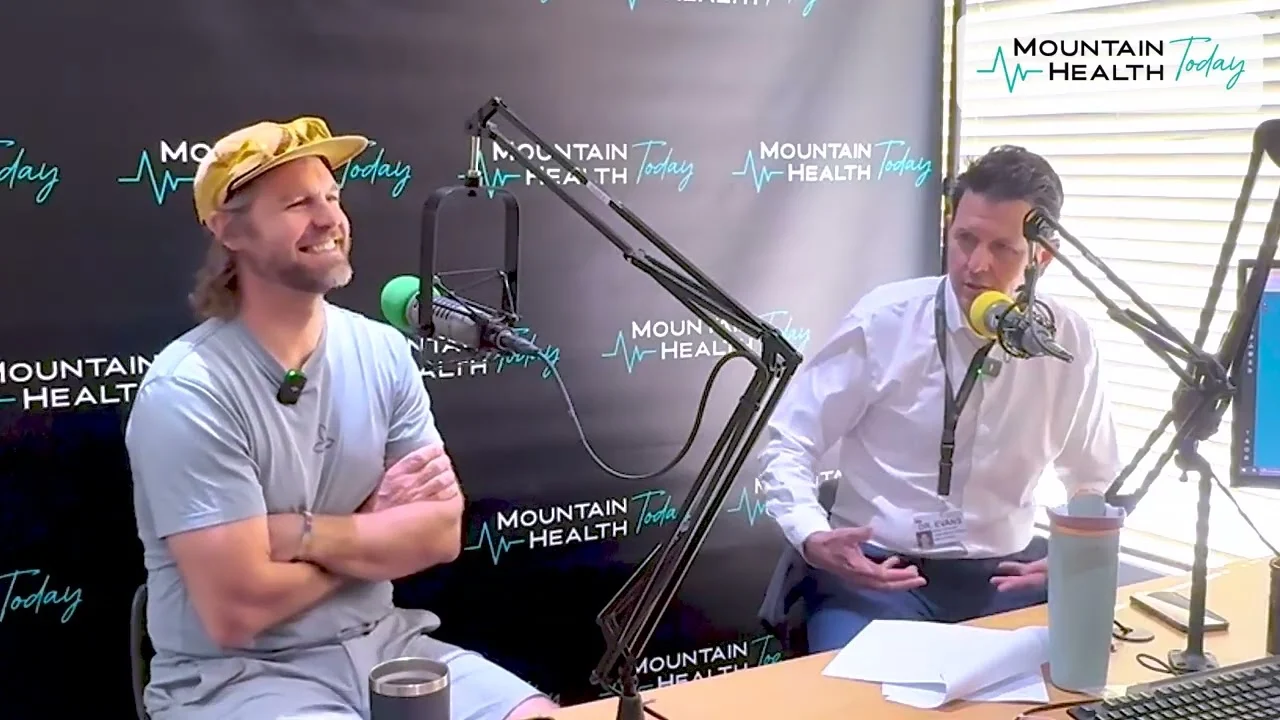
Inside the Emergency Department with Dr. John Swanson

Dr. Brian Evans is joined by Dr. John Swanson, Medical Director of the Emergency Department in Truckee. They explore what it takes to deliver high-quality emergency care in a mountain community.

Welcome to Mountain Health Today, the show where we explore the people, stories, and innovations shaping health in the Sierras. I’m Dr. Brian Evans, Chief Medical Officer, of Tahoe Forest Health System.

From everyday wellness to the latest advances in medicine, our goal is very simple, to give you clear, trusted information that helps you and your family live well. Today, we’re going to be discussing my favorite area of the hospital.

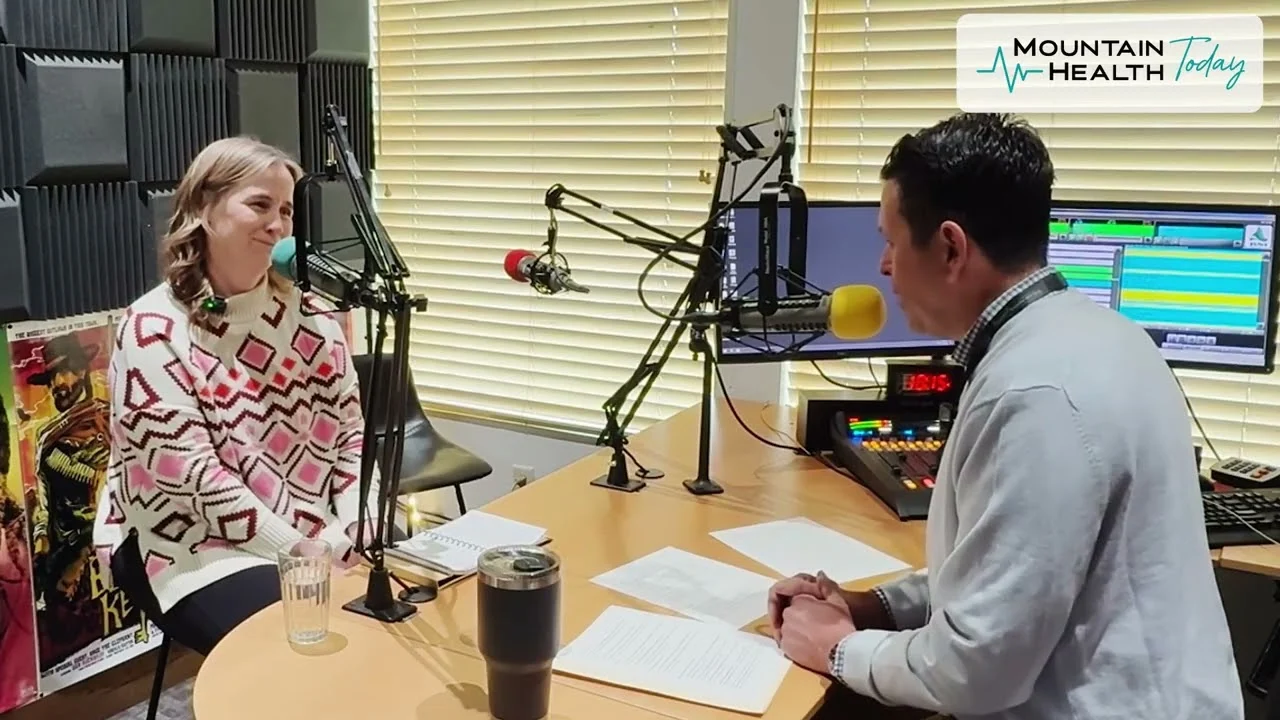
I call it the center of the medical universe, the emergency department. And who better to join us than Dr. John Swanson, the Medical Director of the ED here in Truckee.

Dr. Swanson is a board-certified emergency physician practicing full-time at Tahoe Forest Hospital. He has deep experience managing all kinds of emergency patient care, particularly in the mountain environment in which we live.

Dr. Swanson, welcome to Mountain Health Today. Thanks for having me.

You know, to start us off, can you just tell our listeners about your background? How does one end up becoming an emergency physician?

What’s the training involved? We don’t just take people right off the street.

Correct. Correct.

Yeah. So, you know, as a medical student, you’re exposed to different fields within medicine such as OBGYN, surgery, orthopedics, pediatrics, and many different specialties.

And I found during my training that I really enjoyed most of the library of medicine. And you know, there’s a couple fields that really pick all that up.

And one of them is emergency medicine. And so, as I went through my training, I just liked ortho, I like neurology, I liked OBGYN.

In the end, since I liked it all, I just decided to do emergency medicine. Yeah.

I give you a little bit of everything, right? And full disclosure to the audience, I’m also an ER doc, so by background.

And so I feel very similarly you get that breadth of science and medicine and healthcare and you don’t have to really pick one area. But you’ve also got to be ready to go, right?

You got to be ready for anything that comes through the door, right? And you know we evaluate a lot of medical complaints such as chest pain and you know stroke like symptoms.

But we also get to work with our hands doing laceration repairs, joint reductions and fracture reductions. And so I also found that really intriguing.

And when you say reductions, we’re talking about putting a bone back in the place it belongs. Yep.

Yeah. Aligning up both bones you know, making one side look like the other.

That’s always a good thing. Generally a good symmetry is good.

So, you’re also the Medical Director of the group and the physicians that work in the emergency department here in Truckee. So that’s kind of a different sort of a thing, right?

I mean, it’s not just seeing patients and taking care of patients, but you’re also leading the team and making sure that everybody is functioning at a very high level. Correct.

How long have you been doing that? Correct.

Yeah. So, you know, I started I moved to Truckee in 2000 and worked really just sort of in the pit or in the ER as we would call it for 20 odd years.

And the last couple years I’ve switched over to more administrative work. And one of the things I really enjoy about it is helping to work with the docs that we have sort of putting them in you know other administrative roles where you know giving them an opportunity to succeed doing other aspects of providing care in the emergency department.

And so I’m involved with clinical policy formation. You know, reviewing patient charts and reviewing patient concerns. And trying in general to make sure that the care provided at Tahoe Forest Hospital is topnotch.

Yeah, things change all the time, right? I mean, how has the emergency department and the science around it and what we know about how to take good care of patients changed in your career?

Sure. Sure.

I mean, you know, I would say one of the biggest changes in my career is we went from paper charts to electronic healthcare records. It was, you know, a dramatic change.

And, you know, there we were, and 2000 flipping through, you know, paper charts that were the size of an old dictionary. And now everything is integrated into the computer.

You know, along with computer physician order entry. You know, most of what we do is on the computer now.

And that’s helped make things much quicker and much more efficient. And also brought in you know more patient safety making sure you know we’re doing the correct orders on the correct patients.

And so I think that’s probably been one of the biggest changes in my lifetime. I get a little post-traumatic stress just thinking about switching from paper because I was trained on paper too.

And I remember it well when we went to the computers. And some docs were really not happy and actually quit the profession at that time because it was just too much to learn how to do these systems.

But I mean back in those days we had to worry about handwriting for example like bad handwriting could be a major patient safety issue. And certainly that’s been resolved with computers.

Yep. You also have been the Medical Director for EMS.

So what does EMS stand for and you know what’s involved in that? How does that interplay with the emergency department?

Sure. So Emergency Medical Services it’s really kind of describing pre-hospital care. You know, care provided by what most of the public would think about and you know an ambulance per se.

And in our community you know it’s Truckee and Tahoe City Fire that provides EMS or patient care outside of the hospital. And this ranges you know they’re called out for medical complaints.

They’re called out to ski resorts. They’re called out onto the freeway in the worst weather imaginable.

And trying to figure out how to extricate patients from where they’re injured. Package them up and get them safely to a hospital where we can take care of them in a nice warm dry environment.

So they really set the tone for and are critical in providing patient care before you know hitting the ER. Yeah.

You know what I think when people think about what is involved in getting patients safely to the emergency department here in Truckee or to our other hospital in incline where you and I know you work very closely with Abby Young who’s the Medical Director of the Incline Emergency Department for us. It’s sort of mindboggling how people get from where they are, like whether it’s in a crashed vehicle or they’re on a mountain after some sort of an accident and they get in here.

How much does weather really play a role in this? Because it does change the mechanisms that we’re using to get folks in and how we’re responding to that.

Sure. I mean, in our community, we have everything from remote bike paths that you know might need to be accessed with a litter and a search and rescue team.

To a UTV or side-by-side type vehicle, which Truckee Fire has. To boats out on Donner and boats out on Lake Tahoe.

So, you know, we’ve got a myriad of different conditions in the natural environment. And then of course ski season is big for all of us.

And we see an amazing number of patients injured out on the slopes that ski patrol is actually sort of even before EMS they’re the ones typically getting patients down a slope. And into the hands of the firefighters.

Yeah. All these things are like little fingers reaching out into the community.

They’re an extension of the emergency department. But ultimately the patients arrive and there they are in the emergency department.

What kind of cases do you typically see? I mean, people always wonder what an ER doctor is doing?

There’s a lot of fascination about the ED and like what’s happening there? So, what kind of cases would you expect to see on a typical ER shift?

You know, a typical ER shift for us, I’d say we sort of have, you know, two big seasons, right? We’ve got our summer season and our winter season.

And as every local knows, the shoulder seasons just seem to be going away. You know, in the winter, you would often see ski or snowboard trauma.

Sort of simple injuries such as a shoulder injury or wrist injury. And then we see more complex injuries where patients will have concussions or trauma to their chest or abdomen.

And you know that’s kind of our sort of winter day trauma that we would see. In the summer, we’re thinking about seeing patients that come in after mountain bike injuries, e-bike injuries, hiking injuries, slip and falls.

So we do see summer in the trauma as well. And as most residents from North Tahoe can tell you, the summer really is probably even our busiest time.

Busier even in the winter. The old mantra is that people came to Tahoe for the winters and they stayed for the summers.

So, it really is a magical time to be up here. And with the swelled population, the emergency census swells as well.

Yeah, the population definitely jumped up around Covid, a lot of people became more permanent residents. And it’s definitely affected the emergency department.

Okay, I’ve got to ask you this, Dr. Swanson. So, I get asked actually all the time about the pit.

All right, this is for those of you that haven’t seen it that are listening, The Pit is a show about an Emergency Room in Pittsburgh. And it’s quite popular.

Won a bunch of Emmys. Have you seen this show?

I’ve seen it. Yeah, it is an amazing show.

And as we mentioned earlier, people are always like, “Is the ER really like The Pit?” And the answer is, of course, yes.

Although the pit is maybe all of the best cases sort of crammed into one shift. So, you take the best cases of the year and you just cram it all into one hour.

So yeah, it’s fun. But I’ve seen almost all those cases that they care for in the pit.

And so it’s always really interesting when you watch it. And they’re seeing and doing the same kind of medicine that we actually practice.

I noticed you said the best cases. And I’m not sure that a lay person would say the best case.

They might say the worst cases. True.

If you know, and maybe the way to put it is exciting cases, right? These are cases that are life or limb threatening.

It’s our opportunity as an emergency physician to make a time-sensitive intervention to save someone’s life. Save someone’s limb.

And that makes for good TV. And it makes for good medicine.

Absolutely. Yeah.

I’ve been surprised by just the way that the procedures are depicted on that show. And they actually look very very realistic.

And I agree. Like all those things that come in, you know, they’re things I’ve seen in the past.

But definitely not on the same shift, luckily. Yeah.

Very interesting. I mean, the fascination with what’s going on in the emergency department has been a constant really as long as I can remember.

And I know that we were talking before about some of the TV shows that have been out there. And the pit is the latest of a long series of them starting with MASH.

So, did you watch MASH when you were younger? I did.

Yep. And I think maybe the surgeon Hawkeye Pierce was maybe my first interest in becoming a physician.

He just seemed like a great fun-loving character. But I also really cared about patients.

And did whatever he could to save the injured soldiers that he was caring for. You know, the docs that you oversee in the emergency department here.

I’ve been just remarkably impressed by their skill level, their intellect, their background. They’re all board certified emergency physicians.

Why is that important? What’s involved in that?

So that people know. I mean, that they’re maybe you could explain to listeners what the specialty even is.

You know, it didn’t used to be a specialty back in the early days, right? So when the emergency department here was founded by Michael McQuiry, the ER was typically staffed by docs either internists and/or surgeons who were looking to build their practice.

And these docs would sort of moonlight in an ER. And when they met patients that needed care, they would often pick them up and add them to their practice.

And probably in the late ’60s early ’70s people really saw that there was a need to have specialty training in emergency medicine. Right?

I mean we were doing everything from fever workups on infants. To running codes if a patient had a heart attack or cardiac arrest.

Or they stopped breathing or their heart stopped. We were managing those cases as well.

And so it was everything from complex medical care to complex trauma care and triage. And so the specialty of emergency medicine was founded.

And currently that means that there is a residency in emergency medicine. It’s typically a three to four year process to train to become an emergency physician.

So all of us in the ER have that training. And we all maintain that board certification.

Yeah, absolutely. Things really have changed.

I think the specialty has gotten much more sophisticated over the years. And I think the expertise and the care that’s provided to patients is much more consistent and very high quality.

You know, one thing that people don’t know about our it’s a small emergency department relative to a big inner city one. But we have added some capabilities.

Or your team has added some capabilities to the hospital in the form of some accreditations. So we are now a stroke receiving center.

We’re also a level three trauma center. And recently certification accreditation as a geriatric emergency department.

Why are these kinds of efforts important for our community and for the patients that receive care here? Sure.

So you know all three of those are excellent examples of the type of work that emergency physicians have done to really raising the bar in care in our community. The first was becoming a trauma center.

The American College of Surgeons are the ones that accredit hospitals as trauma centers. And if you are a level three trauma center, that is telling the public that our hospital is ready to handle most traumatic emergencies.

For example, think about a ruptured spleen that might occur if you fell skiing. And you injured your chest or abdomen.

Our facility has the capabilities of caring for most of those injuries. And by becoming a trauma center that means that we go through a process that a national organization will come in and make sure we have the correct tools and physicians on board and processes to care for injured patients.

And so that was a change that occurred in the last 5 years. When I first started here 10 years ago, we were not a trauma center.

But we cared for a lot of injured patients. And so by becoming a trauma center, it really raised the bar on how we care for our injured community members.

The next one we became a stroke center two years ago. And again this also made caring for patients that are having strokes much higher.

We have the ability to bring in a neurologist over what we call a teleneurology consult. Where they appear on a screen and they talk to the patients.

And they help us make patient care decisions. And it’s really an amazing way to bring specialist care into the emergency department.

Yeah. And I’ll just jump in and say that what some people don’t realize is that a neurologist is there seeing the patient within minutes of their arrival, typically.

Which is very very difficult to do. But we’ve got a process where we rely on neurologists from numerous areas around the country.

And they jump in and see that patient right away. Yeah.

And I’ve listened to these neurologists have conversations with our patients. And they can really provide incredible care despite being out of the ER.

And I’ve heard them talk to patients. They explain everything.

They are very helpful. They’re very caring.

And they are passionate about trying to improve stroke care for patients in the emergency department. They help us try to make the hard decision about whether or not a patient might need different treatments for their stroke.

And then lastly we became a geriatric emergency department. And that means that our ER physicians have undergone extra training to provide the specialty care that our older patients will require.

And sometimes patient presentations as we age get more difficult. And so that’s been great training for us.

And we have a few goals to improve our care for all of our older patients in the emergency department for the next year. So that’s been a great achievement as well.

Yeah. I think recognizing what the community is now and how it’s shifted over the years is important.

And noticing that we’re seeing older people wanting to stay in this community longer. They want to stay here, retire here, and continue to be active.

And they want to know that we’re here for them if something is necessary. Whether it’s a stroke or heart attack or trauma situation.

And now the certification of being a geriatric center so that we can really up our game. I think that’s just an incredible thing for you and the team to have offered.

So thank you for that. One thing that’s in our area of risk is an avalanche.

You’ve had a lot of experience with the Avalanche Center. And so what drew you into that?

And how was that important for us? Sure.

So, you know, I was involved in a lot of pre-hospital research and EMS work. And as I became part of this community, one of the things that I really enjoyed was backcountry skiing.

And of course, that comes with the risk of an avalanche. And so I volunteered with the CR Avalanche Center for the better part of a decade.

And helped them with fundraising and was on their board for many years. And that is a great organization.

But that was how I got involved with the Avalanche Center. Okay.

Well, what’s the one thing that you’d really recommend to our community out there in terms of staying safe? Whether it’s wintertime or summertime.

What would you recommend to folks just to make sure that they stay safe out there? Sure.

I think in terms of general safety, really prevention is the key. For example, if you’re going to go backcountry skiing, there are Avi 1 courses and first aid courses that you can do.

To try to help manage problems as they arise. But the main thing is trying to avoid avalanche terrain.

And avoid getting avalanched. Avi 1 will teach you what to do if there is an avalanche.

But probably the best thing you can do is avoid being in avalanche terrain from the get-go. And so I look at that in terms of all of my outdoors activities.

If we’re mountain biking, maybe just ratcheting back speed. If we’re hiking, try to be aware of the weather and the terrain.

And making sure that we’re prepared for those things. Well, you have your marching orders from Dr. John Swanson.

I really appreciate you being here with us today. Dr. Swanson is the Hawkeye Pierce of Lake Tahoe, I believe.

So, that does wrap up our conversation. Thank you, the audience, for spending part of your day with us.

I’m Dr. Brian Evans, Chief Medical Officer of Tahoe Forest Health System. You can learn more about today’s topic or find resources and services at tfhd.com.

Until next time, take care of yourselves. Take care of each other.

And stay healthy here in the mountains. Thank you.

Breast Cancer Screening and Early Diagnosis

Join Dr. Evans as he talks to Dr. Kristy Howard, a board-certified OBGYN physician with Tahoe Forest Women’s Center. They discuss breast cancer screening and the importance of getting diagnosed as early as possible.

Welcome to Mountain Health today, the show where we explore the people, stories, and innovations shaking health in this year. I’m Dr. Brian Evans, chief medical officer of Tahoe Forest Health System.

Each month, we take a few minutes to talk with local experts and the community leaders about what it really means to stay healthy physically, mentally, and emotionally here in the mountains. From everyday wellness to the latest advances in medicine, our goal is very simple.

To give you clear, trusted information that helps you and your family live well. So, thank you very much for joining us and let’s get started.

Today, we’re actually going to be discussing an absolutely crucial topic. It affects every community, including ours.

It’s about breast cancer screening and early diagnosis. We’re very fortunate to have a guest today, Dr. Kristy Howard.

Dr. Howard is a board-certified OB-GYN physician practicing full-time at Tahoe Forest Hospital. She provides full spectrum OB-GYN care to our community and has special interests including menopause as well as breast cancer screening and early treatment.

Dr. Howard, welcome to Mountain Health Today. Thank you so much for having me.

I think this is such a great series that we’re doing and I’m really excited to be a part of it. Well, we really appreciate your expertise certainly on this topic, but all you do for our community and patients with OB/GYN care, delivering babies, prenatal, postnatal, the whole gambit.

So, we really appreciate you being here. We’re talking today specifically about breast cancer screening and how important it is to make sure that people are getting diagnosed as early as possible.

Maybe you could give us a little bit of an idea about your background and what led you to focus on breast health and breast cancer screening specifically. Great.

Yeah, happy to share that. So, as you mentioned, I’m an OB-GYN.

I was drawn to women’s health and OB-GYN really for the opportunity to take care of women throughout their whole lifespan starting from adolescence or earlier and through menopause and beyond. And I think my practice has really kind of evolved over time the longer I’ve been doing this and that as I have aged with my patients.

I think that I really have focused more on menopause care and included that with breast cancer screening. And then recently, I think one of the things that really has kind of brought it to light for Tahoe Forest Hospital and myself is being a part of partnering with community health in outreach to really help reach people in our community that are not being properly screened for breast cancer.

We’ve taken note that there are folks in our community that are not getting the screening that they need. And you know, overall our rates are pretty good in California and in our particular community, but there are definitely women that aren’t getting the screening that they should get.

And I know that’s a passion for you to make sure that we reach them. There’s lots of folks in our community health department that are trying to figure out strategies to really get people the screening test that they need.

So, thank you for jumping in on that. What are some of those strategies to try to get people to get the screen?

Like how do you have this conversation with their patients and how do you reach people that aren’t even coming into the clinic to see them, right? That’s a good question.

I mean, I think the ones who are coming in and seeing us and doing their yearly exams, that’s kind of the easy population to capture. and you know, that’s what we do on a daily basis is just educating women, empowering women to take care of themselves and do these preventative screenings.

As you mentioned, I think the bigger issue comes in for the women who are not coming in. And so that’s what our big focus is, more with community outreach and trying to reach these women that are not coming in for their routine visits and getting this screening.

Some of the ways that we’re trying to work on that right now, we’re currently partnering with UC Davis, the community health department, this is something that they do so well is with the community outreach. We’re specifically trying to reach our Hispanic population. It is one of the groups in particular that has been underscreened in this community.

And so we’re partnering with them to get outreach materials not only written materials but going to community events where we can reach these women. Why does early screening make a difference?

If somebody feels great, they don’t have any symptoms, they’re not noticing any abnormalities with their breasts, why do they need to get a screening test? No, that’s a really great question and that’s kind of the whole definition of a screening test, right?

It is to detect something and to be able to prevent disease. The benefit of mammograms and breast cancer but it is the primary form of breast cancer screening is that it is able to detect small things that you wouldn’t be able to feel on an exam probably for many many years.

And it makes such a difference to detect these things and diagnose these cancers at an early stage. Not only is it an easier treatment in general, it can do a lot more conservative therapy typically rather than more extensive surgery and be a much more minor surgery, it can have the potential to avoid chemotherapy and a lot more detrimental treatment options that just can affect quality of life.

And so I think not only for the woman herself, but for her family and her support people, finding these things early makes such a difference in quality of life. So it really can be a life or death kind of a situation getting that screening test done.

It really can be. That’s absolutely correct.

I mean the mortality rate from breast cancer was so much higher before mammograms became mainstream which really didn’t happen till late 80s early 90s. and we’ve seen such a dramatic decrease in mortality from breast cancer because of early detection.

Yeah absolutely. So say a little more about some of the treatments.

I think people are familiar with the fact that if they are diagnosed with breast cancer, they may need radiation therapy, they may need surgical therapy, and they certainly are likely to know about chemotherapy. But if the screening is done and the diagnosis is made early on, some of those treatments may be less necessary or less intense or just less impactful to the patient and the family members.

Is that right? That’s absolutely right.

When we can diagnose these cancers at a really early stage more often than not women are able to avoid chemotherapy altogether and just do more limited surgery. We’re able to just remove the problem area rather than having to do a full mastectomy or remove the entire breast and then the adjuvant treatment that needs to happen afterwards can dramatically different it depending on how early these cancers are detected.

What are some of the reasons why some folks might want to avoid these screening tests? Are they concerned about discomfort or they’re afraid of getting bad news or what’s going on?

I mean, I think all of the above, right? I think that there’s a definite fear factor, not only just fear of the procedure itself and the unknowns that come with that, but the fear of getting that information and what you do with that information when you get it.

I think there’s a lot of misinformation, unfortunately, about mammograms where some women are worried that the mammogram itself is dangerous from a radiation perspective. And so I think that that limits some women.

And then unfortunately I think cost and access become an issue for a lot of women as well. A screening mammogram should be something that is routinely covered for all women.

But unfortunately some women either don’t know that or don’t aren’t properly connected to the avenues to help them financially not have to be paying out of pocket for these spring deaths. So we certainly do have options for that for folks that have limited resources and we want to make sure that every woman gets the screening test that is indicated and so you can reach out to Tahoe Forest Hospital and the imaging department and go on the website and figure out the various options.

There’s lots of help available and programs. So yeah, financially you know obviously in this country our insurance system being what it is and we don’t expect you to solve that today but it is a challenge out there but we don’t want financials to be a barrier for getting these screen tests.

That’s absolutely right and I think that’s another thing that Tahoe Forest Hospital is really doing a great job at right now and part of that project that I’m working on that I’d mentioned partnering with UC Davis for outreach but we’re also working internally to set up these channels to make it much easier for patients to reach financial financial counselors and know all the different programs and things that we have available in grants to help pay for these services for women.

Right. So some women are at higher risk than others for breast cancer.

So, when you’re seeing patients in your clinic, if you’re in your own community, how do you have that conversation with people and try to ascertain whether they do have higher risk and then do your recommendations potentially change as far as screening those individuals? Yes, that’s a really good point.

There are definitely women that are at high risk. The classic thing I think that most people are aware of is a family history.

Interestingly, the vast majority of breast cancers are actually diagnosed in women with no family history, but that is one of our kind of easily identifiable risk factors. Also prior radiation exposure, other lifestyle factors as far as obesity and alcohol consumption and all of these other lifestyle factors absolutely play a role.

So I think that part of these kinds of routine health screenings that we do is assessing the whole woman and the whole picture of what might be influencing her risk. There’s some really nice calculators that plug in all these different risk factors, just age and family history and previous exposure to things that can increase your risk of breast cancer.

And it’s nice because it really can kind of generate this lifetime risk for breast cancer. And it can help kind of guide us as clinicians like what kind of imaging is just a mammogram alone enough?

Do they need supplemental tests and things other than mammograms such as ultrasound and MRI and other tools that can be used? And so it’s definitely an individualized discussion with your healthcare provider kind of based on your own risk factors to see what is going to be best for you. 

Let’s talk about some of those other modalities because when people think about breast cancer screenings, they first think about mammograms, but there is a lot of discussion around MRI as potentially a modality that might be used more in the future, especially for breasts that are dense. Why would that be?

Yeah, that’s a really good thing and it’s definitely a hot topic lately. I think we’re seeing a lot of conversation about this happening. It is something that is assessed at the time of your mammogram is the level of density and there are different gradings based on how dense your breasts are.

And the more dense that tissue is can affect not only the accuracy of mammogram but it also puts a woman at an increased risk of breast cancer when you do have that more dense tissue. And so that’s another one of those factors that does get calculated in those risk predictions and that’s where MRI can really play a crucial role in the early diagnosis for women with the extremely dense tissue.

It’s not meant to take the place of a mammogram. It’s meant to be a supplement and adjunct to mamogram.

Ultrasound similarly is used in this situation. MRI for sure is the preferred study and more and more becoming the preferred study.

But again the cost and finances can always come into play with that conversation. Absolutely.

So you talked a little bit about some people having higher risk than other people. Family history is one of those things.

And there’s genes, right? There’s some people who carry particular genetic changes or abnormalities that put them at higher risk. How would someone even start to figure out if that’s them or they are one of those people?

Would they typically have a family history that they know about or how do you have those conversations? For both and more often that’s you know that’s how women got to our attention typically is from the family history.

And now this genetic testing is so widely available. We offer it through the women’s center. I know primary care offers it in a lot of places. I think you can just order online now yourself to get this information. But I always suggest talking with a physician or your provider so you can have better counseling once you get those results rather than just ordering it online.

But yes, there’s a lot of genetic testing available to identify these women and those really are the women that are at the highest risk. Not everybody with a family history has these hereditary genes, but those women who do particularly the BRCA gene we know puts women at a substantially increased risk of breast cancer.

And these are the women that really need to be followed more closely with not only mammograms but MRI on a regular yearly basis and maybe earlier in life. Correct.

So now for folks that are let’s say average risk, they don’t have the BRCA1 gene or they don’t have any other reason to think that they’re higher risk. Is it 40 that folks are supposed to get their first mammogram or it used to be 50, right?

It used to be 50. Well ACOG the American College of Obstetricians and Gynecologists as well as the American College of Radiologists both recommend starting yearly screening at age 40.

It’s pretty unanimous after age 50 that this should be done yearly. There were some differing opinions for women in their 40s whether it should be yearly or every two years.

Kind of the shared decision with their provider has always kind of been the recommendation for women in their 40s but more and more the push is towards starting yearly at age 40. Okay.

Yeah. So I mean it never hurts to say well talk to your doctor and kind of assess the risk.

We do know that breast cancer is more common as we age. That’s right.

But that doesn’t mean that it doesn’t happen to younger women as well. So we want to think about all of those folks.

What happens after somebody has a mammogram and there’s something abnormal there. This is a fairly intense situation for patients and family members as well.

So how do you handle that sort of finding and walk them through the process? Ideally when I get to counsel a patient before she’s actually had the mammogram, I like to do anticipatory counseling about the possibility of what people refer to as the call back.

That’s after you go in for your routine screening mammogram and you get a call saying we need you to come back in. About 10% of women will get a call back and that is much more common the younger you are.

Most of those call backs do not result in a diagnosis of cancer. It just means they need a closer look.

A diagnostic mammogram uses the same technology but takes more images and different angles. That can be followed by ultrasound or sometimes biopsy if needed.

We try to prepare patients so they understand what might happen so the anxiety is lower if they get that call. Breast cancer treatment has improved so significantly and we have invested heavily in technology including 3D mammography at Tahoe Forest Hospital.

We also have MRI, ultrasound, biopsy capability, and navigation support including genetic counseling. Having access to that full system matters.

We also have a cancer center in Truckee and it is a remarkable resource. We work closely with them and communication is excellent.

Even after a cancer diagnosis, patients continue routine care with us and the cancer team. Care is very coordinated across providers.

Most women still consider OB/GYNs part of their primary care team, even though we encourage partnership with primary care physicians. Preventive care is shared across the system.

Key points are screening should start discussion early, usually age 40 for average risk. Screening type depends on risk factors like breast density and family history.

And the best outcomes come from individualized conversations with your provider. Artificial intelligence is also starting to be used in imaging interpretation.

I haven’t had many patients ask about it yet, but radiology is increasingly using AI to support accuracy. It does not replace radiologists but works alongside them.

It can help improve detection and reduce false positives. Overall it is another tool to improve care.

Thank you, Dr. Howard, for sharing your expertise today. This concludes Mountain Health Today.

I’m Dr. Brian Evans, Chief Medical Officer of Tahoe Forest Health System. Caring for this community is a privilege and these conversations help us stay connected to your health and well-being.

You can learn more at tfhd.com. Until next time, take care of yourselves, take care of each other, and stay healthy in the mountains. Thank you.

Dr. Brian Evans, Tahoe Forest Health System Chief Medical Officer

Meet Dr. Evans

Dr. Brian Evans, Chief Medical Officer, joined Tahoe Forest Health System in December 2022.

From everyday wellness to the latest advancements in medicine, Dr. Evans’ goal for the Mountain Health Today podcast is to provide clear, trusted information to help you live well.

Dr. Evans completed his medical degree at the University of California, Los Angeles, and his residency in emergency medicine at the University of California, Davis. Dr. Evans is certified by the American Board of Emergency Medicine.

From the archives: Mountain Health Today and Mountain Health Minutes

Join us for lively discussions about the state of health care in our region and the role of Tahoe Forest Health System in our community.

We cover topics like hospital pricing and cost, wellness, mental health, access to care, substance abuse and community partnerships. In short, anything that affects health in our local community.
Watch: Mountain Health Today

In-depth discussions covering a wide range of health care topics important to the Truckee-Tahoe region.

mountain health today logo

Watch: Mountain Health Minutes

3-minute topical shorts about health and your health care.

mountain health minutes logo