From Prevention to Performance: Celebrating Our Athletic Trainers
March is National Athletic Trainers Month, a time to recognize and celebrate the dedicated healthcare professionals who specialize in the prevention, diagnosis, and treatment of muscle and bone injuries and illnesses. Led nationally by the National Athletic Trainers’ Association, this month highlights the essential role Athletic Trainers (ATCs) play in keeping athletes safe and performing at their best.
What do Athletic Trainers do?
Athletic Trainers are licensed and Board Certified healthcare professionals who provide:
- Injury and illness prevention through movement screenings, education, and conditioning programs
- Emergency care on the field, including but not limited to concussion evaluation, fracture care, heat illness management, and other injury response
- Clinical evaluation and diagnosis of musculoskeletal injuries and issues, as well as climate-related conditions
- Therapeutic intervention and rehabilitation using evidence-based techniques
- Return-to-play decision-making to ensure athletes safely resume participation
They are often the first healthcare providers to assess injuries during practices and competitions and play a vital role in guiding athletes from initial injury through full recovery.
Provider Spotlight
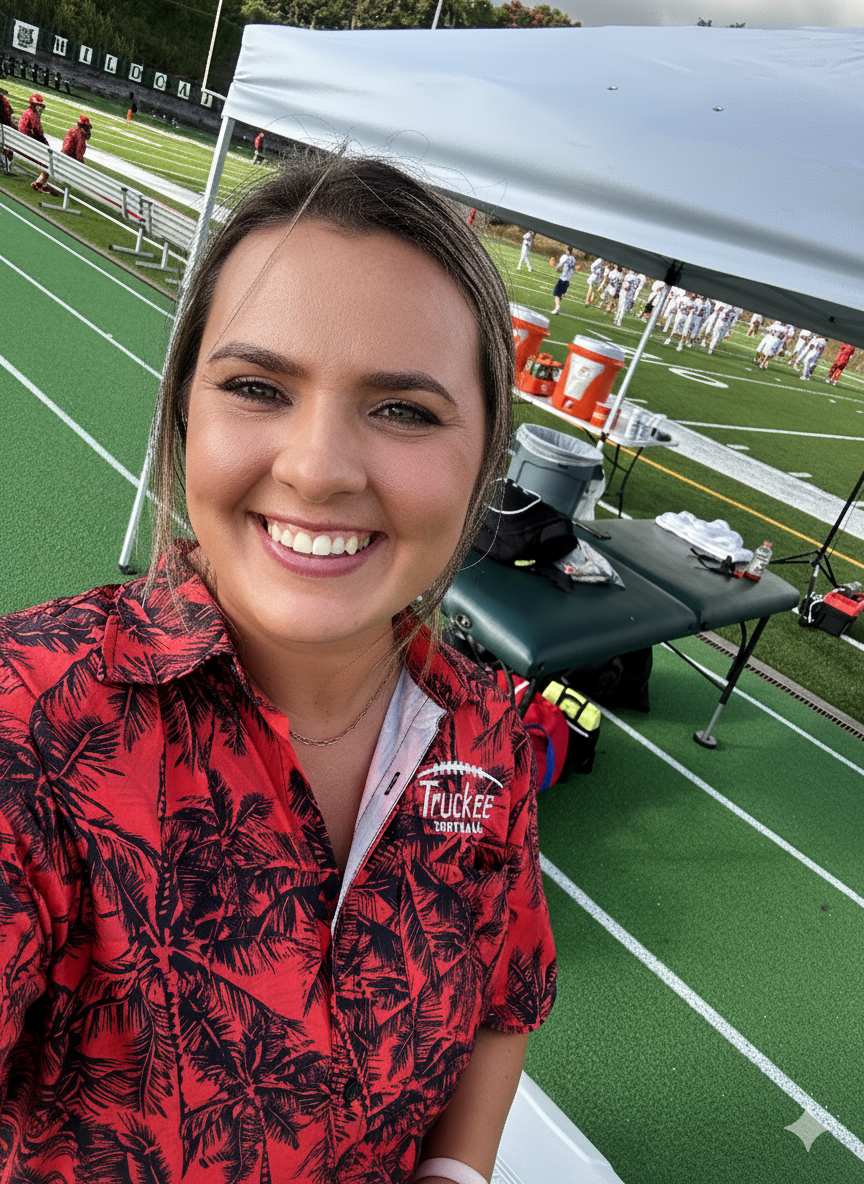
Jennifer Hornback
Athletic Trainer
Tahoe Forest has a staff of 5 ATCs who provide services throughout the Northern Tahoe area. One of those ATCs is Jennifer (Jenn) Hornback.
National Athletic Trainers Month always sneaks up on me as a moment to pause and reflect on a career that’s somehow flown by, 10+ years as a Certified Athletic Trainer, and still learning something new every day. With a Master’s in Exercise Science focused on human movement, I’ve built my career on evidence-based care, injury prevention, emergency response, and helping athletes perform at their best. From the semi-pro level to college to secondary schools, each stop has sharpened my clinical skills, strengthened my leadership, and deepened my love for keeping athletes safe, healthy, and in the game.
But if we’re talking titles, the one that outranks them all is “Mom.” Lynleigh (5) and Tatum (1) keep me on my toes in ways no sideline ever could. Balancing long days, practices, and game coverage with motherhood isn’t always easy, but it’s absolutely worth it. Being both an Athletic Trainer and a mom has strengthened my patience, empathy, and ability to lead with heart (and function on very little sleep).
This month is a reminder that Athletic Trainers are caregivers in every sense of the word. We advocate. We educate. We protect. We show up for our athletes, our communities, and our families. I’m proud to show my kids what passion, dedication, and service look like in action, whether that’s under the Friday night lights or at our kitchen table.
Athletic Trainers are care you can count on.
Contact info
Tahoe Forest Sports Medicine & Therapy Services
10710 Donner Pass Road, 2nd floor, Truckee, CA 96161
Tahoe Forest Orthopedics & Sports Medicine
10051 Lake Avenue, Ste. 3, Truckee, CA 96161
(530) 587-7461 | tfhd.com/orthopedics
Incline Orthopedics & Sports Medicine
880 Alder Ave, 2nd Floor, Incline Village, NV 89451
Featured Therapy
How Athletic Trainers and Physical Therapists work together
Athletic Trainers (ATCs) and Physical Therapists (PTs) share a common goal: keeping athletes healthy, safe, and performing at their best. While their roles are distinct, they are highly complementary and create a seamless continuum of care from injury through full return to sport.
How collaboration works at Tahoe Forest
1. Immediate injury response
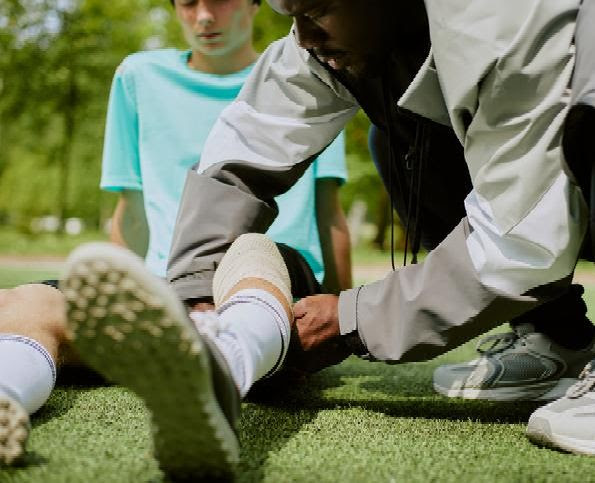
When an injury happens during practice or competition, the Athletic Trainer:
- Performs emergency assessment (ABCs, concussion screening, fracture evaluation)
- Stabilizes the injury
- Determines if the athlete can safely return to play
- Initiates acute care (immobilization, taping, bracing, cryotherapy)
- If the injury is not an emergency and does not require a physician visit, the ATC will treat, manage, and rehabilitate the athlete’s injury
- Documents the mechanism of injury and findings
ATCs are typically the first healthcare providers to evaluate the athlete.
2. Clinical evaluation & rehab planning
If further rehabilitation is needed, the Physical Therapist:
- Performs a detailed musculoskeletal and biomechanical evaluation
- Identifies movement deficits and contributing factors
- Develops a structured, progressive rehabilitation program
- Addresses strength, flexibility, neuromuscular control, and mechanics
- Coordinates with physicians if needed
The PT builds the long-term recovery plan.
3. Ongoing communication
Strong collaboration relies on consistent communication:
- ATCs share sideline findings and injury history
- PTs provide rehab updates and objective progress measures
- Both discuss readiness benchmarks and timeline expectations
- Adjustments are made based on athlete’s response and the sport demands
This prevents gaps in care and ensures consistency.
4. Return-to-play progression
As the athlete improves:
- PTs advance strength, stability, and movement quality
- ATCs supervise sport-specific drills during practice
- Functional testing is performed collaboratively
- Both professionals assess confidence, mechanics, and reinjury risk
Athletes are cleared only when objective criteria and functional demands are met.
5. Injury prevention & performance enhancement
Beyond injury care, ATCs and PTs work together to:
- Implement injury prevention programs
- Monitor workload and recovery
- Correct movement inefficiencies
- Educate athletes, coaches, and parents
- Reduce risk of reinjury
Prevention is a team effort.
Why this partnership matters
When ATCs and PTs collaborate:
- Injuries are managed quickly and safely
- Rehabilitation is comprehensive and individualized
- Communication reduces delays in care
- Return-to-play decisions are safer and more objective
- Athletes return stronger and more confident
Together, Athletic Trainers and Physical Therapists provide a complete system of care, from the sidelines to full performance.

Injury Prevention Corner
Staying consistent when the mountain is calling
Strong athletes are resilient athletes. Injury prevention isn’t just about avoiding time off; it’s about improving movement quality, strength, and control to enhance performance and reduce risk.
Below are key injury prevention exercises commonly recommended by Athletic Trainers and Physical Therapists:
1. Dynamic warm-up
- Increase blood flow, activate muscles, and prepare joints for movement
- Helps reduce muscle strains and improves mobility before activity
2. Knee injury prevention
- Strong hips improve knee alignment and reduce stress on ligaments
- Focus on controlled movement and proper knee alignment over toes
3. Ankle stability & balance
- Improves proprioception and reduces ankle sprain risk
- Progress by adding unstable surfaces only after mastering the basics
4. Core stability & trunk control
- A strong core supports proper mechanics during cutting, jumping, and throwing
- Emphasize neutral spine and controlled breathing.
5. Jump & landing mechanics (lower extremity injury prevention)
- Teaches safe force absorption and knee control
- Knees should track over toes, chest upright, and land softly
Athletic Trainer Q&A
Q: What exactly does an Athletic Trainer do?
A: Athletic Trainers are licensed healthcare professionals who specialize in the prevention, assessment, treatment, and rehabilitation of sports- and activity-related injuries. They work on the field, in clinics, and with teams to keep athletes safe and performing at their best.
Q: How are Athletic Trainers different from Personal Trainers or Strength Coaches?
A: Personal Trainers focus on fitness and exercise programming, and Strength & Conditioning coaches focus on athletic performance. ATCs are healthcare providers trained to manage injuries, provide emergency care, and guide rehabilitation, combining medical knowledge with athletic expertise.
Q: When should I see an Athletic Trainer?
A: You should see an ATC for:
- Injuries during games or practices
- Pain, swelling, or functional limitations in muscles, joints, or ligaments
- Guidance on safe return-to-play after injury
- Preventive screenings or taping/bracing needs
Q: Can Athletic Trainers help prevent injuries?
A: Yes! ATCs implement:
- Movement and biomechanical screenings
- Strength, flexibility, and neuromuscular programs
- Education on safe techniques and workload management
- Early intervention for aches and discomfort
Q: Do Athletic Trainers make return-to-play decisions?
A: Absolutely. They evaluate an athlete’s readiness based on pain levels, functional testing, stability, and sport-specific demands. Their goal is to protect the athlete while facilitating safe participation.
Q: Are Athletic Trainers only for professional athletes?
A: Not at all! ATCs work with athletes at all levels, from youth and high school sports to collegiate, professional, and recreational athletes, as well as in military, workplace, and clinical settings.
Q: How do Athletic Trainers work with other healthcare providers?
A: ATCs communicate closely with physicians, Physical Therapists, and coaches to ensure continuity of care, share injury reports, and coordinate rehabilitation and return-to-play plans.

Introducing True North
Share your thoughts with us
Tahoe Forest Health System has launched True North, a community engagement initiative inviting residents, patients, second homeowners, partners, and staff to help shape the future of healthcare in our region through June 2026.
What is True North?
It’s about listening first. Your feedback will guide priorities around access, services, innovation, and the patient experience.
Focus areas
- Health Within Reach: Improve access, reduce wait times, and keep care affordable and close to home.
- Peaks of Excellence: Identify specialty services that best serve our region.
- Transformation: Reimagine care through innovation, workforce development, and new models tailored to our mountain community.
Your voice matters — take the survey today and help define the future of healthcare in our mountain communities.