Welcome to the fourth Harvest of the Month: Sunchoke!
Sunchokes will be available at your school on Monday, February 8th.
What to do?
- Contact your teacher to schedule a time for your tasting.
- Check with your teacher if any students have food allergies.
- Take the Harvest of the Month home and prepare them for your tasting! There are many recipe ideas included in the handouts, but you can always keep it simple.
- Look over the curriculum and plan key education nuggets you think your class will enjoy.
- Return the green canvas bag the produce came in to the pick up location.
Resources
 Let’s talk sunchokes
- Would you try sunchokes raw, roasted, or mashed?
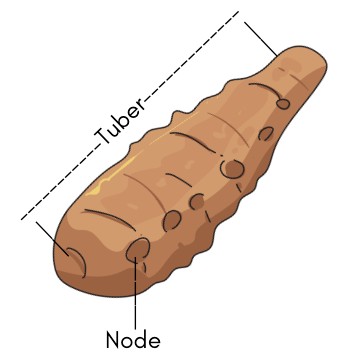
- Can you guess what part of the plant we eat?
- How many tubers can grow on one plant? (10–20!)
Reasons to eat
- Sunchokes are tasty and packed with nutrients!
- Fiber
- Vitamin C
- Iron
- One cup provides one-quarter of your daily iron.
Botanical facts
- Scientific name: Daucus Carota subsp. sativus
- Family: Apiaceae
- Classification: Root Vegetable
Produce tips
- Look for smooth, clean tubers without soft spots, green areas, or sprouts.
- Store sunchokes in the refrigerator vegetable bin, loosely wrapped in a paper towel, for up to one month.
How do sunchokes grow?
- Full sun and well-drained soil help sunchokes grow.
- Edible tubers are ready in 110–150 days.
- They grow best from tubers, not seeds.
- Plant when the soil reaches at least 50 degrees. Early spring works, or late fall in mild climates.
- Harvest in late fall or early spring. A light frost can make them sweeter.
- They are available year-round, with prime season from October–April.
Sunchoke fun facts
- Native Americans cultivated sunchokes as food.
- They are root vegetables in the sunflower family.
- Horses and pigs enjoy them too!
- They can grow wild and sometimes take over gardens.
- You can eat them raw, roasted, or mashed.
- Jerusalem artichoke is another name for sunchoke. They are tubers from a sunflower species native to eastern North America.
- In the early 1600s, European colonists learned about them and sent tubers to Europe.
- California specialty farms grow about 100 acres. California growers have farmed sunchokes for decades.
Sunchoke recipes
Sunchoke Sun Chips
- cleaned sunchokes
- a little olive oil
- a sprinkle of salt or mild seasoning.
Directions:
- An adult slices the sunchokes thinly.
- Toss with oil and seasoning.
- An adult roasts until lightly crisp and golden.
Ask an adult for help with slicing and the oven.
Have Harvest of the Month questions? Please email communityhealth@tfhd.com.