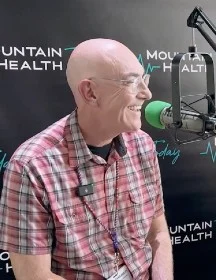
Dr. Brian Evans: Welcome to Mountain Health Today, the show where we explore the people, the stories, and the innovations shaping health in the Sierras. I’m Dr. Brian Evans, Chief Medical Officer of Tahoe Forest Health System. From everyday wellness to the latest advances in medicine, our goal is very simple: to give you clear and trusted information that helps you and your family live well.
Today we’re going to be discussing a fascinating topic: cochlear implants. This is a high-tech way to restore hearing. And I’m very fortunate to be joined by an expert in the field, Dr. Stephen Hoff. Dr. Hoff is a fellowship-trained, board-certified otolaryngologist—we’ll hear about what that is—who came to Tahoe Forest with over 20 years of experience. After completing training at Stanford University and prior to joining us, Dr. Hoff spent more than 15 years as a professor and surgeon at Northwestern University School of Medicine. We’re so lucky to have him here in the community and here in the radio studio.
Welcome, Dr. Hoff. Thank you very much. It’s great to have you.
And I don’t know how many people are familiar with the term cochlear implant, but this is really a super cool, high-tech thing that helps a lot of people. Can you just tell us what the heck is a cochlear implant?
Dr. Stephen Hoff: Yeah, absolutely. So it’s amazing technology. So, as you said, cochlear implants can help restore hearing.
So, similar to a hearing aid, the goal here is when people can’t hear as well, we want to use something to either amplify or restore the hearing. So a hearing aid will work by receiving the sound and sending that signal through the natural hearing pathway, through the eardrum, through the ossicles, into the cochlea, which then is converted into a nerve signal to the brain. And it’s actually the brain that does all the hearing.
Cochlear implant works well when that natural pathway isn’t working. So what happens is the cochlear implant is placed directly into the cochlea and then sends the signal directly to the nerve and then to the brain. So the brain receives that as sound, and it really just brings back that hearing system.
Dr. Brian Evans: Is it kind of like it’s bypassing? You’ve got, like, the brain is just getting sort of information about what a sound is, but there’s a whole lot of things that have to happen in order for the brain to get that electrical impulse. And in some folks, it’s not working well, right?
Either something that they’ve acquired in their life or maybe something they were born with.
Dr. Stephen Hoff: Right, exactly. And it can be that entire spectrum where some people are born without hearing. Some people have had hearing for quite some time and have just lost it as they age.
And it does work by kind of bypassing that external system and going directly into the inner ear, which therefore goes directly to the brain in order to essentially jump over what has been lost or what was missing in the first place.
Dr. Brian Evans: There’s a lot going on in the ears and inside the ears and the middle ear and in the brain and all that kind of stuff. And certainly hearing loss is very common. We probably all know people who struggle with hearing loss, and certainly as we age, we start to worry about that.
I always worry my hearing is going to start going, and maybe it is going a little bit. But you take care of folks from all ages and certainly including children who are born with very little or no hearing, correct?
Dr. Stephen Hoff: That’s right. Yeah. And so hearing loss can affect any age and people. There’s typically two kind of peaks to hearing loss.
That would be children who are born with little to no hearing or lose it early in life, or folks who have had hearing and have lost it as they age due to just diminished hearing and that diminished hearing system. So my, you know, kind of special passion is taking care of kids with hearing loss, which typically are identified almost immediately after birth. So before they leave the hospital nationwide, there’s a law that they have to have a universal newborn hearing screening.
So most kids with hearing loss are identified very early in life.
Dr. Brian Evans: Okay. Yeah. So I don’t know that people are aware of that, but yeah, every newborn basically we’re checking, and anyone born in this country.
Dr. Stephen Hoff: Anyone born in this country. And we try to follow what we call the one, three, six rule, which was to say within one month, they’ve had a hearing screening, one month of life. So one month of being born; within three months, that has been confirmed with a professional audiologist.
Yeah. And then within six months, we are rehabilitating that hearing, be it hearing aids, speech therapy, or if we know that there is no hearing, those children are already on the path to a cochlear implant.
Dr. Brian Evans: At what point did they actually get a surgery for that? By the way, I think for most of us, the idea of doing an operation on a child of that age seems really a science fiction.
Dr. Stephen Hoff: Yeah. And that’s one of the things that makes it so amazing. So we do these now on children as young as seven months of age.
Wow. And it has been well proven that it is a safe and effective procedure. And all research, all studies, and just anecdotal evidence from professionals and parents show that the earlier that we can restore hearing, the better these children do.
So, you know, if they get it at one year as opposed to two years, that’s better. If nowadays we just had the FDA approve the implants down to seven months of age, and that has been shown to be better than 12 months of age. So earlier is better and completely safe.
Dr. Brian Evans: Is it better because children need to develop their ability to process the sounds that they’re hearing and speech and that sort of thing? And so if you restore their hearing early, they’re going to have a better long-term result from it.
Dr. Stephen Hoff: Exactly. So they’re in what we call the critical speech and learning language window, in that their little brains are just sponges for knowledge. They want to understand the world around them.
They want to interact with their parents, with their siblings, with their pets and everything like that. And so their brain is just primed to hear and to see and to interact and to learn these communication skills. And they, in this window, they really, their brains are neuroplastic, so their brain is completely adaptable.
So any signal it gets, it will integrate into communication and sound.
Dr. Brian Evans: Now, you’ve done many of these surgeries, and prior to coming to Tahoe, how long ago did you come to Tahoe Forest and join us? I’ve been here almost two years.
Almost two. Yeah. And before that, you were in Chicago.
That’s right. Doing a lot of pediatric cases, not just cochlear implants, but certainly including them. Right.
Dr. Stephen Hoff: So I was at Northwestern and specifically at their children’s hospital. So Lurie Children’s, and mostly worked on the otology team, which is children with hearing loss or other ear issues.
Dr. Brian Evans: So now you’re able to do this, this procedure, which not a lot of people can do right here in Truckee. That’s right. And so folks are coming in to me, you know, thinking about this as a parent.
If your child is born with really not a lot of hearing, this could be kind of an emotional roller coaster situation where you’re really worried about it. And then they come see a surgeon, and maybe we’re going to get a procedure done, and then maybe their hearing is restored. So walk us through how that works with the parents and the families and what kind of an impact this has on their lives.
Dr. Stephen Hoff: Yeah. And as you said, it’s a very emotional time. Not only are they new parents, but they are getting a new diagnosis, which has profound impacts on their child’s life.
And so there is a lot of counseling that goes into it, both by myself, by the audiologist, by the speech therapist, by the pediatrician. And in general, we want to kind of determine two things: if we can figure out why this child has hearing loss and then what to do about it.
So what treatment plans and modalities can we use, including cochlear implants if needed? Yeah. But yeah, it takes a—it’s an emotional process, and there’s a lot of kind of counseling that goes into it.
And most of that is geared towards let’s find out what’s going on and kind of what—or the why this happened. And then what can we do to help?
Dr. Brian Evans: And so the implant, once you’ve done the surgery, it’s not like you turn that thing on and everything is perfect immediately, right? There’s sort of a period of time afterwards where there’s some accommodation happening.
Is that right? That’s right. So it’s not exactly like a light switch.
Dr. Stephen Hoff: Okay. When the implant—so in general, the procedure is done and then it is given time to heal about three weeks, and then it’s turned on around three weeks later, three to four weeks.
And it’s not exactly like a light switch. So we know it’s working and there’s a response so that it will respond to it. But it’s not even with somebody who was hearing previously.
It’s not like you turn on and suddenly their hearing is back to normal. So what needs to happen is the brain receives that new signal, which is coming through the same auditory nerve that they use, you know, as natural hearing pathway. But it needs to learn how to use that new signal.
Okay. So that takes some speech therapy, some practice, some kind of homework at home, and learning the different kind of subtleties of sound. So, for example, the difference between F and S is very difficult to determine when you have a high-frequency hearing loss, or, for example, B and D and T all sound very similar.
So there’s homework learning programs that we kind of put people through to retrain the brain. And all children with cochlear implants go through a speech therapy program called oral habilitation. So that’s basically training the brain how to hear.
Dr. Brian Evans: So it sounds like it’s kind of a team effort here, a lot of different folks involved in the care of these patients. You’ve got a speech therapist, there’s audiologists, probably a pediatrician somewhere along the line, and probably other folks as well, and your team in the office. That’s right.
Dr. Stephen Hoff: So there’s generally kind of three tiers. There’s the otolaryngologist or ENT. There’s the audiologist and the speech therapist.
But as you said, the pediatricians, we often send genetic testing so we can get geneticists involved. And there’s kind of a whole network: psychologist, you know, counseling to help families and patients really kind of get through this life-changing process.
Dr. Brian Evans: There’s probably some scans involved. So you got a radiologist in the mix. That’s right.
It is a big effort. It’s a big team you got. Yeah.
Okay. Now, you don’t just do cochlear implants for children; you can do them in adults as well. So, for example, and I’m not going to name names, some people listen to too much heavy metal music when they were young, and I’ll just say my first concert was Def Leppard at the Cow Palace in San Francisco, probably a bad choice at the time.
Not a lot of hearing protection at that point. So folks lose their hearing over time. Are they potentially candidates as well?
Dr. Stephen Hoff: They are. They are. And that’s one of the most fascinating things about the ear and cochlear implants is that the cochlea, which is the part of the inner ear in which we hear, is adult size the day you’re born, which is to say we use the same implants and it’s the same surgery in a seven-month-old or a 95-year-old.
And so…
Dr. Brian Evans: Hang on, though. That’s crazy when you think about it. So the structure of the inner ear there where the cochlea is located inside of the ear before it gets to the brain is the same size when you’re born as it is when you’re, let’s just say, 56 years old.
Dr. Stephen Hoff: Yeah. So it’s considered kind of an ancient structure, which is to say it’s been well developed. And what that means is we—cochlear implants are considered a lifetime implant.
They’re replaceable if needed, but this is not the type of thing that we need to increase the size or upscale or anything like that as people get older. We literally use the same implant in any age group.
Dr. Brian Evans: Wow. So how long do they last typically? I mean, if you’re putting them in a baby, I mean, do they—you said they can be replaced, but they can’t. I mean… Wow. That’s amazing.
That’s amazing.
Dr. Stephen Hoff: Yeah. And if, you know, if by chance 30 years from now, the technology were to drastically change or get better, or maybe there was an issue with that particular implant, which is very rare, we’re talking, you know, very small percentages, it can be replaced surgically. But our general goal is we put it in once and everything that happens to that implant is all through the external world, which is to say we can kind of swap out all the externals and never have to do a surgery again.
Dr. Brian Evans: Is it a tough decision for parents to make to consider having a cochlear implant for their child? Because you’re talking about infants who it’s before they can really make an informed choice about it. So the parents have to make the choice and have the surgery.
And some might say, well, no, we’re just going to not do it. And we’re going to have a child who’s got hearing loss, who has deafness.
Dr. Stephen Hoff: Right. And that certainly has been a hot topic and even a controversial topic over the years. In general, most children, the huge majority of children born with hearing loss are born to what we call normal hearing parents, which is where the parents have normal hearing.
They’re not fluent in sign, which is considered its own language. And most parents’ goals, which is part of our counseling session, are for their child to be a regular child, which is to say, you know, go to mainstream school or be on the ski team or just kind of a kid who’s into their own things and unique in their own way. But just kind of, you know, they just want a kid who hears like they do.
Right. So in general, if a child is born without hearing, we tell the parents, you know, they do have other options. They can become fluent in sign, which is true.
Even if we do restore the hearing, they can learn sign language and be part of what we call the deaf culture, which is empowering. They can know that there are other people with similar hearing loss or who have been through a similar experience, and they can still be part of that culture with restoring their hearing. One thing I do need to tell parents is because children are in that critical speech and language learning window, if they decide to wait and let the child make that decision on their own, to a large degree, it will have been too late to make that decision.
So by not deciding, they have decided; they still have made a choice, so to speak. So when they hear that, and, you know, when we go through the entire counseling session and we hear the goals that, you know, they want their child to be able to speak and interact and use what we call oral communication in addition to sign or any other way they want to communicate, that’s really where the hearing restoration comes in.
Dr. Brian Evans: Absolutely. So there must be moments where parents come back with their child, their child now does have hearing restored, you are doing follow-ups with them, and they’re like, wow, this is, this is, you know, massively improved. What’s that experience like?
Dr. Stephen Hoff: It’s, it’s amazing, frankly. And as you said, it doesn’t happen overnight, but with the therapy and with time, sometimes within a few months, sometimes, you know, we—I like to follow people for years just to kind of check in and see how they’re doing. Yeah.
And you’ll see people come back, you know, a year, two years, three years later, and they are achieving so much. They may be singing in a choir of a patient recently who sings in a choir and sing a solo in the choir for her entire school after receiving her cochlear implant. Wow.
And it was just a life-changing moment. Kids who are on the ski team, on the rock climbing team, kids who are playing music, violin, and things that they really just didn’t have access to before. Yeah.
And kind of goes back to being kind of a normal kid, like just getting into something and being able to pursue that thing and knowing that the hearing restoration allowed them to do that. Yeah. It’s amazing.
Dr. Brian Evans: Yeah. What’s changing with the technology now? Is there, is there a progression in the technology?
Has it gotten better over the last, you know, 10 years, or is it pretty static at this point? It just, it just kind of works. Kind of both.
Dr. Stephen Hoff: We should say implants, the internal part, which is the part I put in and we kind of just don’t touch again, work very well, and they—I wouldn’t say they’ve been perfected, but they’re—the technology is already so good that we know that most developments have to do with the outside part. So the computer programming for speech algorithms, which is to say the implant receives a sound and then it puts it through a, essentially a computer program to maximize speech understanding and language, as well as music now is kind of like the up-and-coming thing. And so we, we can reprogram them now as that technology gets better.
You can upgrade.
Dr. Brian Evans: Upgrade. Like my phone.
Dr. Stephen Hoff: Yeah. You like your phone, and people do get the—so when you have a cochlear implant, there’s the internal part, which is, you know, put in and considered permanent. And then the external part that they take on and off, just like a hearing aid, and that part does get upgraded every few years, like a phone.
But even if there’s an update, like your phone, you know, receives an update, that just gets updated with the latest and greatest and, you know, whatever AI or whatever next thing is on the horizon.
Dr. Brian Evans: That’s amazing. Yeah. So if somebody is out there, they’ve got maybe some hearing loss, maybe a family member who has significant hearing loss.
How would they find their way to a cochlear implant? Would they just talk to their primary doctor about it, or how would that go?
Dr. Stephen Hoff: Yeah, exactly. So it’s usually people, and, you know, we talked a lot about children with cochlear implants and those that are identified and usually either at birth or school hearing screenings or their speech has been delayed. But we see a lot of people who have been hearing their whole life and doing well, but then that hearing is progressing downward, typically higher frequencies first.
And frankly, a lot of people, because it’s been a slow process, aren’t really aware of the severity or degree of their hearing loss. And so what the reason they know about it is they become separated from people. And so hearing is a huge worldwide disability.
It’s considered the third most common worldwide disability, but it’s kind of invisible. When you don’t have hearing, what happens is you get disconnected from people. So the classic thing would be somebody who is, you know, at a restaurant with friends and family and just pleasantly sits there and smiles and kind of doesn’t really—they can’t really understand enough of the conversation to participate.
Right. And so they start to lose those connections. They’re not interacting.
They’re not normal. They’re not interacting. And sometimes friends or family will kind of, you know, get frustrated with them for always asking to repeat.
Yeah. And maybe that’s how they are clued in. But it’s usually that kind of disconnect from other people that drives kind of the next steps.
So usually what they’ll do is then get a hearing test. Yeah. So see their primary or, you know, go directly to an audiologist.
They get a formal hearing test with an audiologist. And then the degree of hearing loss there kind of determines their next steps. That may be a hearing aid.
That may be a cochlear implant. One of them. They might be coming to see you.
They might be coming to see me. And we really determine that not just on how bad the hearing is. So one of the misconceptions is that you have to be completely deaf or no hearing to get a cochlear implant.
And that’s actually not true at all. If you think about it, most people who get, let’s say, a knee replacement, they can still walk around. Sure.
It’s difficult. Same with hearing. They can still hear.
It’s just difficult and difficult to understand speech. Yeah. So most of our criteria when we determine somebody is a good candidate for a cochlear implant is based on how well they determine speech.
Dr. Brian Evans: Amazing. Well, I got to say, Dr. Hoff, I mean, I’m so delighted you’re here with us today. I’m so delighted you’re here in the community providing not just cochlear implants, but lots of other services to everybody here.
And bringing your expertise, bringing your passion for this, it’s really just a gift to the Tahoe Forest community. I just want to say this wraps up our today’s conversation on mental health today. Thank you so much, Dr. Hoff, for being here and sharing your insights. I’m Dr. Brian Evans, Chief Medical Officer of Tahoe Forest Health System. Caring for this community is a privilege. And these conversations are one way that we stay connected to what matters most to your health and well-being.
You can learn more about today’s topic and also find resources and services at TFHD.com. So until next time, take care of yourselves, take care of each other, and stay healthy in the mountains. Thank you.