Hydration for High-Altitude Performance
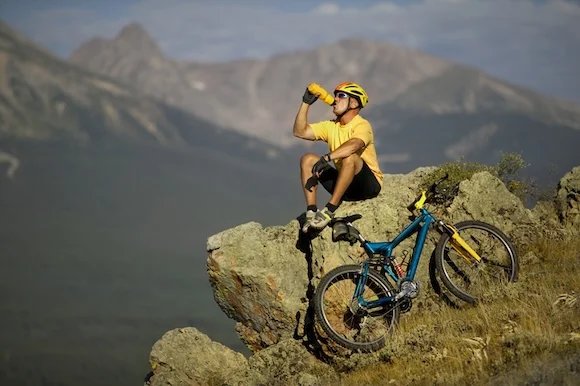
Hydrate. It’s a message we hear all the time, especially in this athletic high-altitude town: stay hydrated for peak performance.
Like most popular messaging related to health and nutrition, there’s a kernel of truth, of good science, at the core of this message. The “hydration products” industry takes that foundation and, to help sell product, builds a house of cards on top of it. Their marketing implies that people need sports drinks, high-salt powdered electrolyte mixes, and custom hydration products to keep them performing their best.
There’s no denying that significant dehydration can have a range of consequences, from decreased athletic performance to dry skin to risk of kidney damage. Low-level chronic dehydration is also not ideal, but few nutrition professionals would recommend sports drinks or high-salt electrolyte mixes for that (unless the taste gets you to drink more water more often). Not many people need extra added sugar, artificial sweeteners, or large doses of salt in their drinks.
Let’s start with the facts. First, the best choice for staying hydrated is plain water, as long as you don’t overdo it. Most people, unless they are exercising for over an hour or in very hot conditions, do not need added salt – there is only mixed evidence salt helps with cramping and most people get more than enough salt from foods. The average American consumes about 3,300 mg of salt a day, nearly 50% over the recommended amount, and diets high in salt can increase blood pressure, weaken bones, and strain kidneys.
Second, most people don’t need the added sugar found in sports drinks. If you have eaten normally during the day (a meal or snack within 2 – 3 hours of a workout), then more fuel generally isn’t necessary for workouts shorter than about 90 minutes.
Finally, nutrition and hydration don’t have to be complicated or expensive. We certainly don’t need to buy all the various powders or potions marketed as sports supplements – it’s easy to make your own sports drink with natural ingredients at a fraction of the cost.
Head to the grocery store and pick up a small bottle of no-pulp orange juice (or your favorite juice). To make a quart (32 oz) of a sports drink, add 1.5 cups juice to a quart bottle, then add 1/4 teaspoon of table salt and 2.5 cups water. Measure the salt carefully – use an actual 1/4 teaspoon measuring spoon (don’t just guess at half a 1/2 teaspoon scoop), fill the spoon and then level it off with the blade of a knife. It’s easy to add too much salt.
Shake well and add to bottles for your workout, refrigerating any extra as you would juice. That’s it!
For a flavor twist, or if you prefer to mix a drink as needed rather than in a large batch, try a maple syrup-based sports drink. For every 16 oz of water, add 1.5 tablespoons of maple syrup and 1/8 teaspoon of salt, then shake well and go.
These recipes are intended for moderate intensity exercise up to 1 – 2 hours and should be supplemented with real food for longer efforts. If you have very salty sweat or are exercising in especially hot conditions, you can add up to 50% more salt to either of these mixes (for a total of 3/4 teaspoon per quart for the OJ-based drink or 3/8 teaspoon for the maple syrup version), especially if you are not eating additional food.
Yes, hydration is important, and yes, a bit of salt can help maintain electrolyte balance, but you don’t need an expensive supplement for your daily workouts. Keep it cheap, keep it simple, and focus on the workout, not your supplement.
Nutritional analysis (approximate):
OJ-based sports drink (per 16 oz serving): 90 calories (23 grams sugar) with 290 mg salt, 335 mg potassium, and 60 mg vitamin C. Not a significant source of fat, protein, or other micronutrients.
Maple syrup-based sports drink (per 16 oz serving): 78 calories (20 grams sugar) with 290 mg salt. Good source of manganese, riboflavin, and zinc. Not a significant source of fat, protein, or other micronutrients.
Bret Sarnquist, MPH, RD, Tahoe Forest Wellness
bsarnquist@tfhd.com
530-587-3769
- * Featured
- Anniversary
- Board of Directors
- CA Office of the Governor
- Children's Health
- COVID-19
- Employee Highlights
- Gene Upshaw Memorial Tahoe Forest Cancer Center
- Health & Wellness
- Health System Foundation - Giving
- Incline Village Community Hospital
- Informational Brochures & Guides
- Nevada County Public Health
- Orthopedics & Sports Medicine
- Patient Success Stories
- Tahoe Forest Health System
- Women's Health