Dr. Brian Evans: Welcome to Mountain Health Today, the show where we explore the people, stories, and innovations shaping health in the Sierras. I’m Dr. Brian Evans, Chief Medical Officer of Tahoe Forest Health System. From everyday wellness to the latest advances in medicine, our goal is very simple. We want to give you clear, trusted information that helps you and your family live well.
Today we’re going to be talking about one of the most exciting and dynamic areas of medicine, which is radiology — a lot going on in radiology. And so I brought in a heavy hitter to answer all our questions for us, Dr. Jeff Fountain. He is the Medical Director of Radiology for our entire health system. Dr. Fountain is a board-certified radiologist, practices full-time at Tahoe Forest Hospital. He has a ton of experience with just about every imaging type there is, and also procedures that are done under imaging guidance.
We’ll talk about that. He’s also an expert in how to create the best possible imaging department in a rural community like ours, which is not an easy task. Dr. Fountain, welcome to Mountain Health Today.
Dr. Jeff Fountain: Thanks, Brian. It’s a pleasure.
Dr. Brian Evans: It’s great to have you. So a lot is going on in radiology. It’s a highly technical field, and I think it’s changed at least as much or more than any other specialty that’s out there. Tell the audience, what does a radiologist do? They might not have a good understanding of what that job even is anymore.
Dr. Jeff Fountain: Sure. Yeah. Happy to give a brief description. So first and foremost, we’re physicians. We’re physicians that interpret imaging. So your X-rays, your ultrasounds, your MRIs, your CTs, we’re in the background looking at every one of those pixels, making sure that we can make the best diagnosis possible for those patients.
Dr. Brian Evans: Yeah. And so patients are coming in with, you know, they’re needing all kinds of different imaging studies. They might need just a basic X-ray of their wrist. They might need a very complicated kind of PET scan or a CT scan. You’ve got all these different modalities. But the radiologists are kind of in the background, making sure that the test is done properly, making sure that the images are good enough to actually get a diagnosis or interpret them. So they’re part of the care team. Who else is on the care team?
Dr. Jeff Fountain: Well, it’s actually a complex team made up of multiple members. It starts at the top, obviously, we’ve got our very talented radiologists, and then our colleagues, our cohorts, our administrators on the side. We’ve got a great dyad, Sadie Voigtlander and myself, helping to run the team. We’ve got the managers on the floor with radiology, MR, ultrasound techs, mammo techs, PET CT techs. We have nurses. It’s a very complicated team of well over 100 members.
Dr. Brian Evans: And becoming a radiologist, I’m not sure people are aware of how long it takes or what’s involved. I mean, it’s not just a few weekend courses at the local junior college, is it? Like, what did you have to do to actually become a board-certified radiologist?
Dr. Jeff Fountain: Yeah, it’s a long haul. I’ve got to be honest, it was fun. We go to medical school just like any other physician that you would see at the hospital. We spent our four years in medical school. After that, we have our internship, and then our residency, a residency is five years. And then the current trend is for radiologists to go out and do a dedicated fellowship in one of the many different modalities of radiology. So I myself did one in body MRI and MSK. And that fellowship has served me really well in our community.
Dr. Brian Evans: MSK being musculoskeletal, right? All the muscles, the bones, the tendons, all that good stuff.
Dr. Jeff Fountain: Exactly.
Dr. Brian Evans: Okay. So a lot of anatomy is involved there. MRI has become really a big thing for just about every hospital, and we’ve got a pretty darn good one. I know. A really nice MRI with a three Tesla magnet is my understanding. So what’s good about that machine and what kinds of things can you do with it that you didn’t used to be able to do in the old days?
Dr. Jeff Fountain: It’s pretty miraculous. We’re pretty lucky to have a machine of its caliber. Long story short, three Tesla versus 1.5, it’s just the strength of the magnet. It’s just the power that it has to perform high quality imaging. At one point in time, when we first purchased the MR, I was very proud to say that the company that we went with, Siemens, came in and said, well, this is probably the most powerful magnet, the highest quality magnet west of the Mississippi. That’s taken into account all of our referral bases, our folks in San Francisco, Los Angeles, all the major metropolitan areas. We were lucky enough to have a magnet that had that kind of quality. We were very lucky to have it, and thanks to our administrative team for helping us with that. But in the grand scheme of things, what it does, it just helps us to get information and to get it faster and better.
Dr. Brian Evans: And I know that we’ve also been really benefited by a community that supports these types of imaging devices and equipment at a very high level, which has really enabled us to have some pretty top tier technology. Now, Dr. Fountain, you actually are responsible for the imaging all over the entire system, not just in the hospital in Truckee, but also in Incline. And if you’re getting an x-ray in one of our urgent cares, all of these imaging modalities and techs and everything, you have to make sure they are up to your standards. Is that right? And does that pressure get to you? How do you deal with the pressure of that? I mean, my goodness.
Dr. Jeff Fountain: Well, you’ve already mentioned the team, right? We’ve got a great team. The nice thing is that we keep that patient-centered focus at the heart of what we do. It’s not hard to convince our team that they’re on board. What I have to do is just present to them what we feel is the latest and the greatest in the standard of care, and they typically are more than eager to jump on board and get that accomplished.
Dr. Brian Evans: Absolutely. So, I know that whenever I need something in healthcare, even though I know a lot about healthcare because I’m in the field, I get kind of stressed out about it. You know what I mean? Even just going to see the primary care doctor, but when somebody’s getting an advanced test or a CT scan or something, there’s some stress that goes into that. How do you guys in the radiology team help patients just deal with that anxiety and make them feel comfortable and that they’re in good hands?
Dr. Jeff Fountain: You know what? We try to keep it simple, and what we try to do is put ourselves in the patient’s shoes. Let’s be honest. When you come in, there is some anxiety associated with that, but if we approach that like, well, what would we do to try to feel more comfortable, and then try to implement that with our patients. You know, we like to greet them at the door, hey, how are you? Come on back. Let’s talk about your test today. Why are you here? How was your day? How was your drive? You know, immediately try to make that connection. Our team does a great job of just making sure that we treat each individual as if they were our own family member, as a friend, our neighbor. And in doing that, what it really does is it allows us to connect, allows us to help them find a way to feel comfortable, and then get them back in the department and help them along the course of their day.
Dr. Brian Evans: A cordial demeanor makes a big difference, and it, you know, gives a real family sort of environment for patients. One of the things that is a stressor, I think, is a patient will get their scan or their x-ray or whatever it is, and then they don’t know what the result is until a radiologist has looked at that study, and then they get the result. And I know that you guys, your team, is really efficient and really tries to get those results back quickly. Why is that important to you guys as a team of radiologists?
Dr. Jeff Fountain: Well, like you said, the anxiety associated with the result. You know, once the imaging is accomplished and completed, we try to get that information back to both the provider and the patient in a timely fashion. I mean, if it was me, I’d want that information as soon as possible so that I could then obviously build that plan forward of what I need to do to take care of my body or myself. And so our team has really come together, and we’ve made it a goal of ours to try to have a 24-hour turnaround time, get everything back to our patients as quickly as we can, get them on the road to health and wellness, and I think we do a pretty good job of that.
Dr. Brian Evans: Definitely a very good job. Very fast results and very, very accurate too, so we appreciate that. You know, the technology we talked about has changed a lot. I remember when I was in training, which was roughly 150 years ago when I was a resident, we were starting the emergency department to use ultrasound there, and I mean, the earlier ultrasounds, it looked like you were staring into a snowstorm, basically, and you’re trying to see a gallbladder, for example. Things have changed, not just in ultrasound, but in all these modalities, I mean, I’m having a hard time just keeping up to date with all that stuff. So what have been the biggest changes you’ve seen technologically over the last 10 years?
Dr. Jeff Fountain: Wow. We could talk about this one for hours, but just to summarize a few things, I mean, I don’t know exact dates of when you trained, but I’m not going to tell you. Long story short, when I started, we were still hanging film. It was a picture, a physical picture that you would put up on a quote-unquote light box, something that would shine light to the x-ray so you could see through it. Now we are completely digital. I mean, I can pull up images on my phone. It’s unbelievable how quickly things have advanced, and a lot of that, I think, it’s just the age that we get the opportunity of living in. You look at the Apples and the Googles and the Microsofts, and these guys are just advancing at such a rapid rate, and then slowly that trickles into the world of medicine. As people start to feel comfortable, we start to see that, and it’s shown right now through the digital age. Everything is on a beautiful 12-megapixel monitor. We can see just the smallest detail in imaging. I can scroll through it. I can stop, close it, open up another case. It’s just so free-flowing. And then obviously, we’re looking at the next five to 10 years, and that is the introduction of artificial intelligence. It’s really exciting. I mean, it’s a tool. It’s not something that’s going to take over the world, but it’s definitely something that’s going to be available to us as a tool to continue to help working at an extremely efficient pace and doing it with the highest amount of accuracy as we can.
Dr. Brian Evans: Yeah. I think people now are getting much more familiar with artificial intelligence, and they’re using things like Claude, or they’re using ChatGPT and those types of things. In the world of radiology, though, it’s a little different, right? You guys are using artificial intelligence platforms that are actually looking visually at the scans that the radiologist is also looking at, and then they’re providing some help, I guess, some assistance in improving that accuracy rate or that speed. What areas are actually being deployed now at Tahoe Forest?
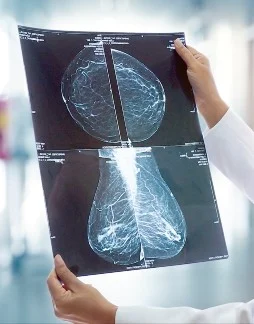
Dr. Jeff Fountain: It’s an amazing time. So at Tahoe Forest, we started using AI for our women’s imaging department, specifically with mammography. It’s most beneficial in the world of screening mammography. We’re lucky to partner with Hologic, which is a company in Northern California that is a premier vendor for women’s imaging, breast imaging. They came to us a while back. One of our radiologists, Dr. Jim Schlund, he’s associated with Hologic, and so he had an inside scoop and said, hey, listen, this is a perfect opportunity for us to work alongside a vendor to identify where artificial intelligence can help us in our day-to-day jobs. So we’re currently using AI and have been for about four years as a tool, right, as an assistant to kind of help us. In fact, we had the privilege of being one of the first sites in California to have this AI platform, and because of that, we’ve been actually teaching it.
Dr. Brian Evans: And yeah, I don’t know that most members of the community have been aware of how much of a front runner Tahoe Forest has been in this technology. And I mean, simply put, the technology is there to save lives, right? I mean, actually make the right diagnosis, make it as early as possible, make sure that people aren’t having unnecessary testing or procedures, just better care overall. So that’s got to be gratifying.
Dr. Jeff Fountain: Absolutely. And, you know, working with it the last four years, we’ve seen its strengths, we’ve seen its weaknesses. We’ve hopefully helped those weaknesses become strengths. It’s been a really interesting trajectory, and I’m excited to see where else it goes. I think there’s going to be a lot of opportunity in that realm.
Dr. Brian Evans: You know, one of the things that, you know, didn’t used to be such a big concern back in my early days of training, which was radiation exposure, and, you know, people are aware now about radiation exposure, and we try to minimize it. I know that your team does a lot to really try to minimize radiation exposure as much as possible. There’s modalities that don’t really use radiation, and there’s limiting doses. So how do you approach that from a patient safety point of view and making sure that patients are informed about radiation and what they should know?
Dr. Jeff Fountain: Absolutely. You know, it’s definitely something that we’re constantly thinking about. You know, for the modalities like X-ray and CT, where radiation is a primary imaging source, we try to maintain the lowest dose possible. And we do that with, once again, utilizing technology. So the latest technology, our current CT scanner has low-dose technology that allows us to use the lowest possible dose to get the best possible image. And so, you know, we lean on that. We utilize that to make sure that patients, first and foremost, get a high-quality image, but don’t get that full dose of radiation that we used to in the past.
Dr. Brian Evans: Well, I think it’s really appreciated, and I know that when people have questions, and they should have questions, they should ask questions, and we’re all very happy to answer them. You know, one thing about radiology that I think some have a view that radiologists never really get out of the darkroom, you know, where they’re reading the studies, but that is definitely not the case at Tahoe Forest, and, you know, your docs are running around all over the place. And a lot of times, they are doing procedures on patients. And that’s a huge part of radiology now, where, you know, some procedures used to really never be done under imaging guidance. So what is that, under imaging guidance? What does that mean, and, you know, what is an interventional radiologist doing that’s different than sort of traditional?
Dr. Jeff Fountain: So just to kind of a little bit of background about radiology, so first and foremost is to really major subspecialties, there’s a diagnostic aspect of what we do, and then there’s an interventional aspect of what we do. And when we talk about the interventionalists in radiology, we’ve got this awesome map, and that is CT, MR, ultrasound, mammography, and what it does is it gives us a look inside the body. And when we see that pathology, call it a mass or call it a lesion, we can put a needle into that particular location, sample that tissue, remove that needle with little to no harm to the body. We can then take that cellular material, identify what it is, and if treatment is necessary, then assist our colleagues in initiating that treatment.
Dr. Brian Evans: So the patient, from their point of view, less pain, less recovery. It’s just a much smoother thing. They’re not having to deal with a long procedure, maybe more of an open procedure where they have to have their body sort of cut into in a more traditional way. Major, major difference, yeah, I mean, again, going back to the dark ages of my training, you know, we used to do central lines, you know, which are basically like large IVs without any sort of imaging support, and now we use ultrasound to do that, and for many procedures we’re using other modalities as well. So really just a huge, a huge gain for patient care and their comfort. And I know that one of the things that your docs do really well is make sure you’re working with the entire team to look at the overall care and make sure that it’s a safe environment, we’ve got the resources we need, and we’re explaining everything really carefully. So I think that that’s really appreciated as well. So, you know, what are some of the bigger procedures you guys do that really make a lot of difference for patients in the radiology department? I mean, you talked about biopsies, which is usually when you’re looking for cancer, but maybe some other things as well. What other kinds of procedures are done?
Dr. Jeff Fountain: Well, there’s a large gamut. You know, we place tubes for drainage. That’s one area, assisting our urology colleagues, nephrostomy tubes, so placing a tube inside the obstructed kidney to kind of help relieve that pressure, backing up from the ureter. Abscesses, so any sort of infection inside the body that needs to be drained that, you know, may not be the best candidate for surgery, we can place a catheter in there to drain that out to kind of help the patient to avoid surgery. We’ve already talked about biopsies. We also assist with central line, actually PICC line placements. Once again, an image-guided procedure to place a larger, more permanent IV into a larger vein, typically in the upper extremity. You know, it’s a large gamut. You know, we’re looking into providing, you know, distal extremity venous procedures, possibly even down the road, assisting with ablations of certain organs, just a lot of stuff out there that gets super exciting. And as long as we have the capability and the talent here, happy to explore it.
Dr. Brian Evans: Yeah, and we certainly have a lot of talent. And it all just results in, you know, less invasive, less discomfort, safer care, shorter recovery, better treatments, and we’re just right at the forefront of it. You know, Dr. Fountain, you’ve got all these different other doctor groups that are customers of yours, the ER doctors, for one, the cancer doctors, the primary care doctors, all these different folks that are out there that really depend on the radiology team and making sure that the images that they order are done, that they are getting the procedures they need. How do you interface with these? And what’s it like being sort of in the middle of that large team of healthcare providers at Tahoe Forest?
Dr. Jeff Fountain: Brian, it’s actually probably one of our strengths. Our medical staff at Tahoe Forest is one of the best. I don’t know if I’ve ever worked with better. And so, because of that, we have such a collegial interaction. We work together so dynamically to try to, first and foremost, take care of each individual patient, but yet still look at the broad scope of medicine and recognize, well, where do we need to expand service? And when we do that, we obviously have to look at, is there a patient need, right? How does radiology support that need? Where can we initiate that technology to make sure that we can support those patients? We’re super lucky at Tahoe Forest, and I couldn’t be happier to work with this current medical staff.
Dr. Brian Evans: Ditto. Ditto for me. So, what’s the last thing, the big thing you’d want the community to know about radiology, radiologists that are listening out there that hadn’t thought much about radiology until this conversation we just had today?
Dr. Jeff Fountain: Well, you know, I think the biggest thing is just the idea that we’re here. We’ve got a very talented department that’s dedicated to patient care, and we’re helping each and every patient, whether they see us or not, in the background to try to direct their care to make sure it’s the best possible care that we can provide.
Dr. Brian Evans: Well said. Well, that wraps up our conversation today on Mountain Health Today. I just really want to thank our guest, Dr. Jeff Fountain, for sharing your insight. I learned a lot. I hope everybody did as well, and I want to thank you, the listener, for spending part of your day with us. I’m Dr. Brian Evans, Chief Medical Officer at Tahoe Forest Health System. You can learn more about today’s topic or find resources and services at tfhd.com. Until next time, take care of yourselves, take care of each other, and stay healthy here in the mountains.