Dr. Brian Evans: Welcome to Mountain Health Today, the show where we explore the people, stories and innovations shaping health in this era. I’m Dr. Brian Evans, Chief Medical Officer of Tahoe Forest Health System. Each month we take a few minutes to talk with local experts and the community leaders about what it really means to stay healthy, physically, mentally and emotionally, here in the mountains.
From everyday wellness to the latest advances in medicine, our goal is very simple: to give you clear, trusted information that helps you and your family live well. So thank you very much for joining us, and let’s get started. Today we’re actually going to be discussing an absolutely crucial topic. It affects every community, including ours. It’s about breast cancer screening and early diagnosis. We’re very fortunate to have a guest today, Dr. Kristy Howard. Dr. Howard is a board certified OBGYN physician practicing full time at Tahoe Forest Hospital. She provides full spectrum OBGYN care to our community and has special interests, including menopause as well as breast cancer screening and early treatment. Dr. Howard, welcome to Mountain Health Today.
Dr. Kristy Howard: Thank you so much for having me. I think this is such a great series that we’re doing, and I’m really excited to be a part of it.
Dr. Brian Evans: Well, we really appreciate your expertise, certainly on this topic, but all you do for our community and patients with OBGYN care: delivering babies, prenatal, postnatal, the whole gambit. So we really appreciate you being here. We’re talking today specifically about breast cancer screening and how important it is to make sure that people are getting diagnosed as early as possible. Maybe you could give us a little bit of an idea about your background and what led you to focus on breast health and breast cancer screening specifically.
Dr. Kristy Howard: Great, yeah, happy to share that. So as you mentioned, I’m an OBGYN. I was drawn to women’s health and OBGYN really for the opportunity to take care of women throughout their whole lifespan, starting from adolescence or earlier and through menopause and beyond. And I think my practice has really kind of evolved over time; the longer I’ve been doing this, as I have aged with my patients, I think that I really have focused more on menopause care, and included with that, breast cancer screening. And then recently, I think one of the things that really has kind of brought it to light for Tahoe Forest and myself is being a part of partnering with community health and outreach to really help reach people in our community that are not being properly screened for breast cancer.
Dr. Brian Evans: There has been, we’ve taken note that there are folks in our community that are not getting the screening that they need. And, you know, overall, our rates are pretty good in California and in our particular community, but there are definitely women that are not getting the screening that they should get. And I know that’s a passion for you, to make sure that we reach them. There’s lots of folks in our community health department that are trying to figure out strategies to really get people the screening tests that they need. So thank you for jumping in on that. What are some of those strategies to try to get people to get the screening? How do you have this conversation with your patients, and how do you reach people that aren’t even coming into the clinic to see you?
Dr. Kristy Howard: Right, that’s a good question. I mean, I think the ones who are coming in and seeing us and doing their yearly exams, that’s kind of the easy population to capture. And, you know, that’s what we do on a daily basis, is just educating women, empowering women to take care of themselves and do these preventative screenings. As you mentioned, I think the bigger issue comes in for the women who are not coming in. And so that’s one of what our big focus is, is more with community outreach and trying to reach these women that are not coming in for their routine visits and getting the screening. Some of the ways that we’re trying to work on that right now are currently partnering with UC Davis, the community health department. This is something that they do so well, is the community outreach. We’re specifically trying to reach our Hispanic population as one of the groups in particular that has been underscreened in this community. And so we’re partnering with them to get outreach materials, not only written materials, but going to community events where we can reach these women.
Dr. Brian Evans: Why does early screening make a difference? What if somebody feels great, they don’t have any symptoms, they’re not noticing any abnormalities with their breasts? Why do they need to get a screening test?
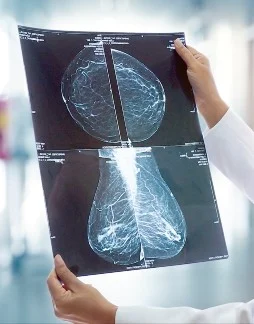
Dr. Kristy Howard: No, that’s a really great question. And that’s kind of the whole definition of a screening test, right, is to detect something and to be able to prevent disease. The benefit of mammogram, which is the primary form of breast cancer screening, is that it is able to detect small things that you wouldn’t be able to feel on an exam probably for many, many years. And it makes such a difference to detect these things and diagnose these cancers at an early stage. Not only is it an easier treatment in general, you can do a lot more conservative therapy typically rather than more extensive surgery, and be a much more minor surgery. It can have the potential to avoid chemotherapy and a lot more detrimental treatment options that just can affect quality of life. And so I think not only for the woman herself, but her family and her support people, finding these things early makes such a difference in quality of life.
Dr. Brian Evans: So it really can be a life or death kind of situation, getting that screening test done.
Dr. Kristy Howard: It really can be, that’s absolutely correct. I mean, the mortality rate from breast cancer was so much higher before mammogram became mainstream, which really didn’t happen until the late 80s, early 90s. And we’ve seen such a dramatic decrease in mortality from breast cancer because of early detection.
Dr. Brian Evans: Yeah, absolutely. So say a little more about some of the treatments. I think people are familiar with the fact that if they are diagnosed with breast cancer, they may need radiation therapy, they may need surgical therapy, and they certainly are likely to know about chemotherapy. But if the screen is done and a diagnosis is made early on, some of those treatments may be less necessary or less intense, or just less impactful to the patient and the family members. Is that right?
Dr. Kristy Howard: That’s absolutely right. When we can diagnose these cancers at a really early stage, more often than not, women are able to avoid chemotherapy altogether and just do more limited surgery. Again, they’re able to just remove the problem area rather than having to do a full mastectomy, or remove the entire breast. And then the adjuvant treatment that needs to happen afterwards can be dramatically different depending on how early these cancers are detected.
Dr. Brian Evans: What are some of the reasons why some folks might want to avoid these screening tests? Are they concerned about discomfort, or they’re afraid of getting bad news, or what’s going on?
Dr. Kristy Howard: I mean, I think all of the above, right? I think that there’s a definite fear factor, not only just fear of the procedure itself and the unknowns that come with that, but the fear of getting that information and what you do with that information when you get it. I think there’s a lot of misinformation, unfortunately, about mammograms, where some women are worried that the mammogram itself is dangerous from a radiation perspective. And so I think that limits some women. And then, unfortunately, I think cost and access become an issue for a lot of women as well. A screening mammogram should be something that is routinely covered for all women. But unfortunately, some women either don’t know that or aren’t properly connected to the avenues to help them financially not have to be paying out of pocket for at least screening tests.
Dr. Brian Evans: We certainly do have options for that for folks that have limited resources, and we want to make sure that every woman gets the screening tests that are indicated. And so you can reach out to Tahoe Forest and the hematology department and go on the website and figure out the various options. There’s lots of help available and programs. So, yeah, financial, you know, obviously in this country, our insurance system being what it is, and we don’t expect you to solve that today, Dr. Howard, but it is a challenge out there. But we don’t want financials to be a barrier for getting these screening tests.
Dr. Kristy Howard: That’s absolutely right. I think that’s another thing that Tahoe Forest is really doing a great job at right now, and part of that project that I’m working on that I’ve mentioned, partnering with UC Davis for outreach. But we’re also working internally to set up these channels to make it much easier for patients to reach financial counselors and know all the different programs and things that we have available, and grants to help pay for these services for women.
Dr. Brian Evans: Right. So some women are higher risk than others for breast cancer. So when you’re seeing patients in your clinic or in your own community, how do you have that conversation with people and try to ascertain whether they do have higher risk? And then do your recommendations potentially change as far as screening for individuals?
Dr. Kristy Howard: Yes, that’s a really good point. Definitely, there are women that are high risk. The classic thing, I think, that most people are aware of is family history. Interestingly, the vast majority of breast cancers are actually diagnosed in women with no family history. But that is one of our kind of easily identifiable risk factors. Also, prior radiation exposure. Other lifestyle factors, as far as obesity and alcohol consumption, and all of these other lifestyle factors, absolutely play a role. So I think that’s part of these kind of routine health screenings that we do, is assessing the whole woman and the whole picture of what might be influencing her risk. There’s some really nice calculators that plug in kind of all these different risk factors, just age and family history and previous exposure to things that can increase your risk of breast cancer. And it’s nice because it really can kind of generate this lifetime risk for breast cancer. And it can help kind of guide us as clinicians: like, is just a mammogram alone enough? Do they need supplemental tests and things other than mammograms, such as ultrasound and MRI and other tools that can be used? And so it’s definitely an individualized discussion with your health care provider, kind of based on your own risk factors, to see what is going to be best for you.
Dr. Brian Evans: Let’s talk about some of those other modalities, because when people think about breast cancer screening, they first think about mammograms. But there is a lot of discussion around MRI as potentially a modality that might be used more in the future, especially for breasts that are dense. Why would that be?
Dr. Kristy Howard: Yeah, that’s a really good thing, and it’s definitely a hot topic lately. I think we’re seeing a lot of conversation about this happening. Something that is assessed at the time of your mammogram is the level of density, and there are different gradings based on how dense your breasts are, and the more dense that tissue is can affect not only the accuracy of mammogram, but it also puts a woman at an increased risk of breast cancer when you do have that more dense tissue. And so that’s another one of those factors that does get calculated in those risk predictions. And that’s where MRI can really play a crucial role in the early diagnosis for women with the extremely dense tissue. It’s not meant to take the place of mammogram. It’s meant to be a supplement and adjunct to mammogram. Ultrasound similarly is used in this situation. MRI for sure is the preferred study and more and more becoming the preferred study. But again, the cost and finances can always come into play with that conversation.
Dr. Brian Evans: Absolutely. So you talked a little bit about some people have higher risk than other people. Family history is one of those things. And there’s genes, right? There’s some people that carry particular genetic changes or abnormalities that put them at higher risk. How would someone even start to figure out if that’s them, or if they are one of those people where they typically have a family history that they know about? Or how do you have those conversations for both?
Dr. Kristy Howard: And more often, that’s, you know, that’s how women got brought to our attention typically, is from the family history. And now this genetic testing is so widely available. We operate through the Women’s Center. I know Primary Care offers it. A lot of places, I think you can just order online now yourself to get this information. But I always suggest talking with a physician or your provider so you can have better counseling once you get those results rather than just ordering it online. But yes, there’s a lot of genetic testing available to identify these women, and those really are the women that are at the highest risk. Not everybody with a family history has these hereditary genes, but those women who do, particularly the BRCA gene, we know puts women at a substantially increased risk of breast cancer. And these are the women that really need to be followed more closely with not only mammogram, but MRI on a regular yearly basis.
Dr. Brian Evans: And that would be earlier in life, correct? So now for folks that are, let’s say, average risk: they don’t have the BRCA1 gene, or they don’t have any other reason to think that they’re higher risk. Is it 40 that folks are supposed to get their first mammogram? Or it used to be 50, right?
Dr. Kristy Howard: It used to be 50. ACOG, the American College of Obstetricians and Gynecologists, as well as the American College of Radiologists, both recommend starting yearly screening at age 40. It’s pretty unanimous that after age 50 this should be done yearly. There was some differing opinions for women in their 40s, whether it should be yearly or every two years. Kind of the shared decision making with their provider has always kind of been the recommendation for women in their 40s. But more and more the push is towards starting yearly at age 40.
Dr. Brian Evans: Okay. Yeah. So, I mean, it never hurts to say, well, talk to your doctor and assess the risk. We do know that breast cancer is more common as we age, right?
Dr. Kristy Howard: That’s right.
Dr. Brian Evans: But that doesn’t mean that it doesn’t hit any younger women as well. So we want to think about all of those folks.
Dr. Kristy Howard: That’s right.
Dr. Brian Evans: Okay. I want to talk a little bit about just what happens after somebody has a diagnosis, or has a mammogram, let’s say, and there’s something abnormal there. This is a fairly intense situation for patients and family members as well. So I would imagine you’ve been in these situations a lot, where you have to explain what’s next.
Dr. Kristy Howard: Yeah.
Dr. Brian Evans: So how do you talk about that sort of finding, in the context of the fact that breast cancer treatment has improved so markedly, and also, you might not even be in a situation where you know what the diagnosis is at the initial, you know, “hey, there’s an abnormality here”? So how do you handle that with patients, and really try to ease them through this process and kind of walk them through it?
Dr. Kristy Howard: No, I think that’s a great question. I think ideally, when I get to counsel a patient before she’s actually had the mammogram, I like to counsel them about the possibility of what people refer to as the callback. Now, that’s after you go in for your routine screening mammogram and you get a call saying, “we need you to come back in, we need to take a closer look at something.” And I think that is that trigger of significant anxiety for women when you get that call. So when I have the opportunity to do anticipatory counseling, I like to warn them: about 10 percent of women will get a callback on their mammogram. And that is much more common the younger you are. So particularly at age 40, a woman going in for her first mammogram, I like to counsel that there’s a possibility that you’ll get called back, and that does not necessarily, the majority of those callbacks do not result in a diagnosis of cancer, but it just simply means they need to take a little closer look. Your basic screening mammogram that we’re recommending be done yearly is kind of a two-view look, and that sometimes is not enough to see certain areas, particularly in women, as we mentioned, with dense breasts. Sometimes they want to do what’s called a diagnostic mammogram: same technology, but taking a lot more images and different angles and different views, so that if something got missed on that basic two-view, they want to do a follow up. And that gives the opportunity to do an ultrasound and just use some of those other diagnostic modalities that can help give us a better idea of exactly what’s going on. And sometimes that callback, they do the follow-up imaging and it’s great, then you’re cleared and you don’t need to do anything else. And sometimes it does lead to biopsies, where we need an actual biopsy, tissue, to be able to know what’s going on.
Dr. Brian Evans: So I appreciate that, and I also just want to kind of highlight that you try to prepare people in advance for the “what ifs,” a little bit like, okay, we’re going to get this screening because what if it is positive? And I think we always need to think about that mentality without being really freaked out about it and stressed out about it, because that’s not the point. And you mentioned some of the equipment. So I’ll be honest with you, I’ve had difficulty just keeping up with the technological changes that have been happening, not just in breast cancer screening, but all kinds of imaging modalities. We at Tahoe Forest have invested heavily in making sure that we have the best possible equipment, including 3D mammogram technology in Truckee, as well as in Incline, which is our hospital as well. And then we also have a very sophisticated MRI device when we need that, ultrasound devices. We have the ability to do biopsies with our team of radiologists rapidly. And we also have navigation, with folks that can help us navigate with genetic counseling and all that kind of thing. So the technology, it’s not like one mammogram is equal across the board. There’s lots of differences, right? So how important is it for you, as an OBGYN, to know that that sort of apparatus is there for you in this community?
Dr. Kristy Howard: No, good question. With regards to the mammogram, you know, the standard really has become to have the 3D tomosynthesis, which is what Tahoe Forest offers. And again, particularly for women with dense breasts, it just significantly increases the sensitivity and the likelihood of being able to detect a problem, as opposed to the previous technology, which was the 2D. And so, yes, I’m very happy to know that Tahoe Forest does have the most current technology there.
Dr. Brian Evans: Absolutely. We also, and people probably know this and should know this, we have a cancer center in Truckee, and it’s a remarkable cancer center. And so do you work closely with the cancer team when there are diagnoses of breast cancer that are made?
Dr. Kristy Howard: Yeah, we definitely do. And I think anybody who has dealt with them in town knows how fantastic the cancer center really is, and not only from the patient level, but also as a physician, the communication back and forth is so great. And patients, although if they do get diagnosed with cancer, the cancer center kind of takes over, they’re still following up with us and doing their routine care. And it’s really nice, the communication that we have, so that all of your care team kind of knows what’s going on.
Dr. Brian Evans: As I said, absolutely, well, we’re very fortunate to have you in the community. Do your patients look at you as their primary care doctor?
Dr. Kristy Howard: Yes, I think very much so. We always, you know, I try to encourage women that I’m not meant to take the place of a primary care physician, but we do live in such a healthy community that I think most women really are looking for just preventative strategies, and they’re able to get that, whether it’s from an OBGYN or from a family practice or internal medicine doctor. But yes, I think most women do kind of consider us to be their primary care physicians. But we prefer to partner with a primary care doctor with that.
Dr. Brian Evans: Hard to do it all, right?
Dr. Kristy Howard: It is.
Dr. Brian Evans: Yeah, I mean, definitely babies, you’re doing surgeries, you’re doing all kinds of different things, and you’re working with the community to improve the health of the whole area. So we appreciate all of that. So I’m hearing from you that, number one, make sure you have a conversation about when screening should start. That’s certainly a key thing, and that may vary depending upon risk. For the average risk person, the time might be 40.
Dr. Kristy Howard: That’s right.
Dr. Brian Evans: I’m hearing that the modality of the screening type, whether it’s going to be a 3D mammo or whether it’s going to be something else or a combination of things, might depend upon: do you have dense breasts, or do you have higher risk, those types of things. And the best way to sort this out is really to have a conversation with your physician. One thing we haven’t touched on, and it wouldn’t be a podcast without talking about artificial intelligence, because that seems to be the hot topic of the day. Do you have folks that are asking you about AI, and whether they should be using AI to help them figure out screening and that kind of thing?
Dr. Kristy Howard: That’s a good question. I haven’t really had too many patients inquiring about it, but I do know that with some of the interpretation, they’re starting to use the AI through our radiology department. And I think it’s fantastic, and it’s really improved the accuracy as well.
Dr. Brian Evans: Yeah, and I’ll just say that, you know, with regards to imaging, mammogram and other types of imaging, artificial intelligence is starting to be applied pretty much across the board, in all of these different modalities. And I do think that some patients are nervous about that, and they’re worried about artificial intelligence as a general concept and how that affects their health. But it does show, in many cases in radiology, that it improves accuracy.
Dr. Kristy Howard: That’s right.
Dr. Brian Evans: And it could actually really help diagnose cancers earlier, or potentially reduce the possibility of a false positive, which we don’t want to have, either. We don’t want somebody to think, “oh, I might have a tumor of some sort,” and realize later that it’s not one.
Dr. Kristy Howard: Yeah.
Dr. Brian Evans: So it’s helping the radiologists quite a bit, and I think it’s helping all the clinicians out there.
Dr. Kristy Howard: Absolutely. And I don’t think it’s taking the place of our radiologists, they’re still very much an important component of it. But as you said, the combination of having that AI software with the radiologist interpretation, I think has been really wonderful.
Dr. Brian Evans: Absolutely. Well, Dr. Howard, I really appreciate you being here today to talk about this incredibly important subject. This does wrap up our conversation on Mountain Health Today. I want to thank you, Dr. Howard, for sharing your insight, and thank you for spending part of your day with us. I’m Dr. Brian Evans, Chief Medical Officer of Tahoe Forest Health System. Caring for this community is a privilege, and these conversations are one way that we stay connected to what matters most: your health and well-being. You can learn more about today’s topic, or find resources and services, at tfhd.com. Until next time, take care of yourselves, take care of each other, and stay healthy in the mountains. Thank you.