Dr. Brian Evans: Welcome to Mountain Health Today. This is the show where we explore the people, the stories, and the innovations that are shaping health in the Sierras. I’m Dr. Brian Evans, Chief Medical Officer of Tahoe Forest Health System. From everyday wellness to the latest advances in medicine, our goal is very simple. We want to give you clear, trusted information that helps you and your family live well. Today we’re going to be talking about gastroenterology, which is a fun word.
We’re going to find out what that is. It’s everything from your mouth down to your stomach, into your intestines, and beyond. We’re going to be diving into that and also talking about screening for colon cancer.
So, as usual, I need an expert who knows just about everything there is to know about gastroenterology, and I’ve got just the one. Dr. Jim Nachiondo is a board-certified gastroenterologist, and he’s also our medical director of our GI program at Tahoe Forest. He works in Truckee and Incline, and we are very, very fortunate to have his expertise in our community.
Dr. Nachiondo, welcome to the program.
Dr. Jim Nachiondo: Thank you. Thank you so much for inviting me.
Dr. Brian Evans: Yeah, of course. So let’s talk a little bit about what a gastroenterologist is, because I’m not sure how many people are familiar with what that word even is, but you probably have a sense of it. How do you explain that to the lay population?
Dr. Jim Nachiondo: Yeah, sure. Well, so a gastroenterologist is a provider who’s done specialized training in, as you mentioned, what I call the luminal GI tract — the esophagus, stomach, intestines, but also, you know, we have a lot of breadth in our field. So the liver, the pancreas — those are under our umbrella too. So we provide care, continuity care, in the clinics. And that’s one of the most amazing things about my job — the relationships that I develop with patients, sometimes over 10, 15, 20 years. There are a lot of so-called GI conditions or liver conditions that require a lot of continuity. And then, on the other hand, we do procedures, and there’s a lot of immediate gratification there. We get to diagnose conditions and sometimes fix conditions — problem swallowing, diagnosing precancerous states and cancerous states. And then we also handle patients with advanced liver disease and help decide when they might need referral to a transplant center, and provide that pre-transplant and post-transplant care too. It’s a really great field to be in.
Dr. Brian Evans: There’s a lot going on in gastroenterology. I mean, I think people do sort of think, “Oh, well, it’s the stuff where you eat, and the food goes down and comes out.” And you’re thinking about everything in between there. That’s gastroenterology. But yeah, there’s this thing called the liver, and there’s the gallbladder and the pancreas. So there’s a lot going on, and there are actually specialists in those areas as well, correct?
Dr. Jim Nachiondo: Yeah. Yeah. So I did a three-year fellowship in gastroenterology and liver care in Oregon after medical school, and then an internal medicine, adult medicine residency. And some of my colleagues actually do even more training — fellowships in inflammatory bowel disease, or transplant liver care, things like that. I like to consider myself kind of a garden-variety gastroenterologist. I really enjoy caring for all the various conditions. I do have a particular interest in inflammatory bowel diseases, but yeah, a lot of opportunity to kind of sub-sub-specialize, if you will.
Dr. Brian Evans: Now, you said you trained up at Oregon, at OHSU, I believe, right? Which is a fantastic academic medical center, a great place to get training. What brought you back into North Lake Tahoe?
Dr. Jim Nachiondo: Sure. Yeah. Well, I’m from Northern Nevada, Winnemucca, if you know where that is.
Dr. Brian Evans: Oh, yeah. Yeah.
Dr. Jim Nachiondo: And, you know, when I was finishing training around 2005, my parents were still living, and they were in their 70s. So it was really family and home that brought me back. I wanted to be able to spend time with them. As you know, becoming a physician takes a lot of sacrifice and time away from family and friends. So I was finally at a point where I could decide that I could be closer to them, and to my siblings and nephews and nieces. And then, growing up, I just loved the area. I loved skiing and hiking and all of the fun things we can do outdoors, on the water, and whatnot. So it was really a great opportunity — a professional fit and a personal fit — to come back here. This is a special place, and I’m really lucky to care for the patients in our region.
Dr. Brian Evans: Yeah. And, you know, so many people have that same draw to this community. We’re really very fortunate. One of the things about gastroenterology I don’t think people are aware of is that you’ve got to do your training in internal medicine after medical school — three years of that — and then a whole separate fellowship in GI, or gastroenterology. And it seems a little unique because gastroenterologists have this whole procedural element, where there’s a lot of time spent doing endoscopy, or scopes. Tell us about that. Was that a draw for you? Is that something that actually makes the field more attractive to people who like to do procedures?
Dr. Jim Nachiondo: Yeah. Yeah. I mean, it involves a lot of specialized teaching — getting used to having a teacher, what we call an attending physician, standing next to you and saying, “What are you going to move in? Give me that scope,” you know — and taking the scope away while you’re learning to do these procedures. So we spent half of the day, Monday through Friday, during that three years of training, doing procedures and learning things like pattern recognition, and when to just bail on a procedure if it’s not going well, and how to change things and make it so that it is a successful procedure, because you want to try to complete, especially, a colonoscopy. And we had to get used to doing a lot of conferences called “morbidity and mortality conferences” — those were kind of humbling — presenting cases and getting picked apart by colleagues, things like that. It’s just a really intensive three years of training.
Dr. Brian Evans: Yeah, it really is. Well, good. Well, we’re glad you completed it and are sharing your expertise with us. I want to talk a little bit about colon cancer. Obviously, we could talk about so many different things, gastroenterology-wise, but this could be a six-hour program here. I hope we don’t have that much time, but I do want to cover colon cancer, because this is one of the things that is really — it’s in the news a lot. It’s a concern for a lot of folks, and for many people it’s the first sort of interaction they might have with a gastroenterologist, where it’s to talk about colon cancer. So, first of all, where does the gastroenterologist fit in with this, and what do you tell people about risk for colon cancer? How do you approach this with your patients?
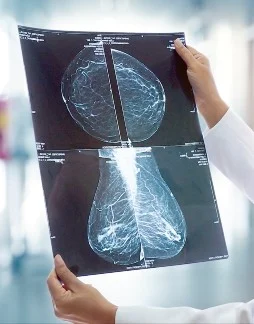
Dr. Jim Nachiondo: Yeah. So, I mean, the conversation often starts with primary care. And honestly, just in the media nowadays too, I think it’s no secret that we’re seeing increasing rates of incidence of colon cancer among people less than 50 years of age. Right? And that tends to get people’s attention. So, obviously, we conduct colonoscopies. When it comes to colon cancer screening, the current recommendation is to begin average-risk screening at age 45. And that was a change — it used to be 50. So, about 10 years ago, the United States Preventive Services Task Force — that’s a mouthful, USPSTF — noticed that we were seeing these increasing rates among younger people, and that about 10 percent of new colon cancer diagnoses were occurring among people under 50. So they collected some data — it was called modeling — and came up with the recommendation to lower the average-risk screening age to 45. So we are often involved, as gastroenterologists, in the discussion of what tests to do for colon cancer screening. We have a lot of options — the optical tests, like colonoscopy or flexible sigmoidoscopy, which is kind of like a shortened version of colonoscopy that just looks at a limited portion of the colon. And then there are the other stool-based tests, and even a blood test now. So we get to talk with the patient. It’s important to treat the patient as a unique individual, and sort of hear what they have to say, what they bring to the table about which tests they’d like to have, because there are pros and cons. The gold standard is colonoscopy. But the best test is the one that the patient will do.
Dr. Brian Evans: That’s what I always say. Right. If the option is not doing anything, we want to get them to some sort of screening test. Why is colonoscopy the gold standard?
Dr. Jim Nachiondo: Yeah. So colonoscopy remains the gold standard because it allows us the opportunity to look directly. So we’re not only looking to detect colon cancers — and colon cancer is quite treatable when detected at an early stage — but additionally, we’re looking for polyps. Almost always, a colon cancer starts out as a benign little bump in the lining of the colon called a polyp. And if we identify a polyp, we can remove it and then send it off for pathology analysis during a colonoscopy. So it’s a test that allows detection of cancers, prevention of cancers, and then a lot of other diagnostics too.
Dr. Brian Evans: So prevention of cancer is just such a big deal. And I think a lot of patients aren’t really aware of that fact — that when they get a colonoscopy, there could be something done that actually prevents them from having colon cancer in the future. Let’s talk a little bit about the other options. So there’s stool testing, and there’s also blood testing for colon cancer. The blood testing is new, right? That hasn’t been around for that long.
Dr. Jim Nachiondo: Yeah. Yeah. So, I mean, I think there’s been interest in finding a less invasive procedure as the first-line screening test for colon cancer, when compared to a colonoscopy. So, about 20 years ago, research started looking into the stool-based tests. And then, more recently, we’ve come around to looking for abnormal genetics, basically, in a blood test, which is just amazing — it blows my mind. And I firmly believe that we’ll continue to have research into that area, and eventually that’s where we’ll land, as kind of an across-the-board recommendation for the first-line test. We’re not quite there yet. When we’re looking at tests in medicine, we talk about test performance characteristics, like sensitivity and specificity. And that has to do with how well the test detects the thing you’re looking for, and how much you can trust a positive result. So today, colonoscopy is still the preferred method, based on those test performance characteristics. But we have to look at the risks of a procedure for an individual patient, and whether or not the patient’s willing to go through with a prep and a colonoscopy.
Dr. Brian Evans: Well, so you mentioned the prep. So what are the barriers? When you talk to patients who are somewhat reluctant, shall we say, to go through the procedure — is it about the prep? Is it about the procedure? Is there a fear? What’s going on there that would be a barrier to folks?
Dr. Jim Nachiondo: Yeah, I think, honestly, I think the biggest barrier is fear of the prep. There’s a reason I call it “the coyote juice” when I’m counseling patients. So, just to summarize: leading up to a colonoscopy, we ask patients to change their diet a little bit. Starting about a week out, we try to get them to stop eating things like seeds and nuts and things that might make the procedure more difficult by clogging up the scope, things like that. And then, the day before, you have to be on a clear liquid diet — that’s like Jell-O and broth, and that’s about it. Fun. No fun. And then you drink this laxative prep that honestly tastes like the ocean. It’s very salty, and, for the most part, not pleasant. And you know what happens after you drink that. So patients don’t love that part, in general — although, once in a while, I have patients who say, “That wasn’t bad,” or “I actually feel better after that.” But with that being said, the prep has evolved, and there’s so much research into trying to make it easier and not be such a barrier.
Dr. Brian Evans: Well, you’re not sugarcoating it, clearly. You’re not trying to trick the patients into taking the prep — you let them know that it’s not super fun. How about the procedure itself? It’s a very safe procedure nowadays, correct?
Dr. Jim Nachiondo: Yeah. Yeah. So, as with most procedures, there are risks, and so we counsel patients. But, this day and age — things that patients want to know about would be things like safety from an infection standpoint. So all of the equipment is reprocessed to the highest degree, and we comply with so many standards to make sure that’s happening, and there’s so much intensive training for our staff. Patients are afraid of bleeding post-procedure, or things like a perforation — that means a hole being poked. Whenever we put instruments into a hollow organ like this, there’s that theoretical potential, but it’s very, very rare. And we factor those things into the discussions that we have with patients beforehand, as far as whether they might be a little bit higher risk for those sorts of things. But it’s really a pretty safe procedure, especially for the average-risk patient.
Dr. Brian Evans: You know, some folks might resist based on the fact that they feel fine. They don’t have any symptoms. Do you ever hear that — like, “Hey, I feel great. I don’t really see any reason to do a test like that. It seems like a big deal to come in and do all the prep when I’m feeling fine. My bowel movements are normal.” What do you tell folks like that?
Dr. Jim Nachiondo: Yeah. I mean, I hear that from my brother. There he is. So, “if it ain’t broke, don’t fix it,” right? But that’s not what a screening test is about. A screening test is for someone who does not have symptoms. We want to prevent something before it manifests. So I try to convince patients to be proactive in their healthcare, and I think there’s kind of a push toward that — again, especially knowing that, for reasons we can have an entirely different show on, we’re seeing more colon cancer amongst younger people. That’s getting people’s attention. So, a screening test is for someone who does not have symptoms. That’s the whole point.
Dr. Brian Evans: Okay. And 45, for people who have, let’s say, average risk — which would be just kind of out there in the population — who needs to maybe think about getting one earlier? Are they people with a family history, or what’s going on there?
Dr. Jim Nachiondo: Yeah, absolutely. So anyone who has a family history of colorectal cancer — when I say colorectal cancer, I mean colon cancer, we kind of use the two terms interchangeably — but yeah, anyone who has a family history, especially in a first-degree relative — a parent, brother, sister, or a child — it’s really important to talk with your providers about starting a little bit earlier. And then, anyone who has long-term inflammatory bowel disease, like Crohn’s disease or ulcerative colitis, that affects the colon — that long-term smoldering inflammation can be a risk factor for colon cancer too. Things like that. And there are other familial syndromes, like Lynch syndrome or familial adenomatous polyposis. Patients want to talk with their providers about altering when they start, and that’s not average-risk colon cancer screening at that point — it’s high-risk colon cancer screening.
Dr. Brian Evans: Right, right. Okay. Any way to prevent colon cancer? What should I be doing? What should our audience be doing to reduce their overall risk?
Dr. Jim Nachiondo: Yeah, yeah, that’s a great question. So, first of all, it’s important to realize that the older we get, the more chances there are that we’re going to have these sporadic genetic changes in the DNA in our cells. So, paying attention to how old you are, and what the recommendations are — those things we’ve been talking about. In addition to that, you want to look at minimizing exposure to tobacco and alcohol. And then, we now know that obesity can be a risk factor as well — it’s an inflammatory state, things like that. Sticking to a high-fiber diet — I really like to push the high-fiber diet, “fiber is your friend,” I tell all my patients. So, aiming for whole grains, beans, nuts, fruits, vegetables in their diet. I talk with patients a lot about supplementing fiber as well.
Dr. Brian Evans: So the fiber just kind of helps move things through, really kind of cleans things out, and, yeah, just generally healthier?
Dr. Jim Nachiondo: Okay. Yeah, absolutely. It also helps prevent other conditions, like diverticulitis, that can happen in the colon too.
Dr. Brian Evans: Yeah, right on. So, you know, on the internet — and by the way, when you start a sentence with “on the internet, you know,” you know you’re in for something — there’s just all kinds of stuff out there. I mean, people are talking about gut health all the time. They’re talking about your gut biome, various things about how to have a healthy gut and not have a leaky gut. So you must hear it all. And I’m curious — what do you tell people in terms of getting good information that is reliable, and how to avoid misinformation?
Dr. Jim Nachiondo: Yeah. Oh, man. I mean, that’s a pet peeve of mine. Broad statements with a lot of confidence and little evidence are rarely helpful, and sometimes harmful. So I find that medical science tends to be more careful, thoughtful, and humble than social media. I approach it with an open mind — I know that social media is out there, I know that influencers are out there — but I also know that we actually have studies now that show that the vast majority of gut and liver health content being espoused on the internet by influencers is completely wrong. So please don’t take a beet cleanse hoping that you’re going to remove 10 or 12 pounds of waste from your body — you’re probably just going to change the color of your urine and your stools and freak everyone out. So, again, take everything with a grain of salt. If a claim sounds miraculous, or seems to provoke shame in you that you haven’t started doing it yet, then be skeptical, and talk with your providers about it. And another thing — we’re seeing more liver inflammation, sometimes very dangerous liver inflammation, from herbal use. So just be mindful that herbals are not entirely safe just because they might be, quote-unquote, “natural.” Understand that there can be tradeoffs, and that you should talk with your providers about the use of herbals as well.
Dr. Brian Evans: Yeah. And some people are on the internet making a ton of money on these supplements or herbal products, and really pushing it. So don’t buy into that — really think about the sourcing of the information, and whether there’s profit there for them. So, real quick — any red flags, any concerning symptoms you want people to think about and want to get help for right away if they’re having something? When should they call their doctor?
Dr. Jim Nachiondo: Yeah. Yeah. I mean, we know our bodies better than anyone else. So the first thing is, any sort of change. If a patient comes to me and they’ve had any sort of change in their stool characteristics or frequency, I’m going to listen to that. The ones we think are important are things like unexplained weight loss, visible bleeding — whether it’s red blood in the stool or black, tarry stools — or anemia, new-onset anemia, particularly iron-deficiency anemia, or what we call “early satiety,” getting full faster after eating a meal. Those are some examples of red-flag signs and symptoms that might then take a person out of that average-risk screening category and into a more diagnostic approach. And we’re happy to be a part of the care partnership, and figure out what tests should happen, and in what order.
Dr. Brian Evans: Yeah, I like that. We do know our bodies better than anybody. If we know something’s kind of different, something’s kind of weird, please come in, let us check you out — let Dr. Nachiondo have a look at you. That does wrap up our conversation today on Mountain Health Today. I really want to thank our guest, Dr. Jim Nachiondo — great insights, really appreciate it. And thank you to the audience for spending part of your day with us. I’m Dr. Brian Evans, Chief Medical Officer of Tahoe Forest Health System. You can learn more about today’s topic and find resources and services at tfhd.com. Until next time, take care of yourselves, each other, and stay healthy here in the mountains.