
Dr. Brian Evans: Welcome to Mountain Health Today, the show where we explore the people, the stories and the innovations shaping health in the Sierras. I’m Dr. Brian Evans, Chief Medical Officer of Tahoe Forest Health System. From everyday wellness to the latest advances in medicine, our goal is very simple, to give you clear and trusted information that helps you and your family live well.
Today we’re going to be talking about the amazing trauma program that we have at our health system. It’s just an astonishing group of resources that has been put together with some very smart people. We’re going to understand first, what the heck is the trauma program?
And we’re also going to be learning all about what it’s like to be a general surgeon. In order to do that, I’ve got to bring in an expert. And I’ve got just the one, somebody who can tell us all about both those things.
So we’re very, very lucky to be joined by Dr. Ellen Cooper. Dr. Cooper is a board certified general surgeon and medical director of the trauma surgery program. She can do it all, from taking out your appendix to fixing you if you crash your e-bike into a tree.
Dr. Cooper, welcome to Mountain Health Today. Thank you. I hope you can fix me if I crash my e-bike into a tree because it’s almost happened many times.
Dr. Ellen Cooper: I’m going to do my best.
Dr. Brian Evans: Okay.
Dr. Ellen Cooper: And if I can’t, we’ll get you to where you can be fixed.
Dr. Brian Evans: Okay, sounds good. I do wear my helmet, you know, we’ll probably get to that later. But thank you for being here. I really appreciate it. Let’s start with just general surgery and what a general surgeon is because it has changed over the years and you are a general surgeon kind of first and foremost, and also the head of our trauma programs.
Dr. Ellen Cooper: That’s correct.
Dr. Brian Evans: Yeah.
Dr. Ellen Cooper: So when I think about general surgery, I think about surgeons who take care of a variety of conditions and diseases. We operate all over the body. Our focus is mainly on the abdomen and the chest, but we also take care of cancers across the body and really get to fix a lot of problems in patients.
Dr. Brian Evans: Yeah, it’s a pretty broad area and it kind of covers the gamut from head to toe.
Dr. Ellen Cooper: It does. And sometimes we kind of define ourselves by what we aren’t. We don’t operate on the brain. We don’t operate on bones. But we operate almost everywhere else.
Dr. Brian Evans: There are specialties for all that other stuff. Of course. And there’s been more of those specialties kind of accumulating over the years.
Dr. Ellen Cooper: Yeah. And one of the great things about practicing general surgery in Truckee is that because we’re a small town, we haven’t divided ourselves up quite so into small pieces. So we really get to do a lot of different things.
Dr. Brian Evans: Yeah, you really do. What’s the training process like? So if I wanted to become a general surgeon, how would I go about that?
Dr. Ellen Cooper: I wouldn’t recommend it at your age, to be frank. After an undergraduate degree of your choosing, you spend four years in medical school and then at least five years in a general surgery residency. And that can increase depending on if you want to do research or you want to do an additional fellowship, but it’s a minimum of five years of surgical training after medical school.
Dr. Brian Evans: Yeah, just full disclosure, I did think about becoming a general surgeon, but standing up for hours on end, not good for my ADHD. So it was not a fit. ER, definitely more of a fit. ER is much better for your ADHD. Absolutely. Absolutely. All right. Let’s talk about trauma centers because we do now have a trauma center here at Tahoe Forest Health System. So what the heck is that? What does it mean? And specifically, maybe you can talk about the different levels and we’re at level three.
Dr. Ellen Cooper: Yeah. So the concept of a trauma system has been around for decades. The idea is that all injured patients can get to the right resources at the right time in the right place. And so we talk about centers, but what we’re really talking about is a whole continuum of care from pre-hospital to post-discharge where injured patients get exactly what they need in kind of a planned, thoughtful way where we’ve thought about all the possibilities in advance. There are essentially four levels of trauma centers. A level one is typically your big academic center. Level twos are large community hospitals that may not do their research and surgical training but have all of the clinical stuff. And then level three, which is what we are, is really designed to provide resources as quickly as possible, especially in areas that may not be in those big cities.
Dr. Brian Evans: And when you think about our community and all the activities that are going on in the North Lake Tahoe area, it really almost seems like a no-brainer that we have a trauma center here now and getting sort of close to where accidents and injuries may occur.
Dr. Ellen Cooper: Absolutely. I mean, if you think about in the winter with 80 being open or not open, you could be — basically it could be unreachable to get to the level two in Reno or the level one in Sacramento without a little bit of stabilization and care in Truckee itself. The other thing we think a lot about is that if we can care for our community in a way that’s really meaningful and high quality and not have to send people out to those areas, that’s a real value for this area as well.
Dr. Brian Evans: Yeah. When you rewind the clock a little bit and think about what it was like here, maybe 50 years ago or something, there was a hospital, we had an emergency department, we had some operating rooms, but we did not have a trauma center, we didn’t have this coordinated care effort. And so if people got hurt, what would happen to them? I mean, they just — it was a lot more risky, wasn’t it? I think it was a lot more risky.
Dr. Ellen Cooper: And I think it was also a lot more sort of, you know, who’s involved in the moment in making those decisions and everybody was doing their best. But nobody had necessarily thought in advance, well, if this thing happens, this is our plan. And if, you know, if 80 is closed, then, you know, we have a plan to call our battalion chief at Truckee Fire to figure out how to get a patient out of Truckee if we need to. But we also have a whole set of plans for how to take care of patients in our community.
Dr. Brian Evans: Let’s talk a little bit more about the people you’re talking about, some of the folks that are on this broader team. It’s not just the trauma surgeon. You got a lot of folks.
Dr. Ellen Cooper: We think we’re the most important, but actually, it’s really about a lot of people in this community coming together and using their expertise and their field to inform how we’re making decisions for injured patients.
Dr. Brian Evans: For sure. I mean, surgeons all agree that surgeons are the most important people in the hospital.
Dr. Ellen Cooper: That is correct.
Dr. Brian Evans: That is correct.
Dr. Ellen Cooper: Yeah.
Dr. Brian Evans: Well, no dispute.
Dr. Ellen Cooper: No.
Dr. Brian Evans: Okay. But you mentioned some of the folks that are like outside in the environment, like out in the EMS, emergency medical services, picking patients up and bringing them in, sometimes having to go find somebody, deal with very difficult extraction. So who are those folks?
Dr. Ellen Cooper: Well, I think that, you know, in the wintertime, it starts with our local ski patrol, including our people who have wilderness medicine certifications. We have some ski patrol who have advanced training in first aid and ALS. And then it moves on to our really, really valuable fire agencies that do all of our transportation for us. We think about pre-hospital communication between them and our nursing staff in the ER. Our ER is a huge component of this. And then you think about the OR, the ICU and those kinds of places. And then post-discharge after injury, how do we get people back to doing exactly what they love as quickly as possible? So that includes rehab, physical therapy, home health. All of those people play a role in making sure we understand how to take care of these patients as successfully as possible.
Dr. Brian Evans: It’s amazing when you think about just the breadth of skills required in order to take care of a complicated trauma patient. And all of this stuff has to be sort of ready to deploy at a moment’s notice.
Dr. Ellen Cooper: That’s — I think really the key, is that a trauma system has tried to anticipate everything in advance so that when a really sick trauma patient comes in, you don’t think, well, what do we do now? You say, oh, we do what we do every time.
Dr. Brian Evans: Right. So you helped build this program. And I know that it was a team lift, right? Absolutely. But what did that require? Did you have to go out and make a case to the community or to the hospital or to others that we needed this? And what was the case that you made to folks?
Dr. Ellen Cooper: I think that we were really at a moment as a health system that we were really thinking about what’s our next step, what’s our next best thing that we can provide for our community. And everybody knew for I think 10 years or more that we — quote unquote — should be a trauma system. And so I think everybody was ready at that moment. But it does take a lot of buy-in and it takes asking a lot of people to change how they’ve done things historically and say, well, maybe we could do it this way. It’ll provide better care for people. And what I love about working in this community is that if you are a good listener and you really understand where someone’s coming from and what their expertise is, and then you work with them, they really want to do what’s best for a patient. So it was a really, really collaborative environment.
Dr. Brian Evans: Yeah. What a great opportunity to seize. And I know it wouldn’t have happened without you. So thank you for that on behalf of the community. I do want to ask this because, you know, you could almost imagine, oh, we’re just going to build a trauma center. We’re going to get all these positions in place and get the right equipment. And then it’s sort of done, you know, like it’s all done. But that is definitely not the case. No. So tell us what goes into sustaining a trauma program and also a continuous improvement of what we’re doing.
Dr. Ellen Cooper: Yeah, I think that you really make a good point in that if we put a bunch of rules in place and said, okay, everybody follows these rules, a couple of things can happen. One, if the rules don’t make sense to people, they’ll never follow them. And so you have to be continually in dialogue with people about what your rules of the road are and why. And then you really have to be a really good listener when people come to you and say, you know what, you made this set of rules, but in point of fact, Ellen, you are a member of the indoor team and you have never been on the side of a mountain trying to get someone out of a crevice. And so your idea about how we’re going to do this doesn’t work. And then I have to turn around and say, oh, you’re right about that. We need to change these rules. And the other thing you need to do is you need to be constantly looking at how your care is, is the care that you’re delivering what you want to deliver. And if you’re sliding from that, if you’re varying from that, how do you bring people back? And how do you continually keep an eye on things so that you’re continuing to provide the highest level of care that you can?
Dr. Brian Evans: I know that you’re very diligent about data and getting the right data about how is this trauma program performing and then not just looking and going, okay, looks good, but actually comparing how we’re doing at this trauma center to nationally, like what’s going on across the country and where do we stack up? And so what kinds of things are you looking at to sort of show us that we’re either doing really well or maybe we have an opportunity to improve some aspect of the care that’s delivered?
Dr. Ellen Cooper: Yeah, I think there’s a lot of data we look at. And one of the things that we think a lot about is timely access to care — is that if you show up at Tahoe Forest with a broken leg, with a broken femur, the big main bone of your leg, how quickly should that be repaired? How quickly are we repairing that? What are the barriers if we’re not matching up? Why aren’t we doing what we need to? And I’ll let you in on a little secret, Brian, our orthopedic surgeons destroy the national average on getting patients to the hospital, into the operating room. They are amazing at it. They are efficient and they are deeply caring about — this is a high priority for them. But you really have to be looking at all sorts of metrics and the metrics can be kind of boring sometimes, but that’s where you start to see where the quality could slip. Let’s say you’re supposed to get someone to the CAT scanner within 30 minutes who’s significantly injured and you’re watching it go to 45 minutes or an hour. Well, you’ve got to pull that piece back in because that’s where we diagnose life-threatening problems. And so if we delay that one piece, that could have a real consequence to the patient, even if on the outside, it’s like a really boring thing.
Dr. Brian Evans: And we don’t just sort of assume, okay, we like our data, we’re good. You bring in a team of experts that are external to this organization to look at everything, look at our data, look at the care we provide, and then accredit our trauma center. Absolutely. Who are those folks?
Dr. Ellen Cooper: So that’s the American College of Surgeons. And if you’re a surgeon, you think that’s the most important governing body in the entire world. But this — general surgeons and trauma surgeons were the people who conceived of this idea of trauma systems and trauma care. And so they’ve built basically what’s a very technical, very complicated checklist of this is what you need to do to provide care that’s appropriate to your community. And so it’s not really a secret, but it’s really technical and it can be really complicated. And sometimes you have to get creative in your community if you’re, let’s say, from a rural hospital high in the Sierras on how to meet what they expect of you. And that is, I have to say that the surgeons do a lot of that, but the other staff in the trauma program are absolutely critical to making sure that we are dotting our I’s and crossing our T’s and doing what’s necessary to show the American College of Surgeons that we are where they want us to be.
Dr. Brian Evans: It’s almost like a continuous audit of our program. The program isn’t just rolling along and kind of doing what it does. It’s being looked at continuously, scrutinized, and approved upon.
Dr. Ellen Cooper: Absolutely. And the other thing that you have to do is you have to build a culture where people who are not totally enmeshed in this all the time feel really comfortable coming to the program and saying, hey, I have a question about this, or, hey, I was involved in this patient and I didn’t think it went well. Can you guys take a look at this? Or, hey, you know, you guys want me to do this thing and I didn’t do it and here’s why. And so you really have to build a culture where you’re collaborating and people feel really safe and empowered to speak up and make changes or ask us to review cases.
Dr. Brian Evans: Yeah, and I know that a big component of all of this is your trauma conference, the sort of case review conference that you host. And then there’s also a winter illness and injury symposium that we have once a year. So that seems to me to be a great opportunity to get the entire team together. How valuable is that?
Dr. Ellen Cooper: It’s so valuable. And one of the things for me on a personal level, as someone who’s kind of lives in — breeze trauma, there is nothing like listening to Ski Patrol or listening to our EMS partners talk about the challenges of mountain rescue and extrication in this environment. And it just builds for me personally, so much respect for what they deal with and how they solve problems.
Dr. Brian Evans: It really is remarkable. When you think about the day-to-day job of Ski Patrol and EMS and dealing with these, these are very cool people.
Dr. Ellen Cooper: They are amazing. And what I have to admit, and people have heard me say this, that, you know, when I stepped into this role in 2019, I was pretty sure I knew the answer to every question and how things should go. And really quickly, they very gently and without an ounce of, you know, rudeness, educated me on what the realities were like for their jobs. And so I always talk about the indoor team and the outdoor team, and I have such profound respect for our teammates who live outdoors with these patients with very minimal resources.
Dr. Brian Evans: And they don’t check the weather and say, well, it’s raining, I don’t want to go outside, or it’s snowing pretty hard and the wind is blowing, I don’t want to go out there. They just go out.
Dr. Ellen Cooper: They go, and they — I think they’re just amazing.
Dr. Brian Evans: They really are. So, you know, a lot of people have been watching this new show called The Pit. I guess it’s not that new anymore. How much is The Pit like what you do when there’s a trauma patient coming in and everybody gets the alert, like, okay, everybody’s got to go to the ER and take care of this patient, or maybe it’s more than one, you know — are they getting it right in that show? Have you seen the show?
Dr. Ellen Cooper: Yes, I’ve seen the show. And what I would say is that what happens in a day on The Pit would never happen in any hospital in one day. But I actually struggled to watch it because it’s so emotionally resonant to me. It makes me a little anxious. It reminds me of situations I’ve been in. Life is kind of on the line. And so I think that it does a wonderful job of showing the team dynamic and the preparation that it takes to take care of these patients.
Dr. Brian Evans: Yeah. So we’re not endorsing the show, but if you were to watch it as a layperson, you’d see things that we do see and we do take care of at our hospital.
Dr. Ellen Cooper: They get a lot of the little details right.
Dr. Brian Evans: Just not all at once.
Dr. Ellen Cooper: Not all at once.
Dr. Brian Evans: Thank goodness. That would really be a problem. Let’s talk a little bit about general surgery because, you know, general surgery as we talked about is kind of a full spectrum sort of thing. So what kinds of procedures do you do and like to do as a general surgeon at Tahoe Forest?
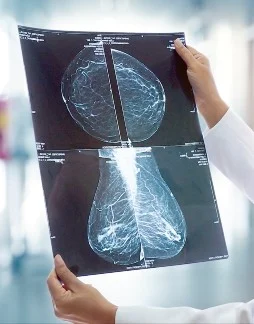
Dr. Ellen Cooper: I feel really fortunate because I get to do a lot of different things at Tahoe Forest. As we talked about before, we’re not divided up into tiny little compartments. I think other than trauma, the thing I love to do most is take care of women with breast cancer. We, with our cancer center, are able to keep the majority of that care within our community. And so I don’t know many general surgeons who sort of wear two big hats of breast cancer and trauma, but I get to do that. And then I also get to take care of people in emergency situations, take their appendixes out, fix their hernias, and solve a variety of other problems. But you talked about your ADHD earlier, and I don’t think I have emergency medicine ADHD, but small town general surgery does allow you to switch gears a lot.
Dr. Brian Evans: It really is interesting that your career, it’s, you know, you’ve got stuff that is routine. It can be scheduled, you know, you can plan it out and like, okay, we’ll do that case in three weeks or whatever. And then other stuff where you’ve just got to like to do it right now and there’s an emergency situation and it’s time to go.
Dr. Ellen Cooper: Absolutely. And one of the things I think is challenging is that, you know, we, because of how our practice is built, can do those same things within about 10 minutes of each other. And so you’re always sort of switching gears and thinking about the long term versus the short term and how you’re going to prioritize care for patients.
Dr. Brian Evans: You know, one of the things about our area is that there is a lot of cancer in — you know, it’s growing, and we have an older population that is getting older, actually. And so our cancer program is busy and it’s also incredible. And so say a little bit about how you interact with the oncology team. That’s how PORR is just taking care of those patients.
Dr. Ellen Cooper: Well, I think the first thing I’ll say is that our cancer center is also accredited by the American College of Surgeons, another situation where the surgeons think they’re the most important person in the room, but they have also built an incredibly high quality program on care. And I think that they do an amazing job at providing care that’s equivalent to the national standard, which is really spectacular. And then what I think the real secret sauce is that we’re so small that you really get to treat every patient as an individual. Our nurses know everybody, they think about everybody. We’re on the phone or texting with each other all the time about patients to make sure that nobody slips through the cracks and that everybody is getting really personal, really emotionally centered care that’s also better than anywhere else.
Dr. Brian Evans: It is remarkable here. We’re so fortunate to have that team. Okay, Ellen, so now we’re getting into kind of the summer months and trauma is relatively unpredictable in itself, but there are trends. And so here in our community, we’ve got this sort of winter stuff and then we’ve got the summer stuff. And as it gets warmer, people start doing stuff like hitting a lake, they fire up e-bikes, that kind of thing. So what recommendations would you give to folks to avoid becoming a trauma patient of yours? Not that we don’t want them.
Dr. Ellen Cooper: We’re happy to take care of them, but you really don’t want to meet me on a Saturday afternoon. I think e-bikes are really an emerging area of concern for trauma surgeons. Many of us put our kids on e-bikes to transport themselves across Truckee, including myself. But these are essentially motorcycles or mopeds, and people need to respect the speed. They need to be thoughtful. They need to follow the law when it comes to right-of-way and yielding and those kinds of things. And people need to remember that they go a lot faster than your body can power. So if you’re someone who hasn’t been on a bike in 20 years and you get on an e-bike, your balance and your agility may not be the same. And so if you’re going 20 or 30 miles an hour on this, it can be really, really risky. And always wear your helmet and don’t drink an e-bike.
Dr. Brian Evans: That is very good advice. I am personally going to take your advice in an effort to avoid becoming a trauma patient. And I just want to say, you know, this does wrap up our conversation on Mountain Health Today. But I want to thank you, Dr. Cooper, for sharing your insights. And I want to thank you, the audience, for spending part of your day with us. I’m Dr. Brian Evans, Chief Medical Officer at Tahoe Forest Health System. You can learn more about today’s topic or find resources and services at tfhd.com. Until next time, take care of yourselves, each other, and stay healthy here in the mountains.
Get Involved
True North 2030 Strategic Plan

Featured Episode: Mountain Health Today
Featured Video
Health System eNewsletters
- Tahoe Health News
An electronic newsletter about local health and healthcare topics - Tahoe Forest Wellness News
Info on health education resources and upcoming health-related events - Orthopedics, Sports Medicine & Physical Therapy News
News about our specialized care - TFHS Foundation News
News about the Tahoe Forest Health System Foundation - IVCH Foundation News
News about the IVCH Foundation