Continuous Glucose Monitors: What to Know
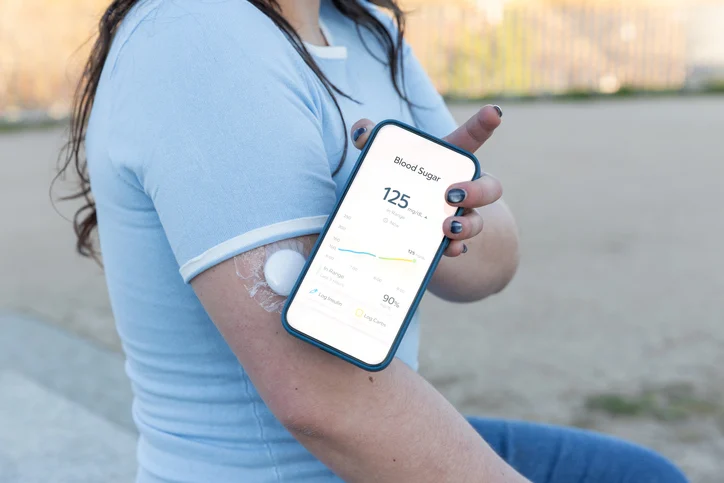
You may have seen someone wearing a small round sensor on the back of their arm. This may be a continuous glucose monitor, or a CGM. A CGM is a small device worn on the skin, often on the arm or belly. It checks glucose levels day and night and sends the number to a phone, receiver, or insulin pump.
Many CGMs update every few minutes, so you can see where your glucose is now and where it may be going. Today, glucose sensors are also available over the counter for some people with type 2 diabetes, pre-diabetes, and even adults without diabetes who want to learn more about how lifestyle affects their glucose levels.
As a wellness dietitian, I like CGMs because they give us a bigger picture of what glucose is doing throughout the day. The single finger stick is like taking a photo of your glucose at one moment.
A CGM is more like watching a movie of your day, showing when glucose rises, falls or stays steady. This can reveal patterns that may be missed with occasional finger-stick checks.
Your glucose naturally rises and falls throughout the day, so the goal is not a perfect flat line. Instead, use your CGM to get curious about what may be causing the changes. A rise after eating carbohydrates is normal and does not mean a food is “Bad”. Instead, look for patterns you can learn from.
You might notice that a 10-20 minute walk after a meal can help lower blood sugar by helping your muscles use glucose for energy. A high-fat meal may cause glucose to rise more slowly and stay longer because fat slows digestion. You may also see glucose rise when you wake up even before you are eating, because morning hormones can tell your liver to release glucose to help your body get ready for the day.
These patterns can help you better understand how your body responds to food, portions, physical activity, sleep, stress, illness, and other daily factors. Blood work, such as fasting glucose or A1C, is still the best way to check for diabetes or prediabetes.
Helpful things to know before using a CGM
What can help |
What to keep in mind |
|---|---|
See daily patterns
|
Not every rise is a problemGlucose often rises after eating and then comes back down. For many people without diabetes, these changes are normal. |
Guide small changes
|
It does not diagnose diabetesA CGM is a learning tool. It does not replace lab tests such as fasting glucose or A1C. |
Help with diabetes care
|
Cost and comfort matterCoverage, price, skin irritation, alerts, and wearing a device may affect your choice. |
Why a CGM reading may look “off”
CGMs are helpful. Sometimes a CGM number may not match how you feel. A CGM measures glucose in the fluid under your skin, not directly from your blood, so readings may be a little different from a finger stick.
Pressure on the sensor while sleeping can also cause false low readings. Certain medications or supplements may affect some CGMs, so check the instructions for your device.
If a CGM reading does not match your symptoms, confirm with a finger-stick meter if you have one. A dietitian or diabetes care team can also help you understand your CGM patterns and connect them with your meals, activity, sleep, stress, and medications. Rather than focusing on one high or low number, they can help you look at the bigger picture and decide which changes may be helpful.
Do you need to have diabetes to use one?
Not always. Some glucose sensors are now sold without a prescription. Dexcom Stelo is designed for adults 18 and older who are not using insulin, including people with prediabetes or type 2 diabetes. Abbott Lingo is also available over the counter for adults who are not using insulin.
The ADA states that there is not enough evidence to use CGM for diagnosis; blood tests such as fasting glucose and A1C remain important.
For more information, call Tahoe Forest Wellness to schedule a consult with a dietitian: (530) 587-3769.
Dietitian tip: If you try a CGM, don’t chase every number. Use it as a learning tool. Ask yourself: What happens when I change my meal, portion, or activity? The goal isn’t perfect glucose – it’s using the information to make choices that support your health.
By: Sarah Bernhoit, RDN, Tahoe Forest Health System
- * Featured
- Anniversary
- Board of Directors
- CA Office of the Governor
- Children's Health
- COVID-19
- Employee Highlights
- Gene Upshaw Memorial Tahoe Forest Cancer Center
- Health & Wellness
- Health System Foundation - Giving
- Incline Village Community Hospital
- Informational Brochures & Guides
- Nevada County Public Health
- Orthopedics & Sports Medicine
- Patient Success Stories
- Tahoe Forest Health System
- Women's Health